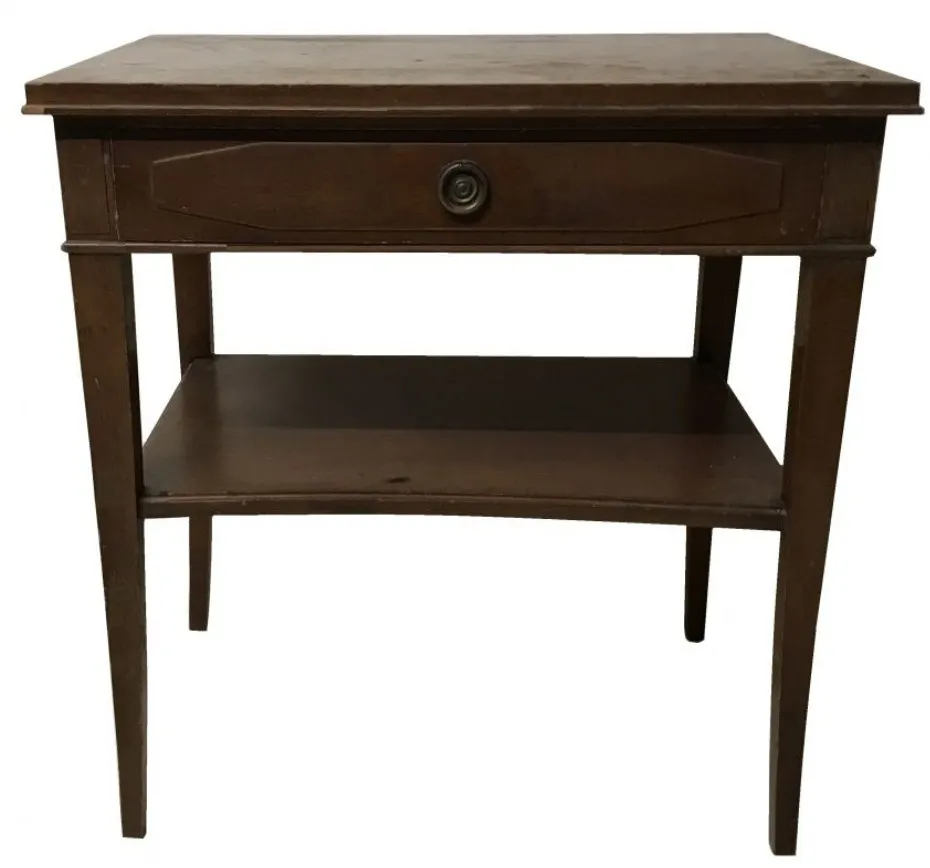
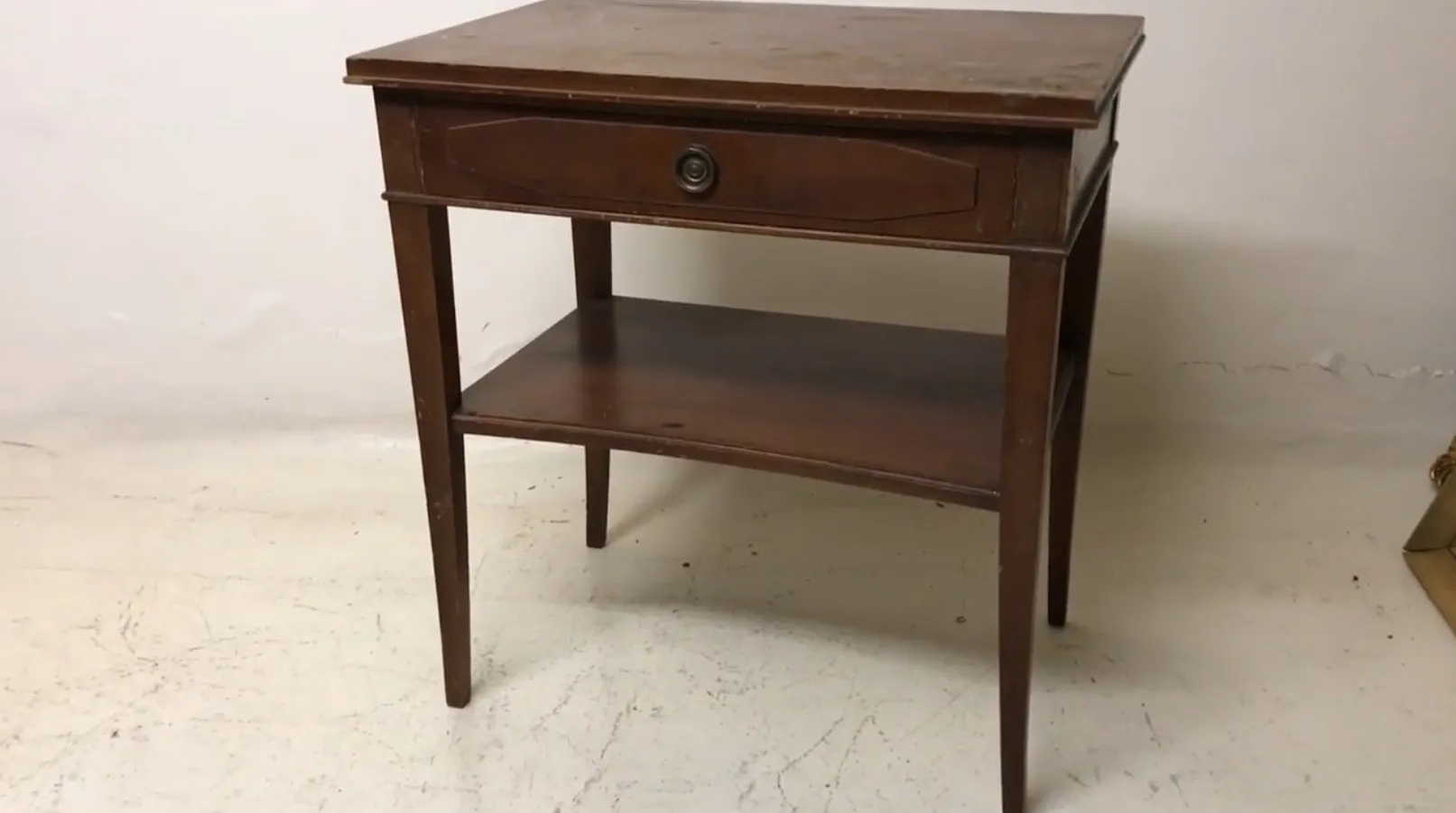
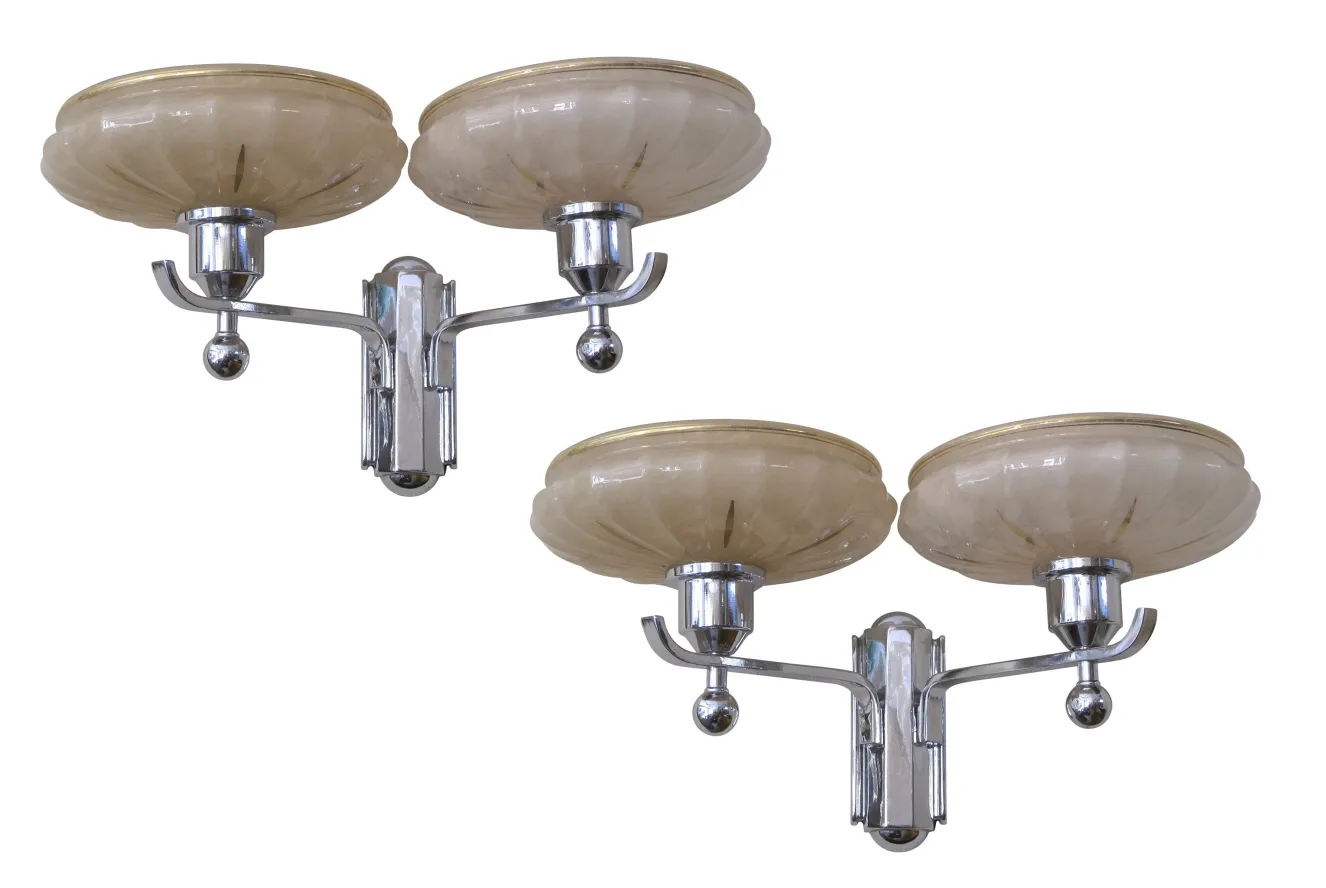
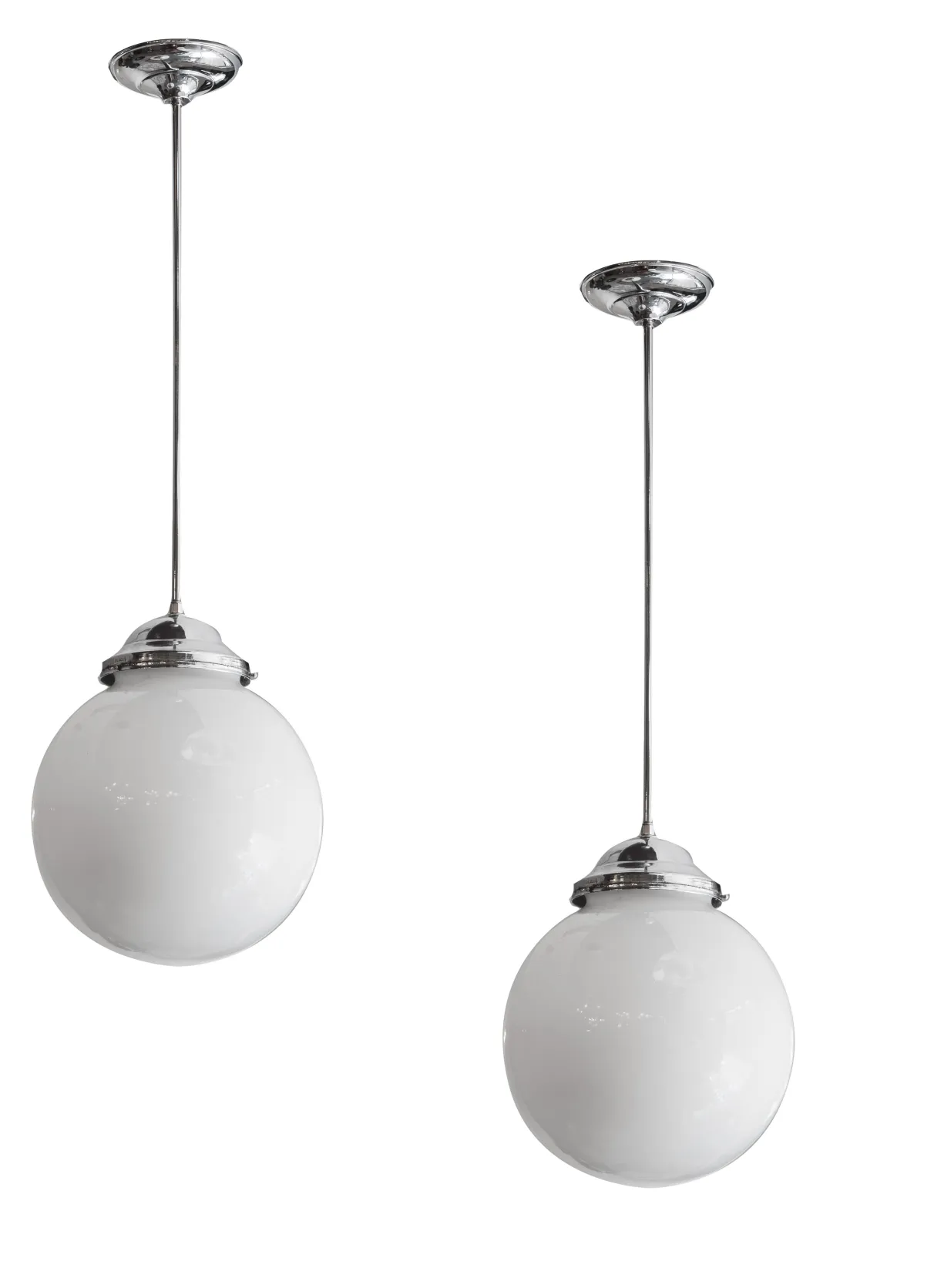
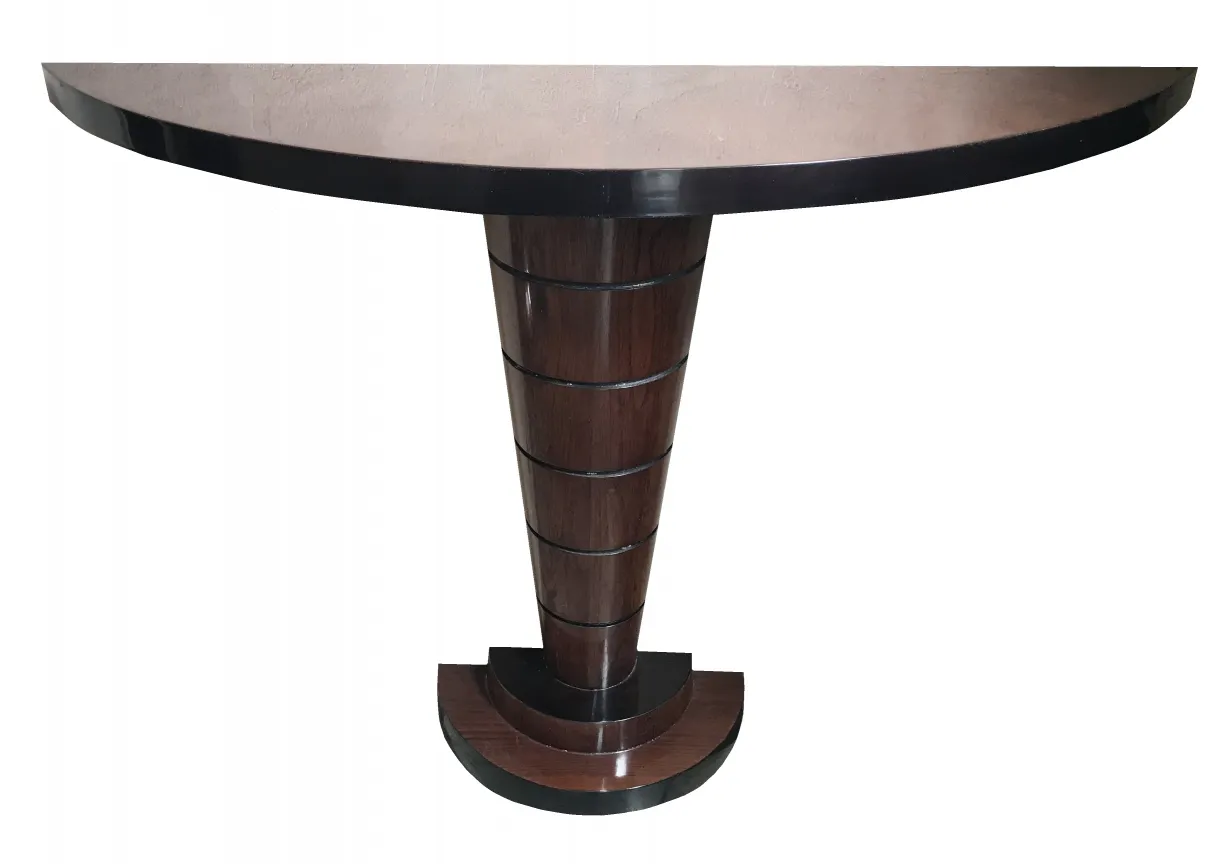
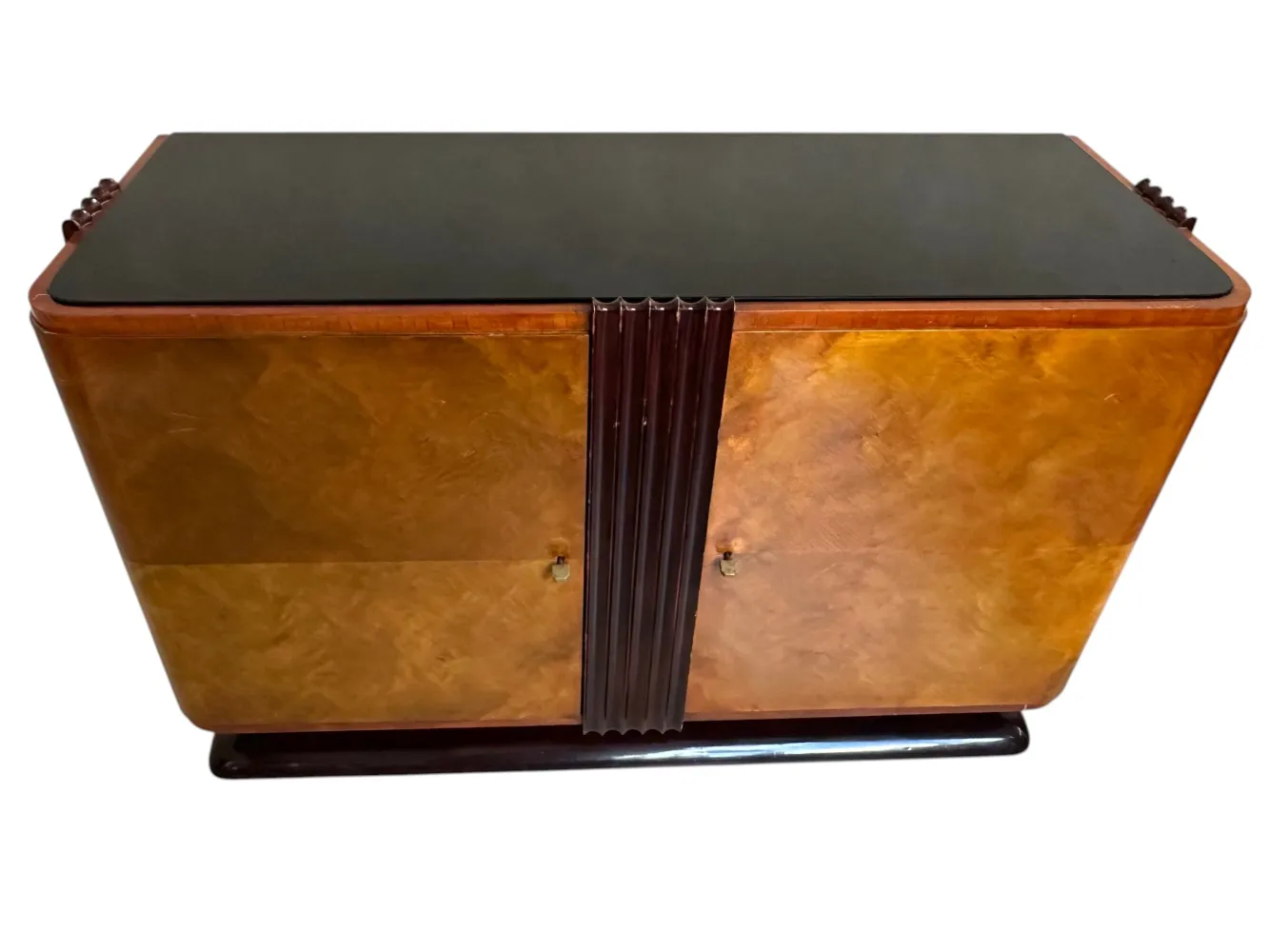
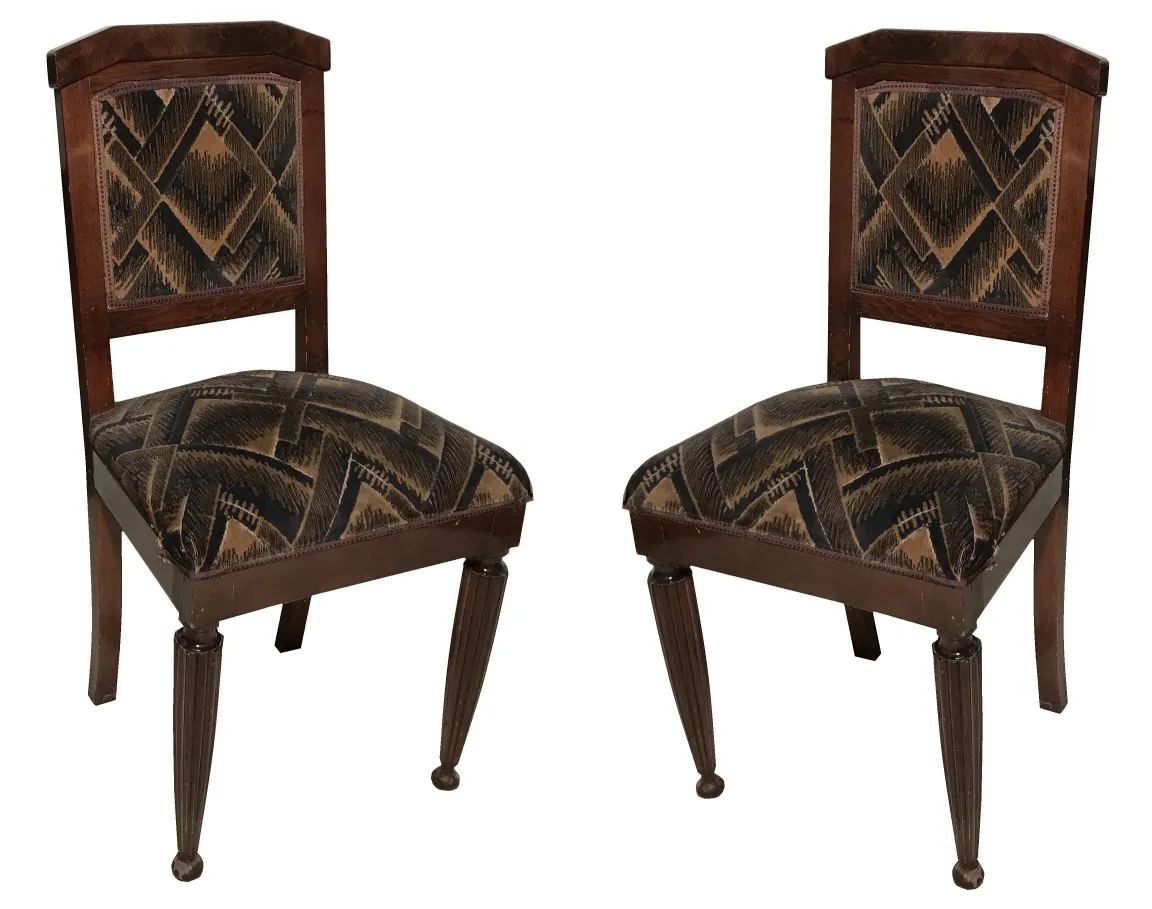
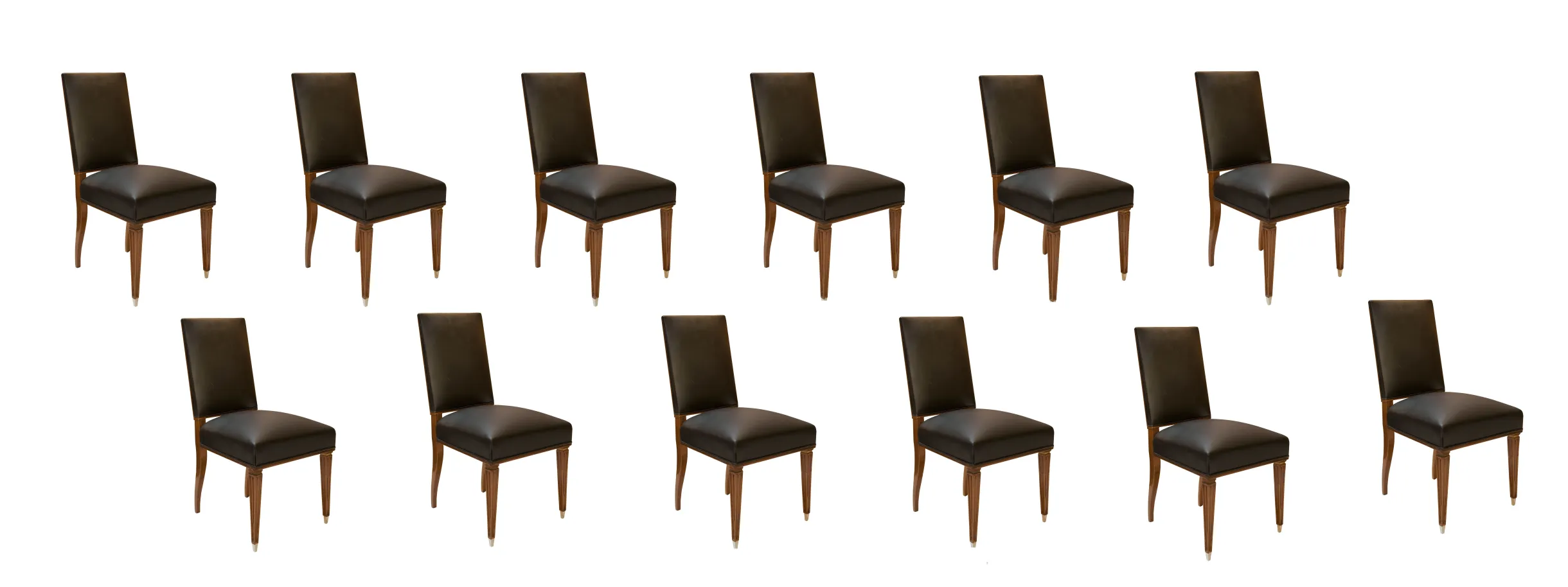
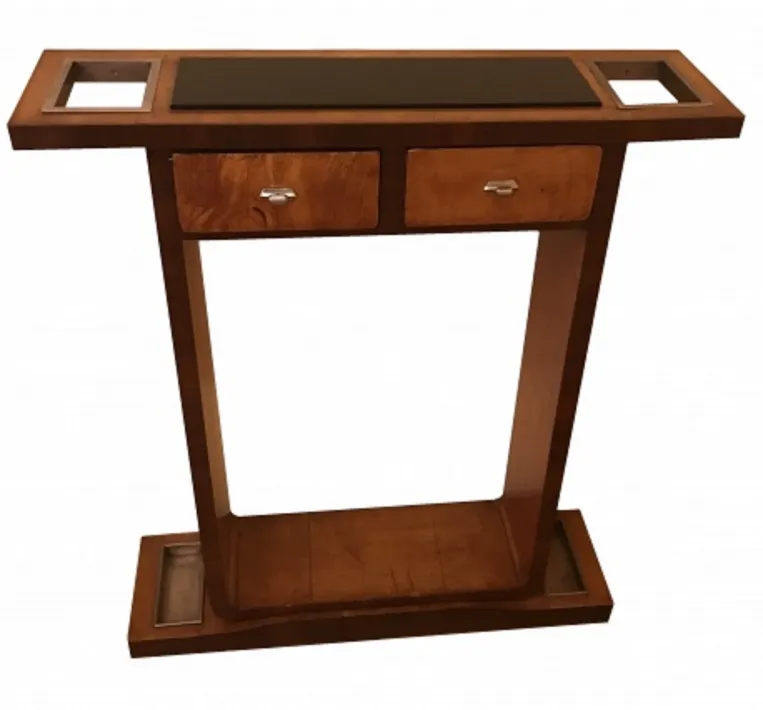
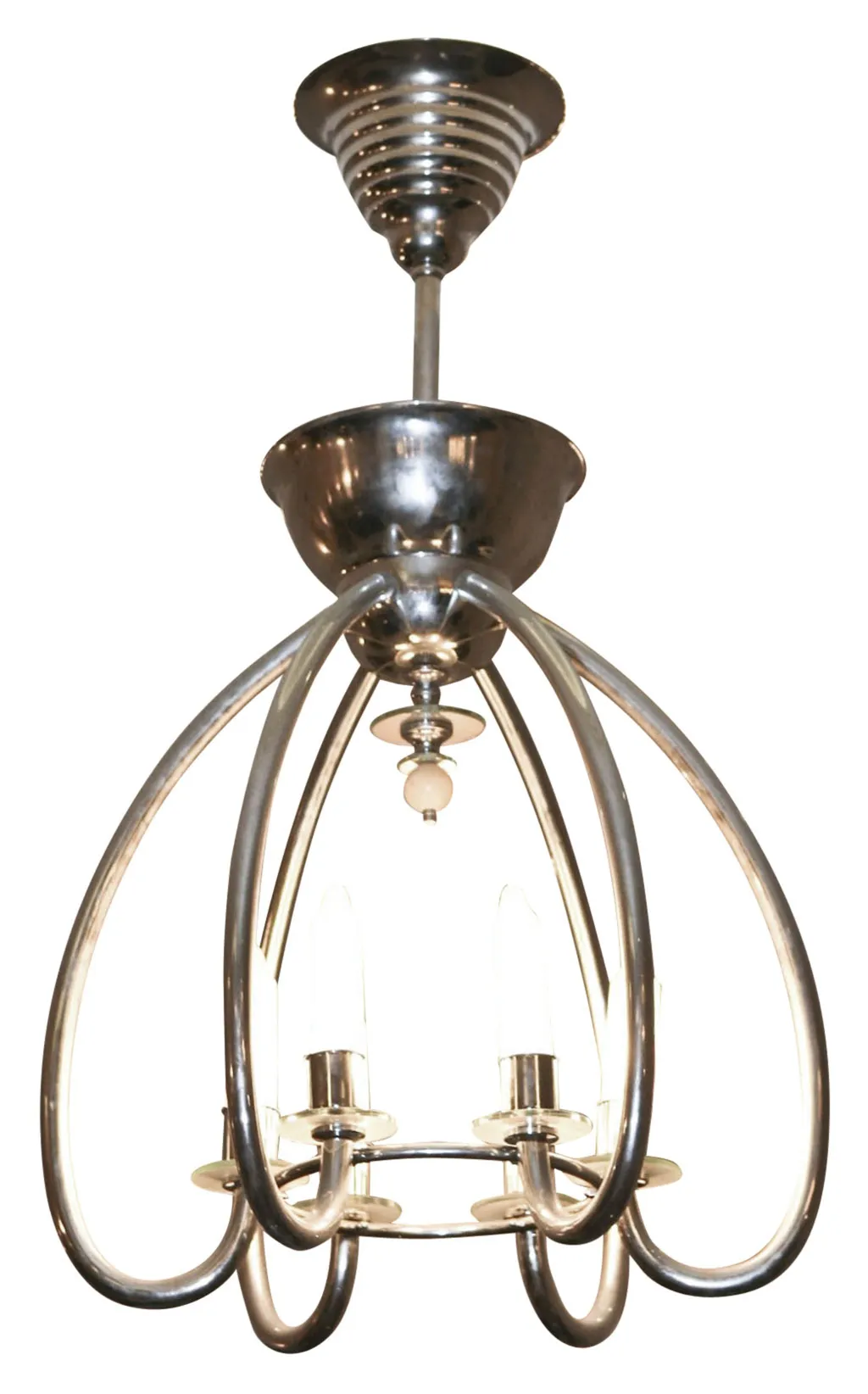
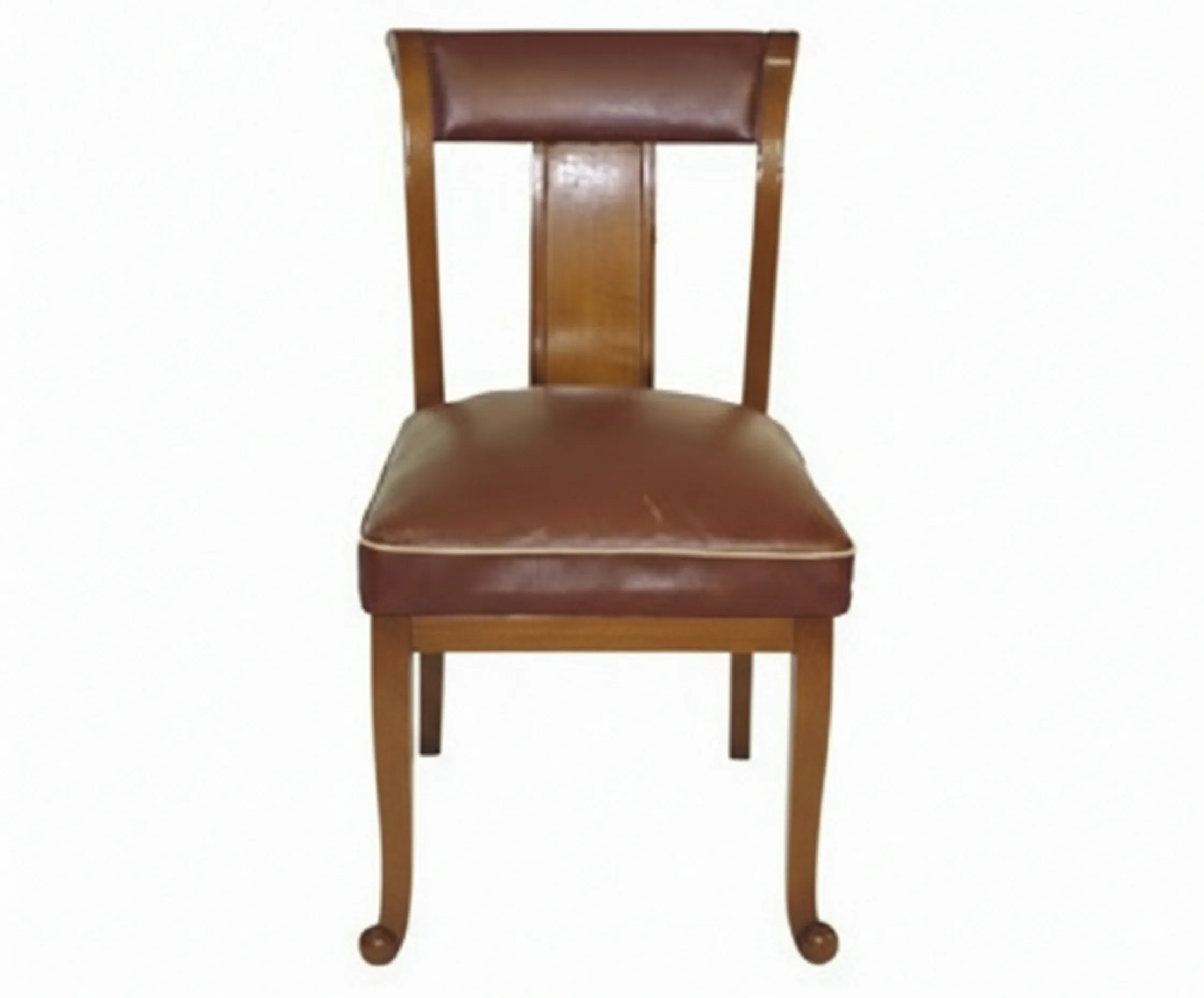
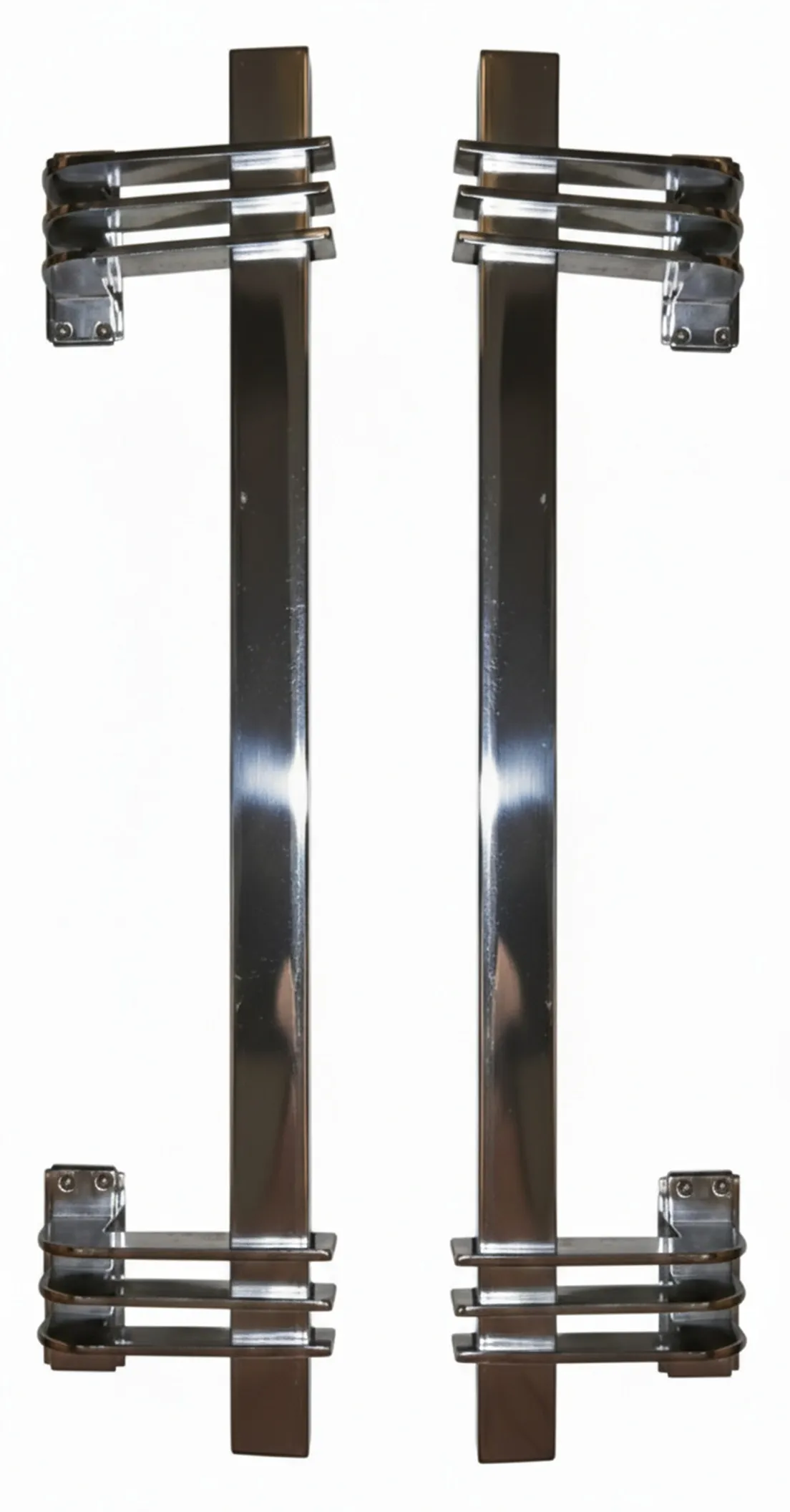
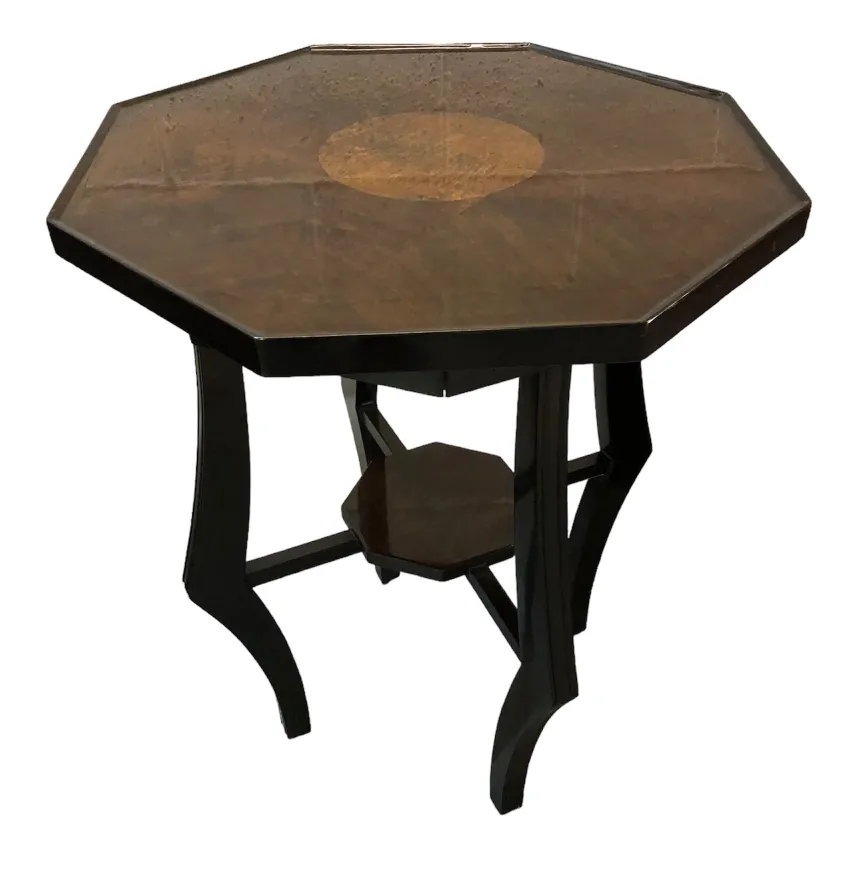
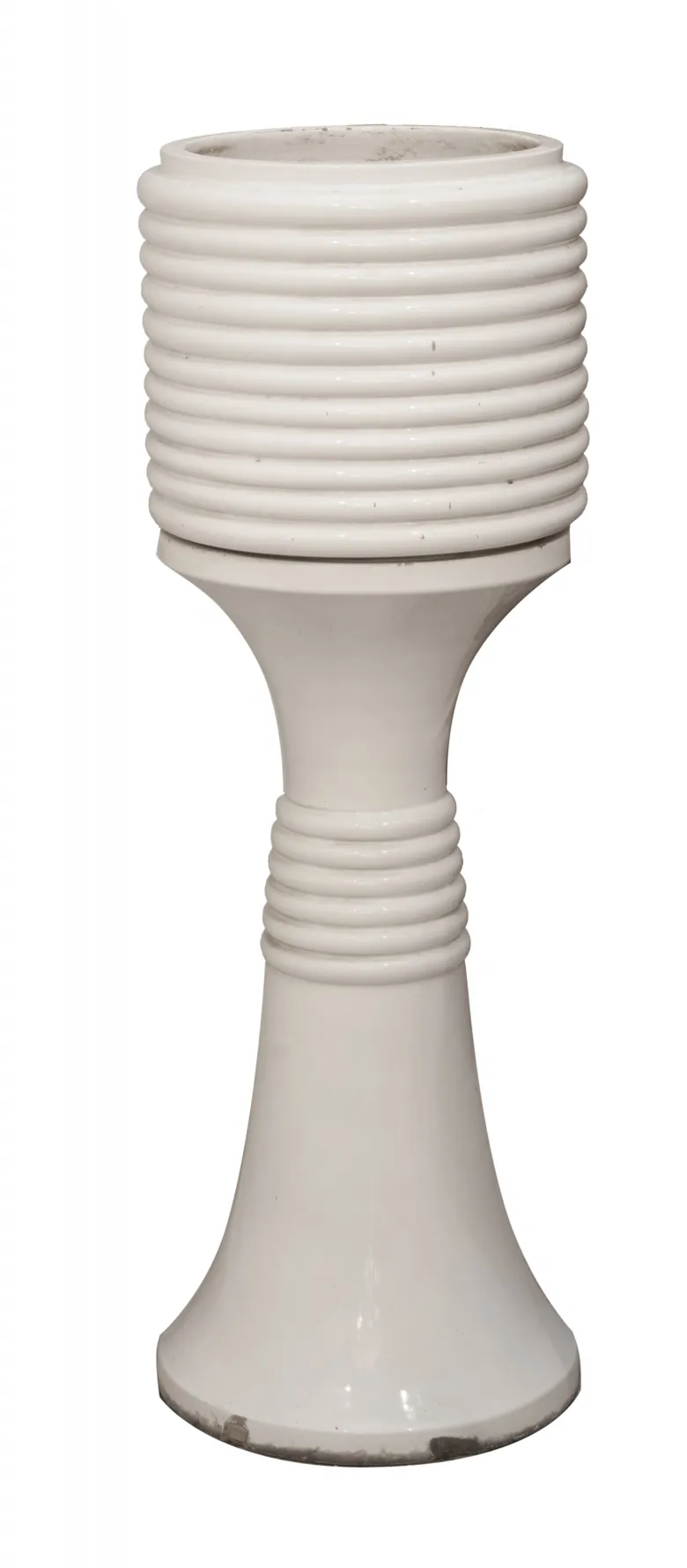
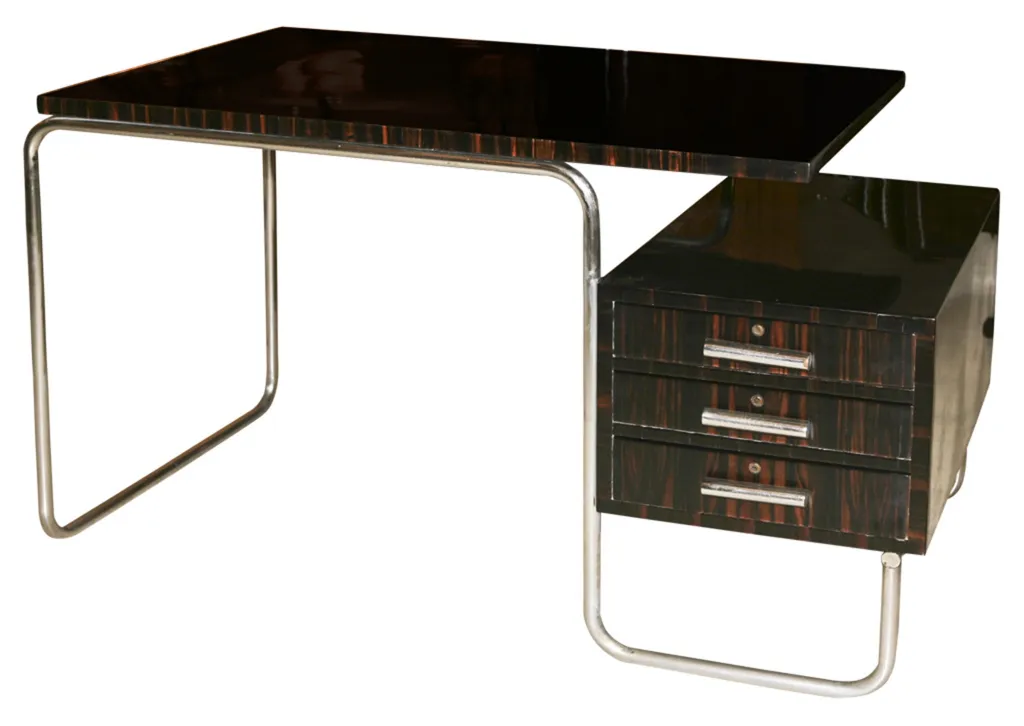
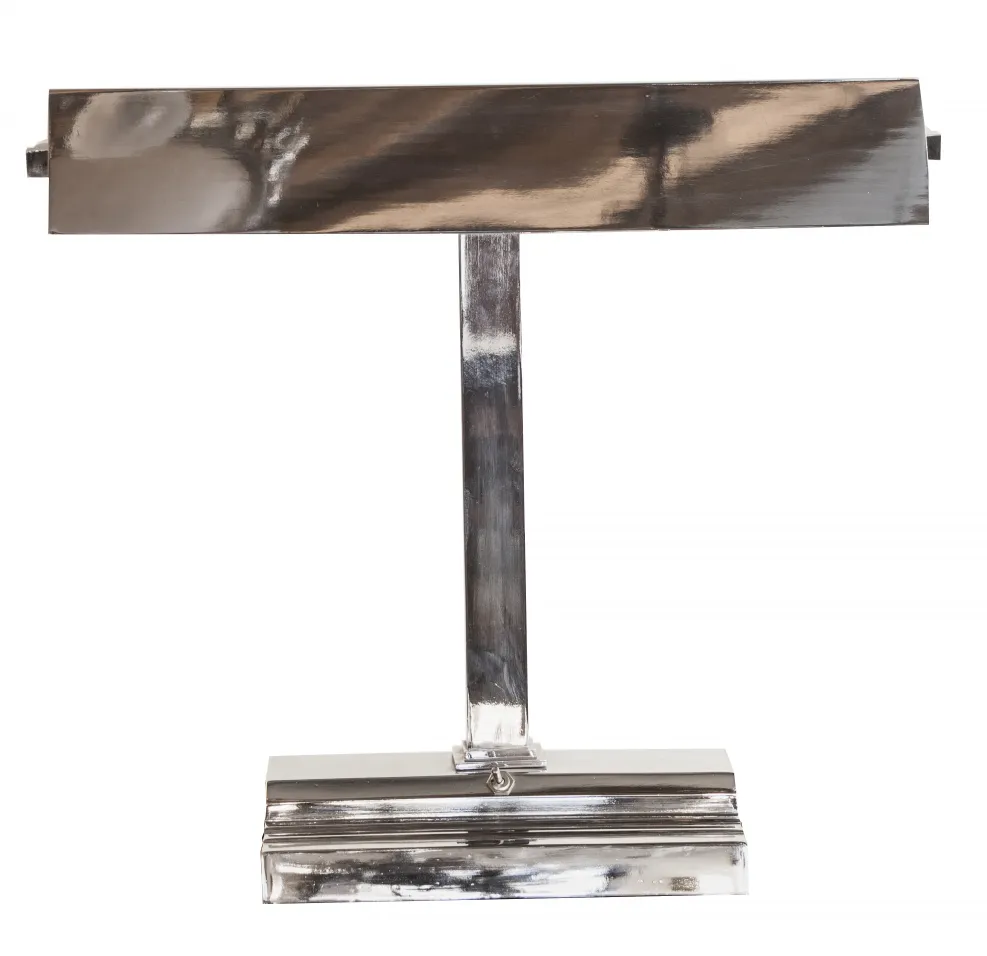
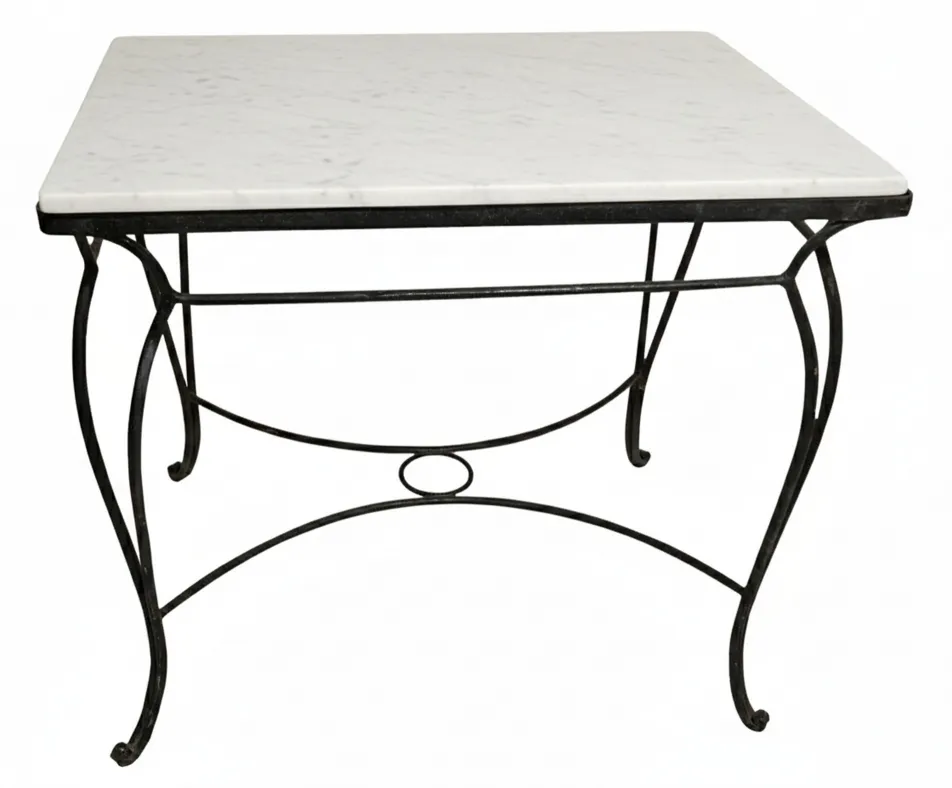
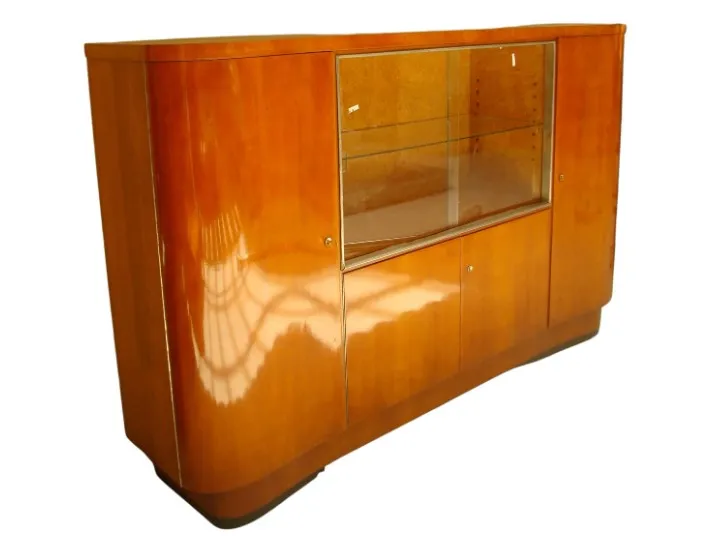
André Arbus, born in 1903, was an influential French designer, decorator, and interior architect, considered a key figure in the transition from Art Deco to post-war modern design in France.
Coming from a family of cabinetmakers and furniture manufacturers in Toulouse, Arbus trained in the family workshop, which gave him a deep knowledge of materials and artisanal techniques.
He began his career exhibiting his creations at the Salon des Artistes Décorateurs in the 1920s. He became one of the most sought-after designers by the Parisian bourgeoisie.
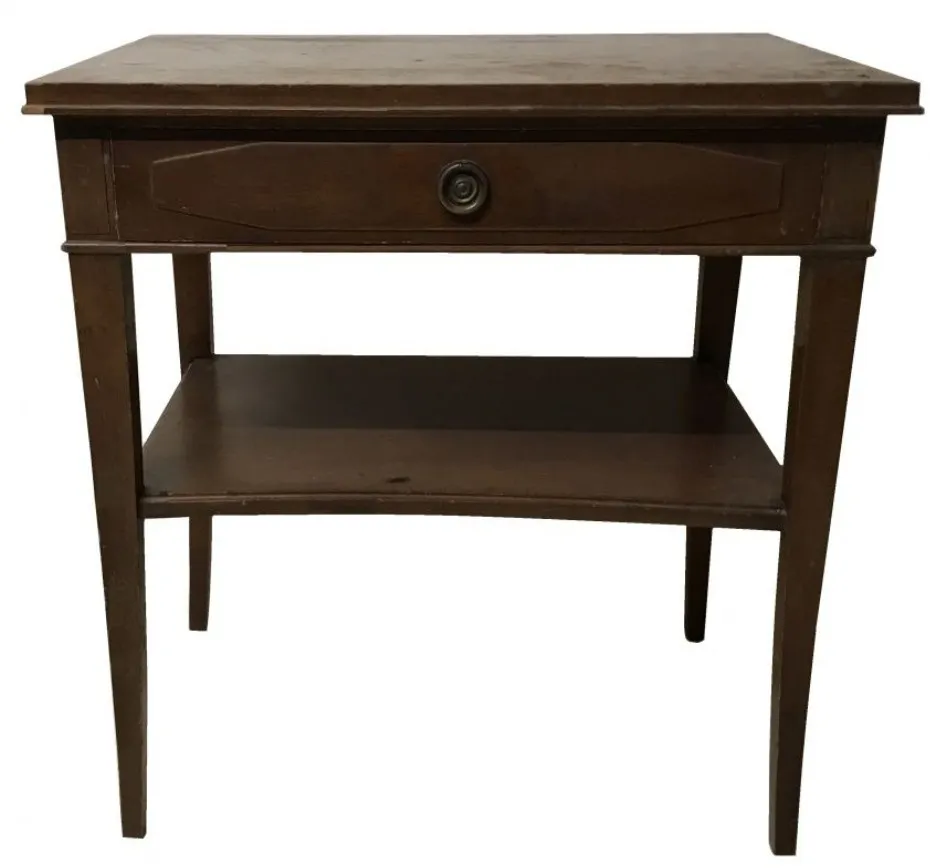
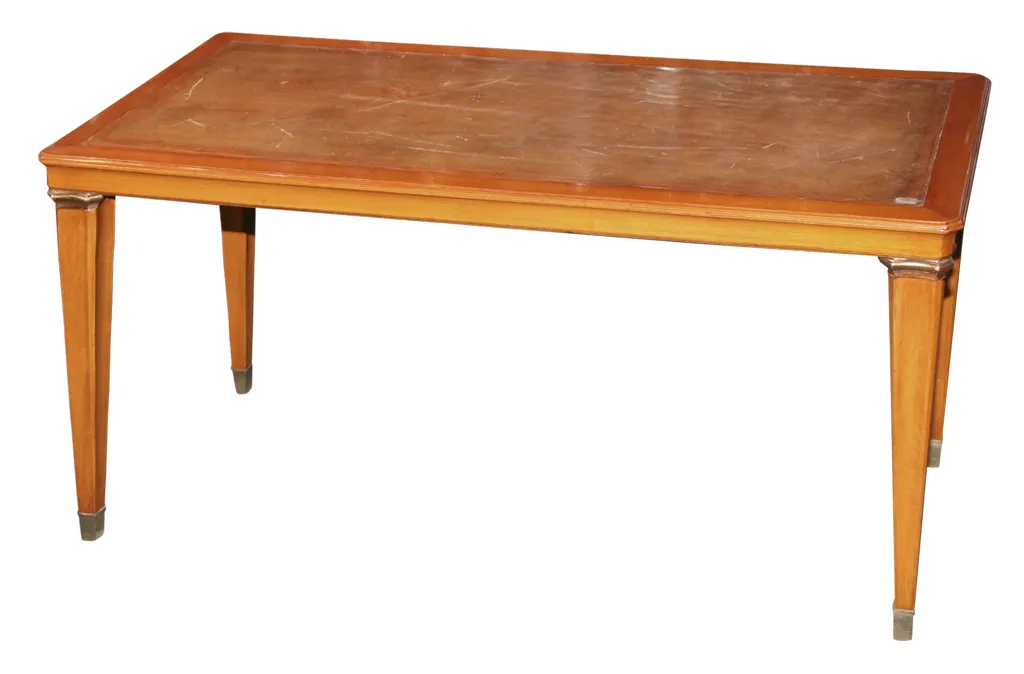
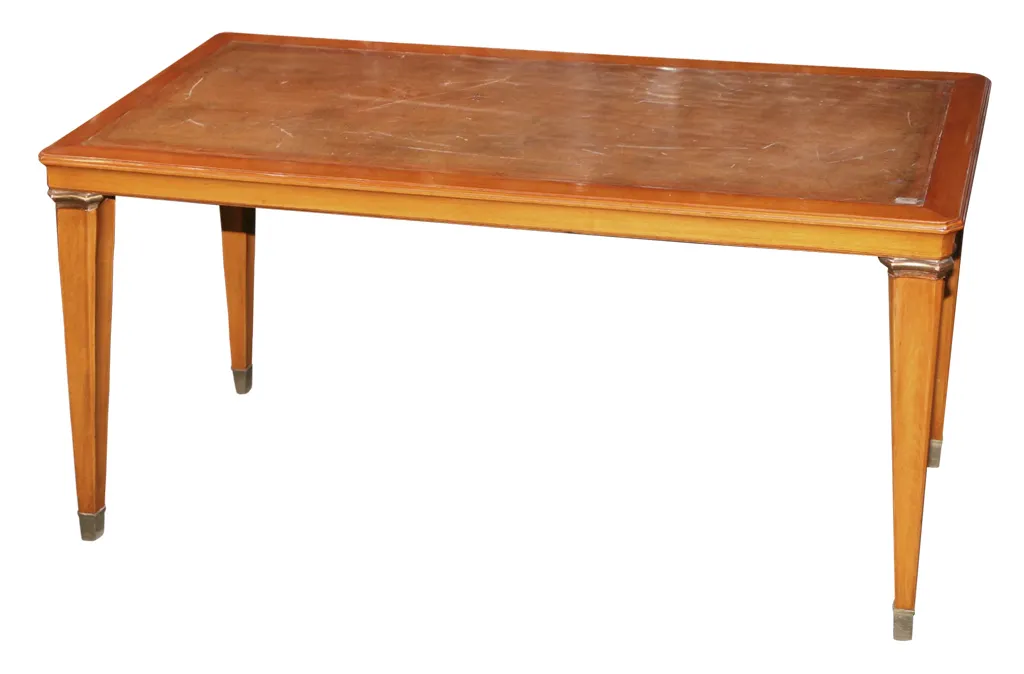
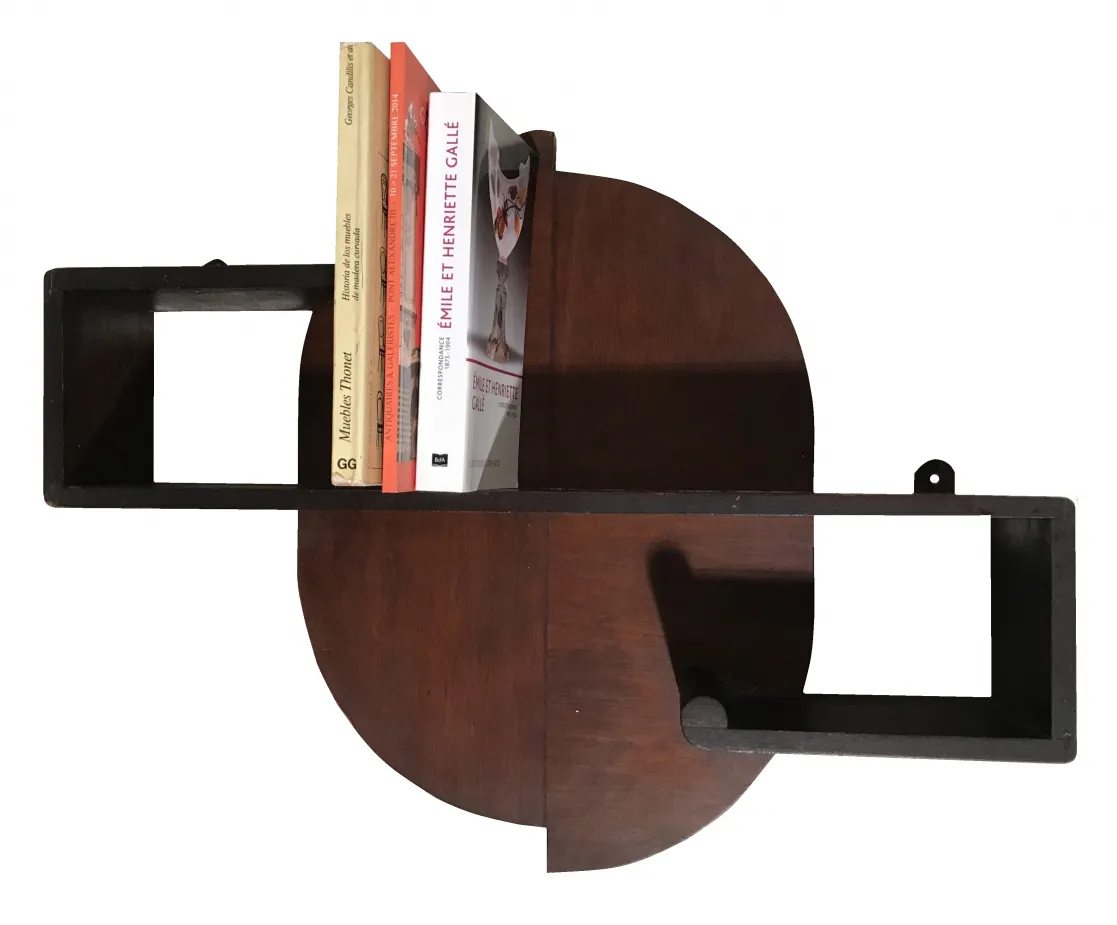
His creations are distinguished by their clean lines, pure volumes, and a simplicity that borders on minimalism, without ever losing sophistication.
He used precious woods such as ebony, rosewood, and sycamore, often combined with bronze, leather, parchment, and plaster.



 Share
Share