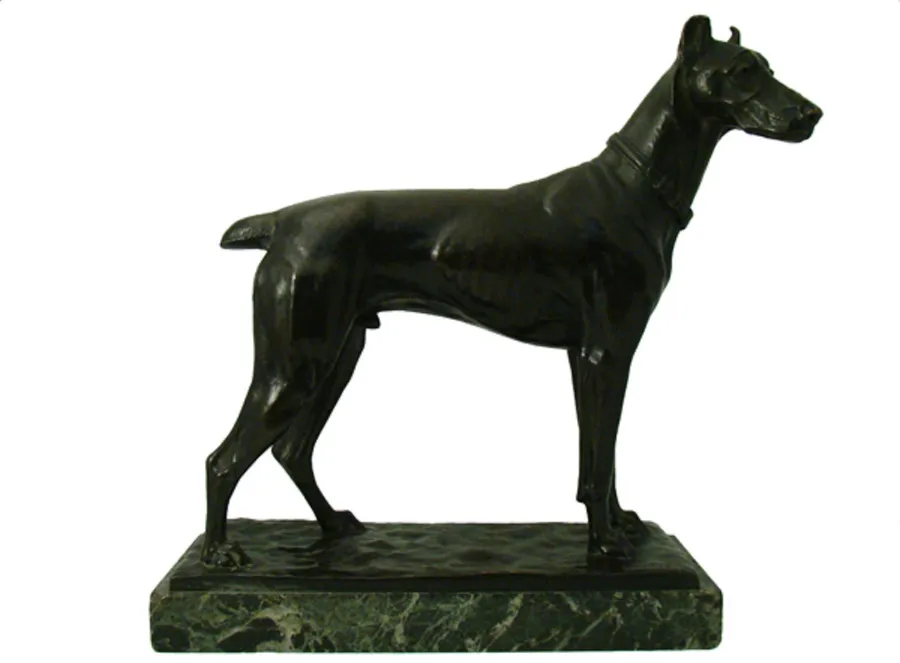
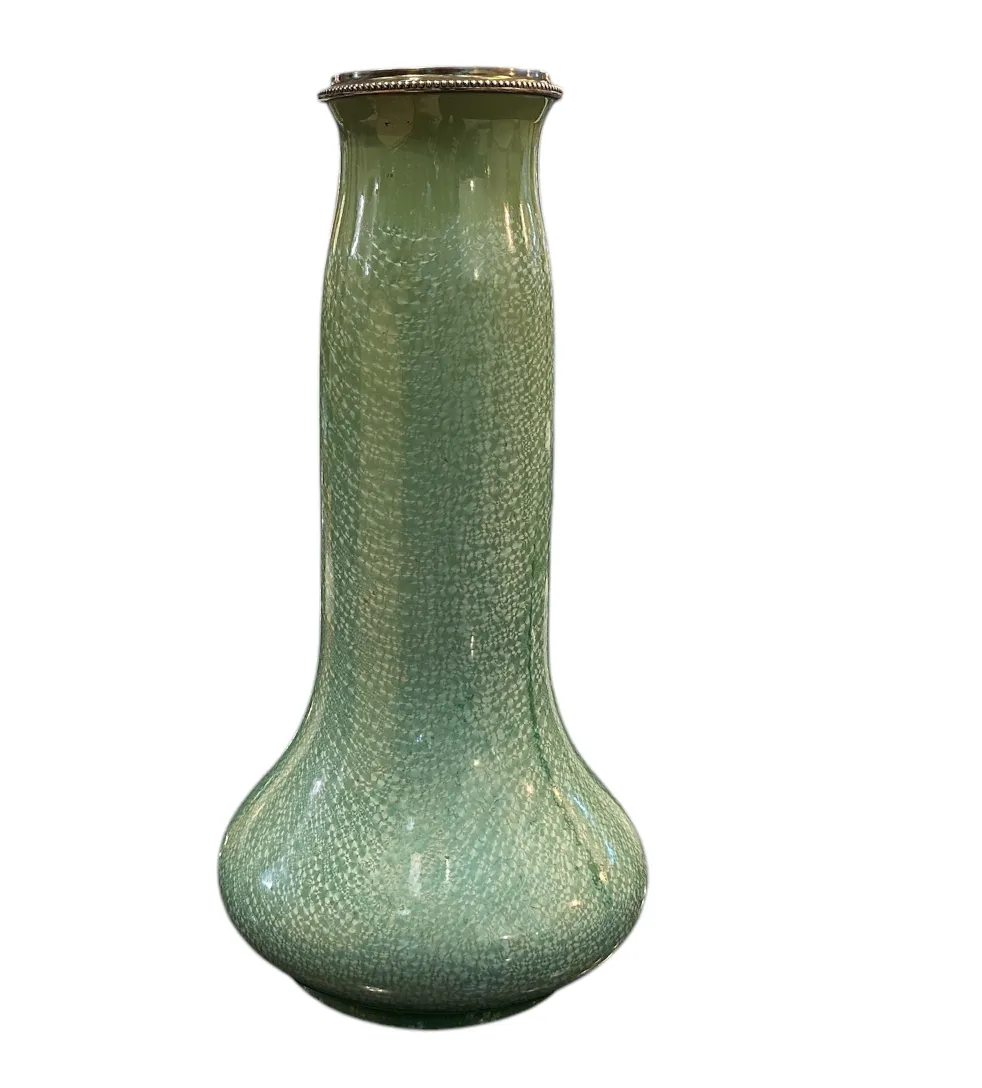
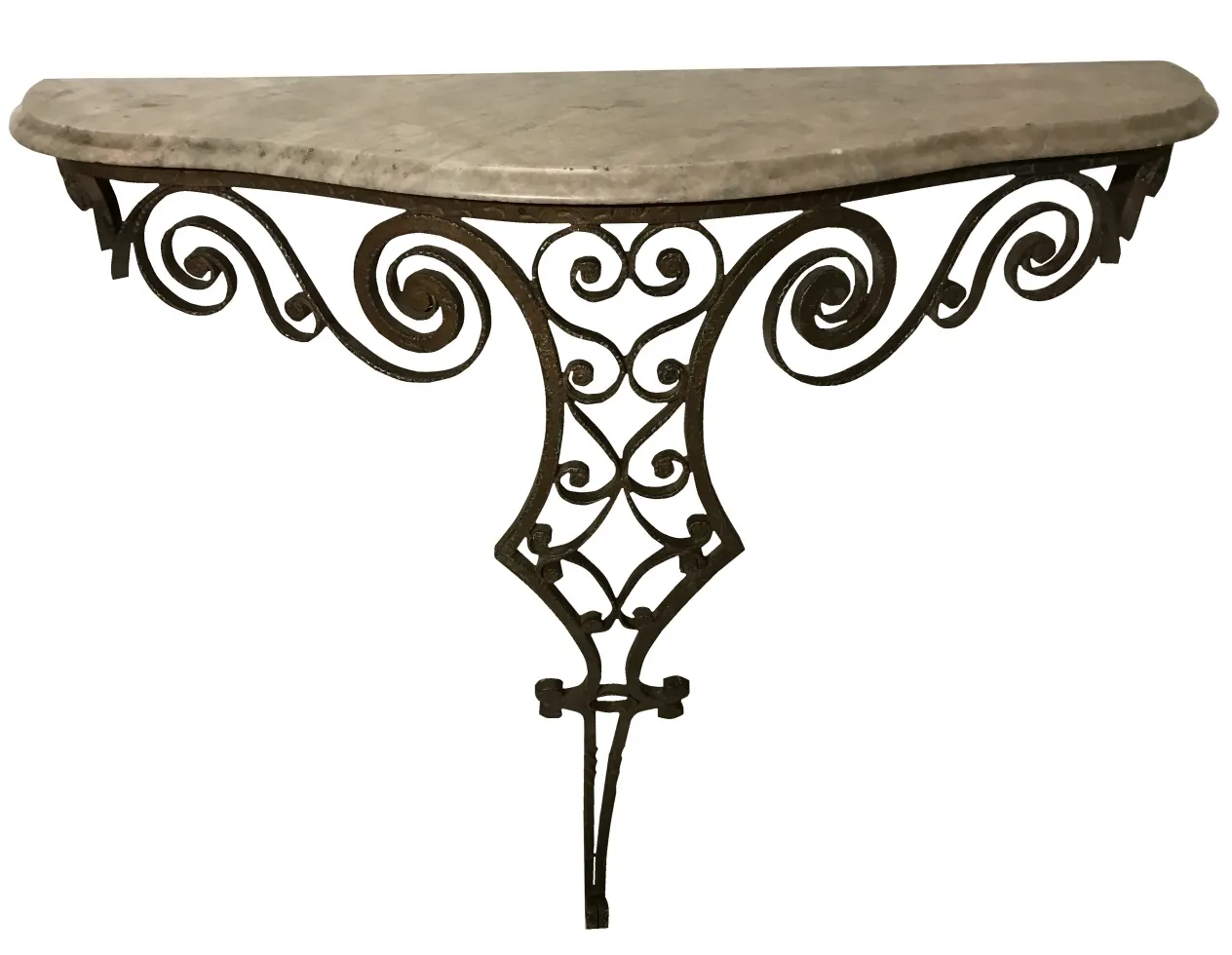
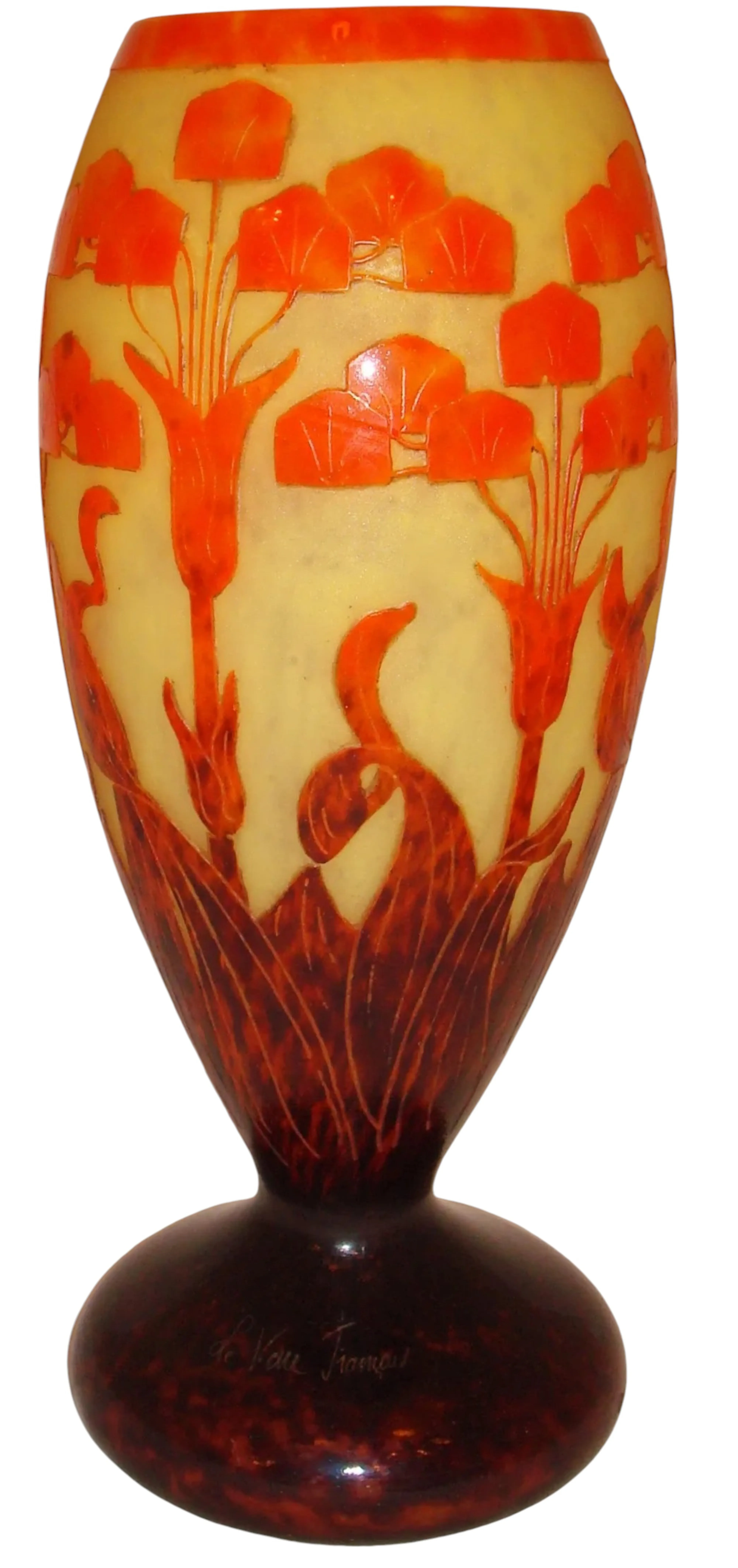
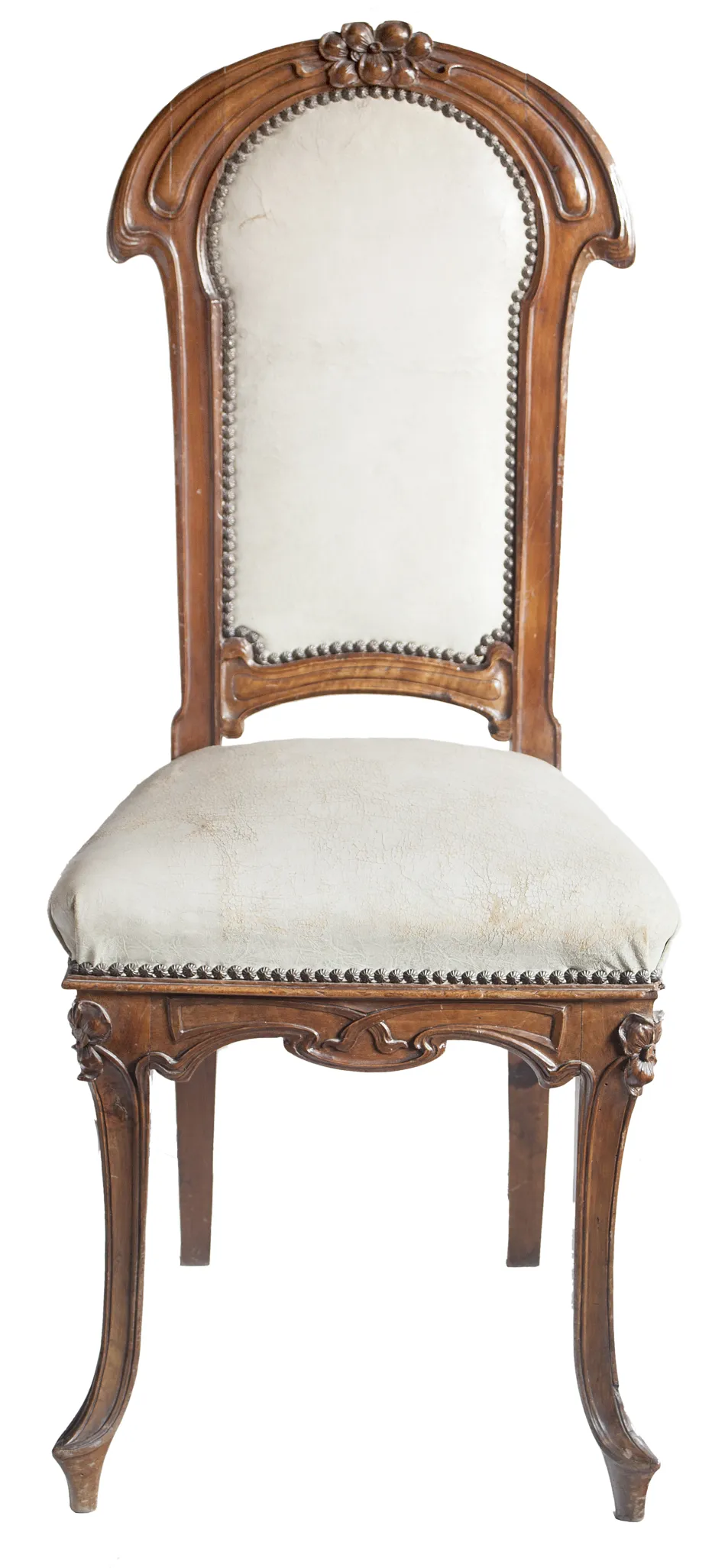
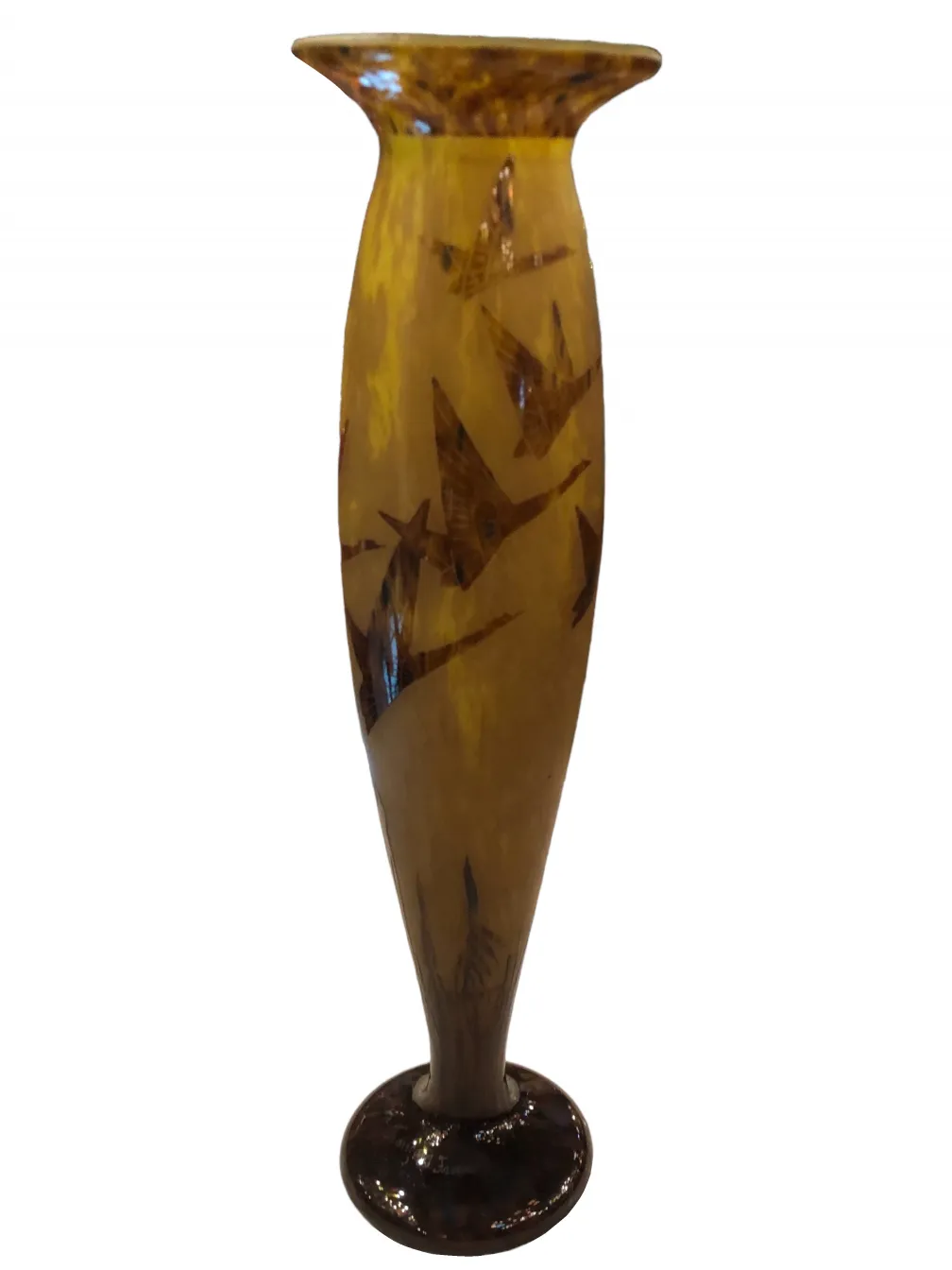
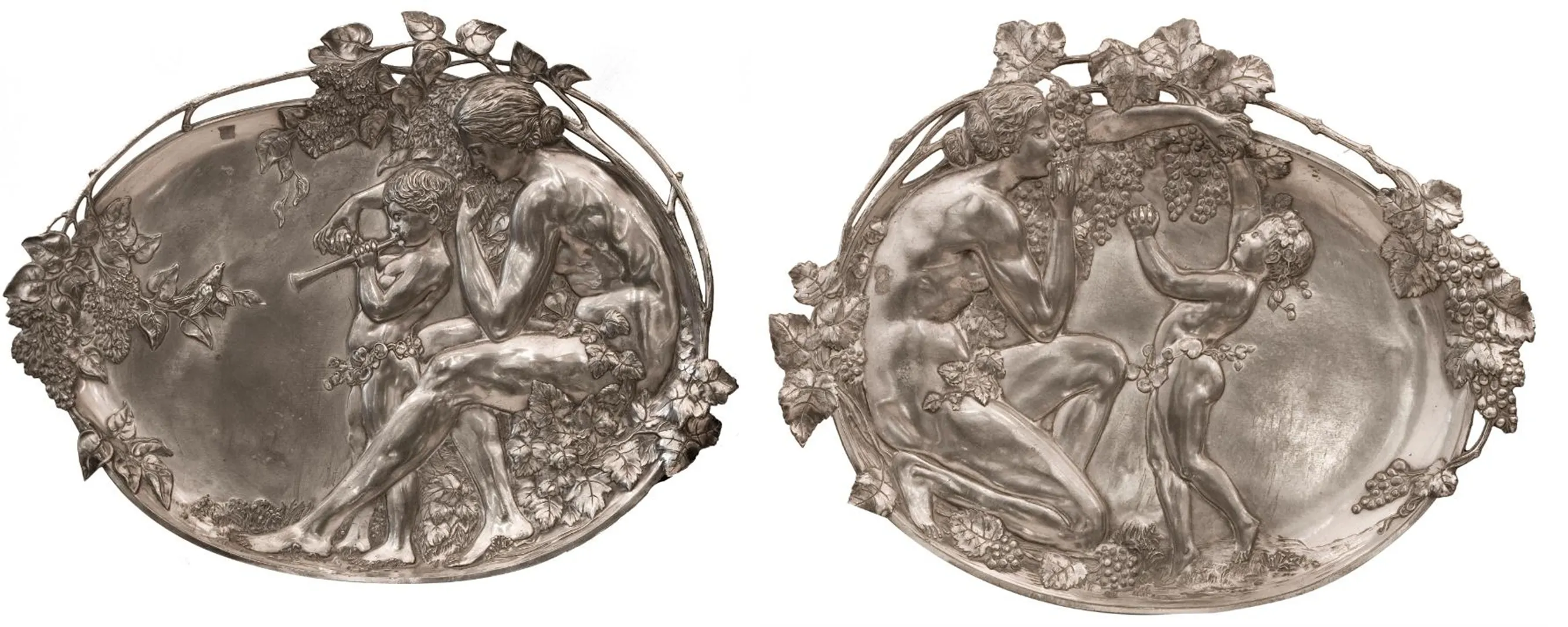
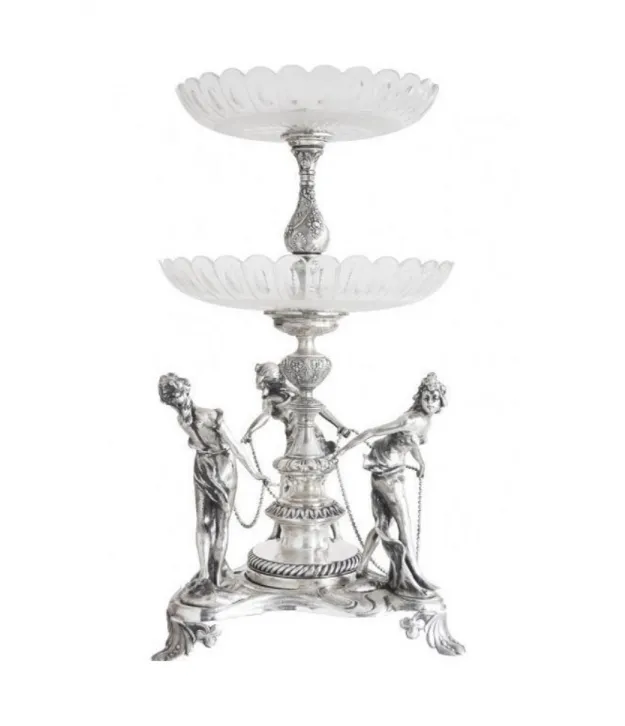
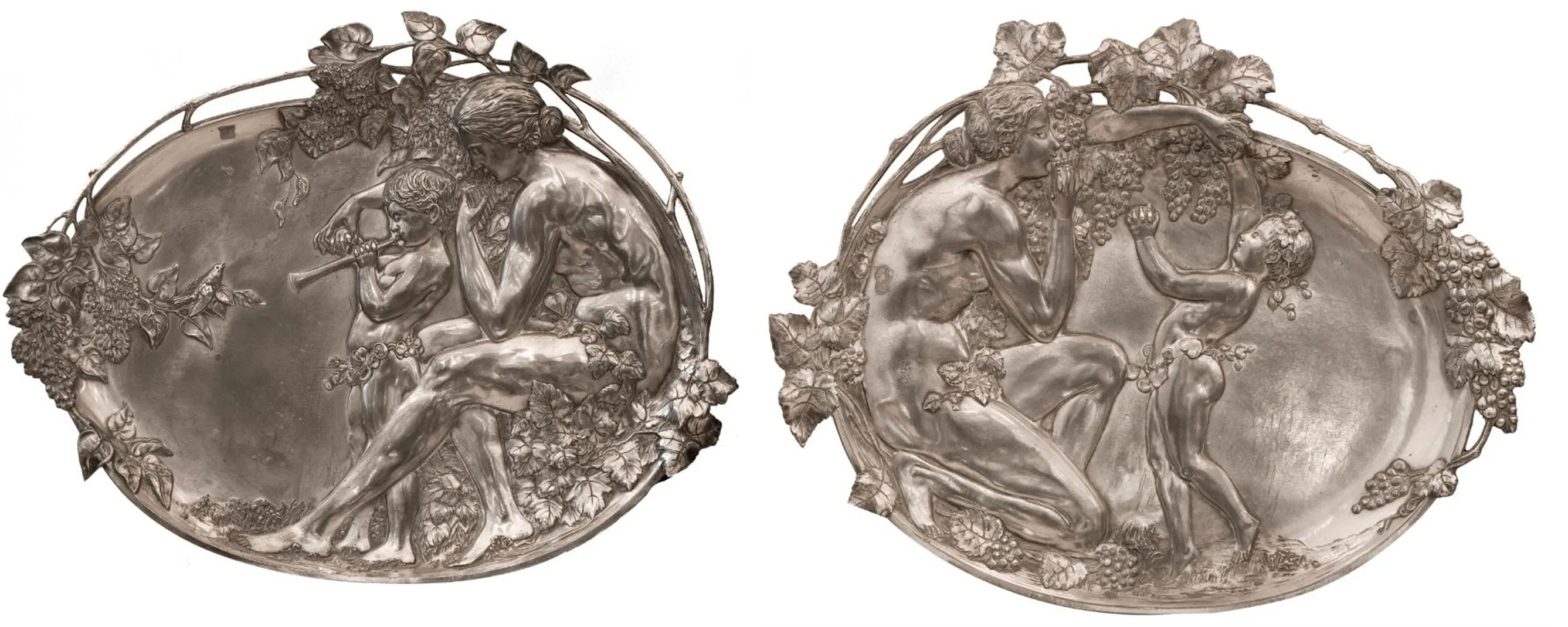
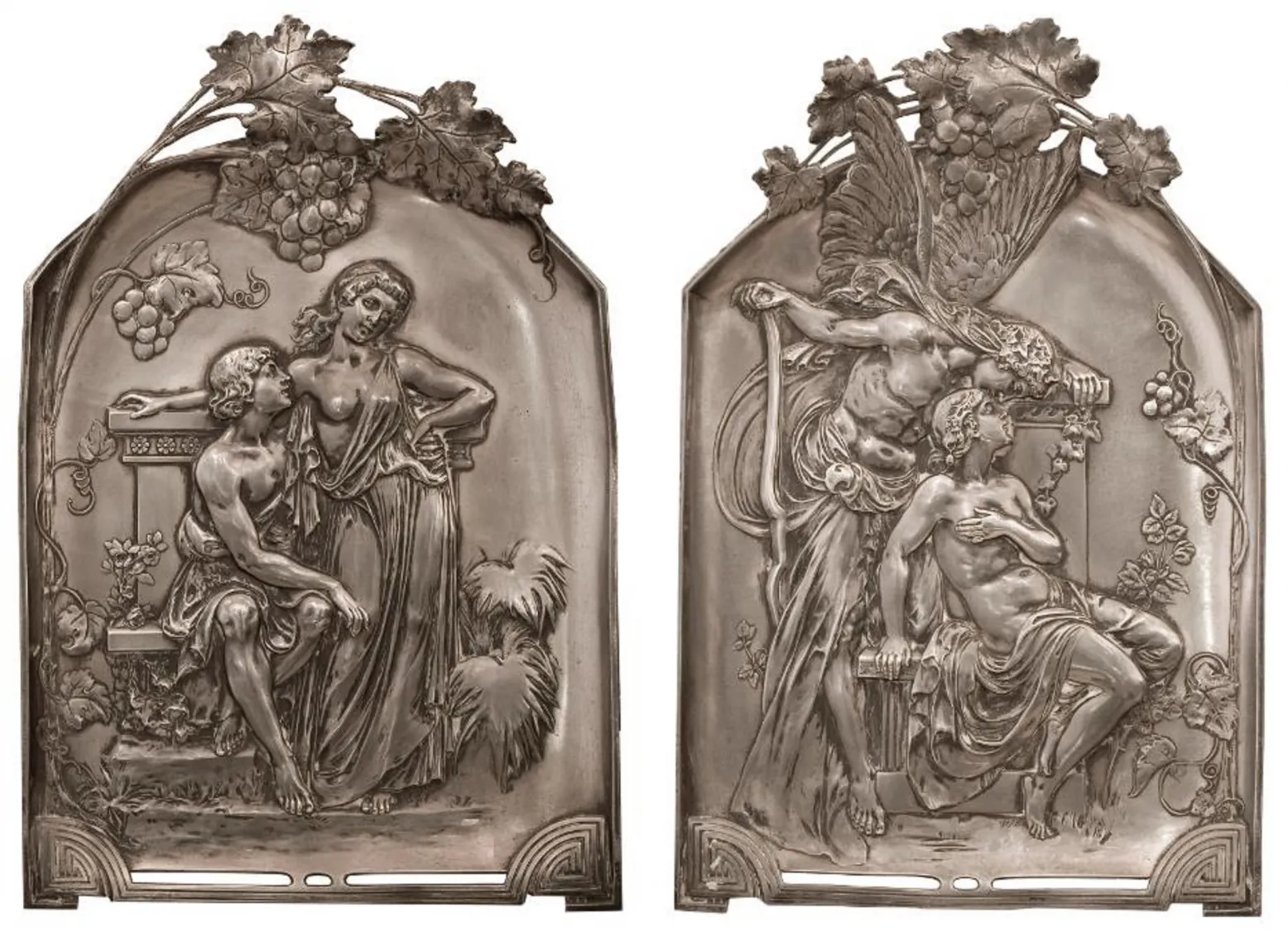
'WMF' was founded in 1853 with 16 workers, influenced by the Art Nouveau style.
In 1914, factories were opened in Germany, Poland, and Austria.
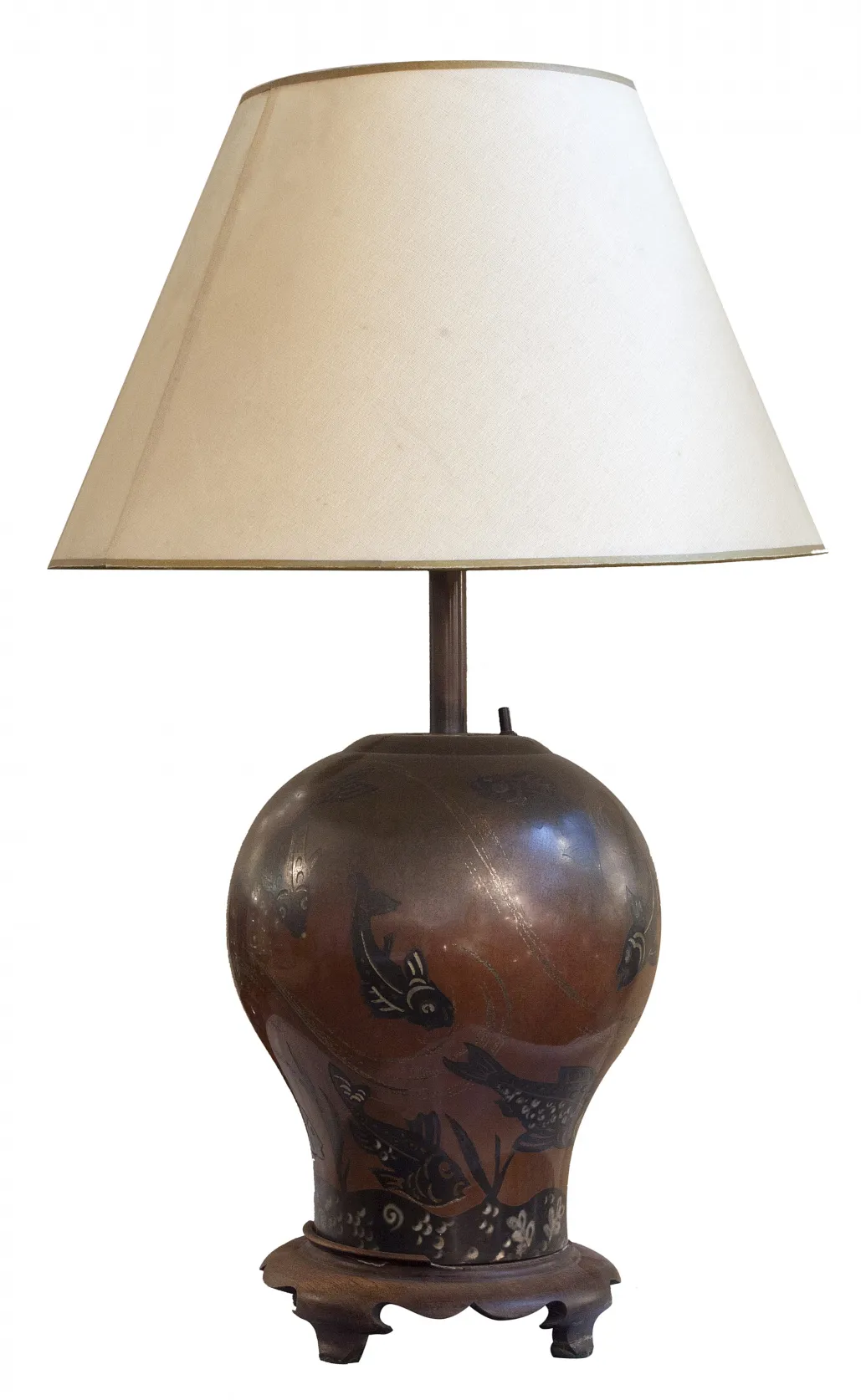
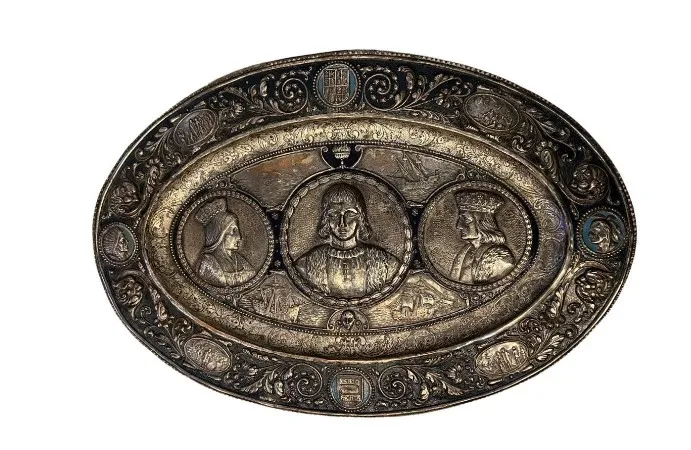
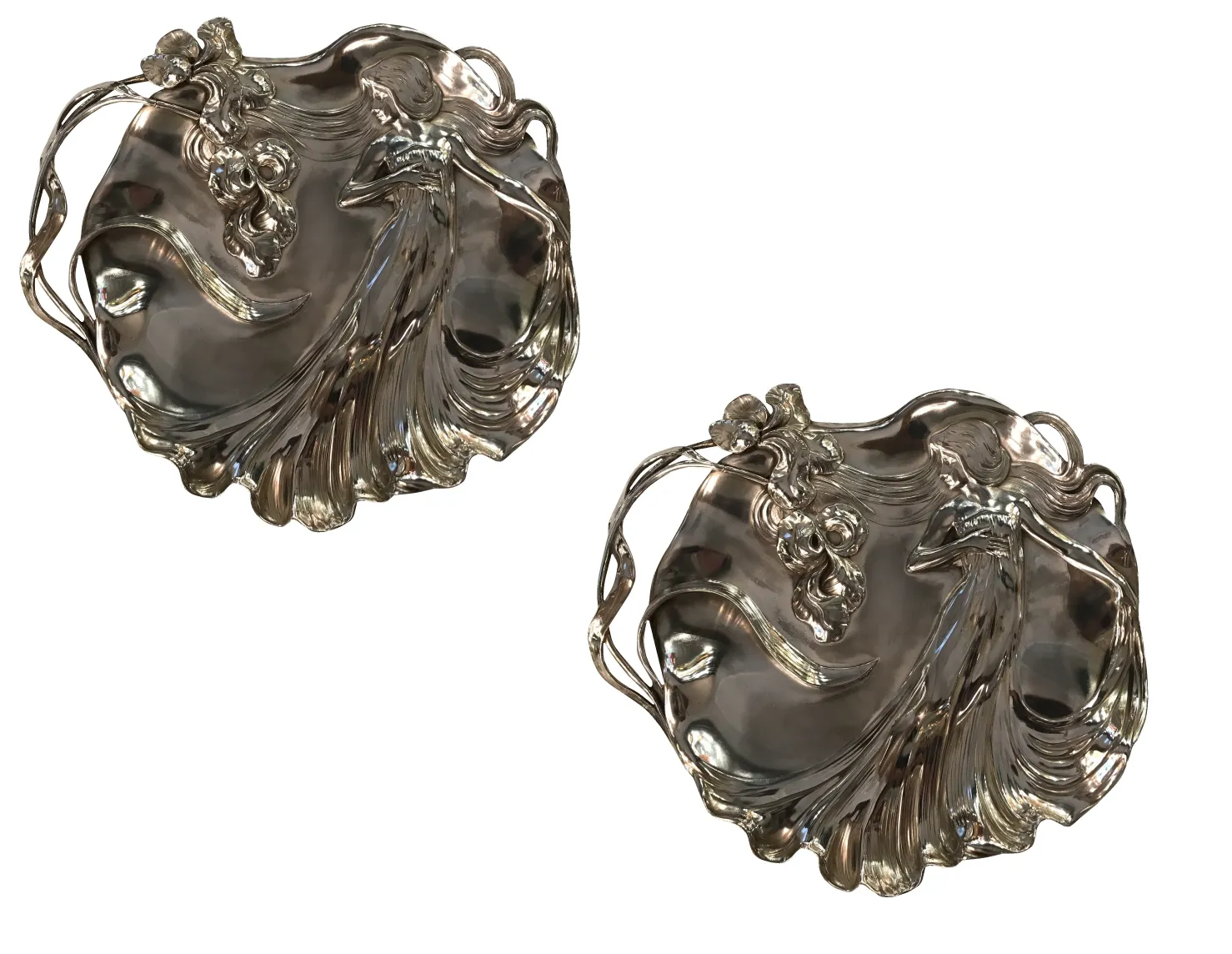
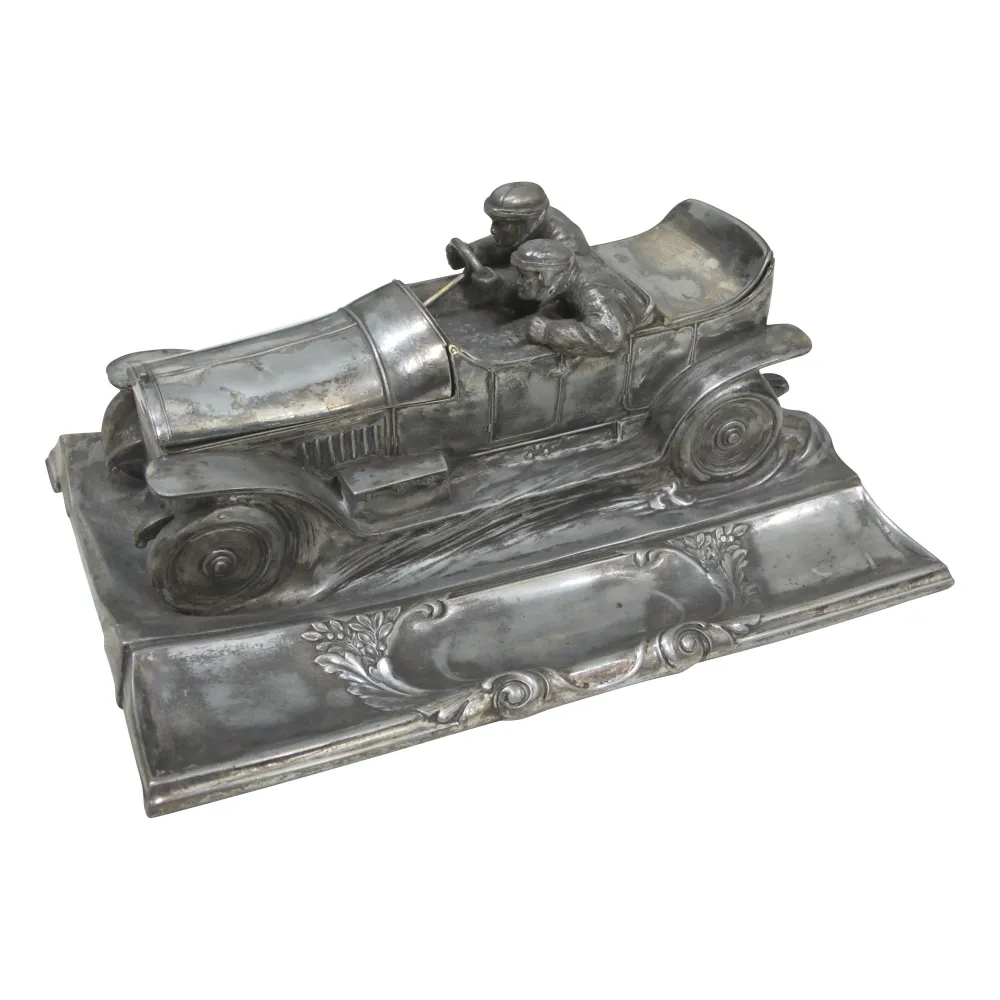
The company's first catalogs appeared in 1856 and 1859. The products were made of silver-plated metal and crystal. Among their works are candlesticks, planters, punch bowls, cardholders, vases, fruit bowls, and cutlery, among others.
The company was awarded several prizes, and its international success heralded a period of greater expansion.
German Emperor Wilhelm II presented a small museum at Harvard University.
In 1905, WMF acquired a majority stake in the companyAG Orivit, which manufactures products under the name "Orivit".



 Share
Share





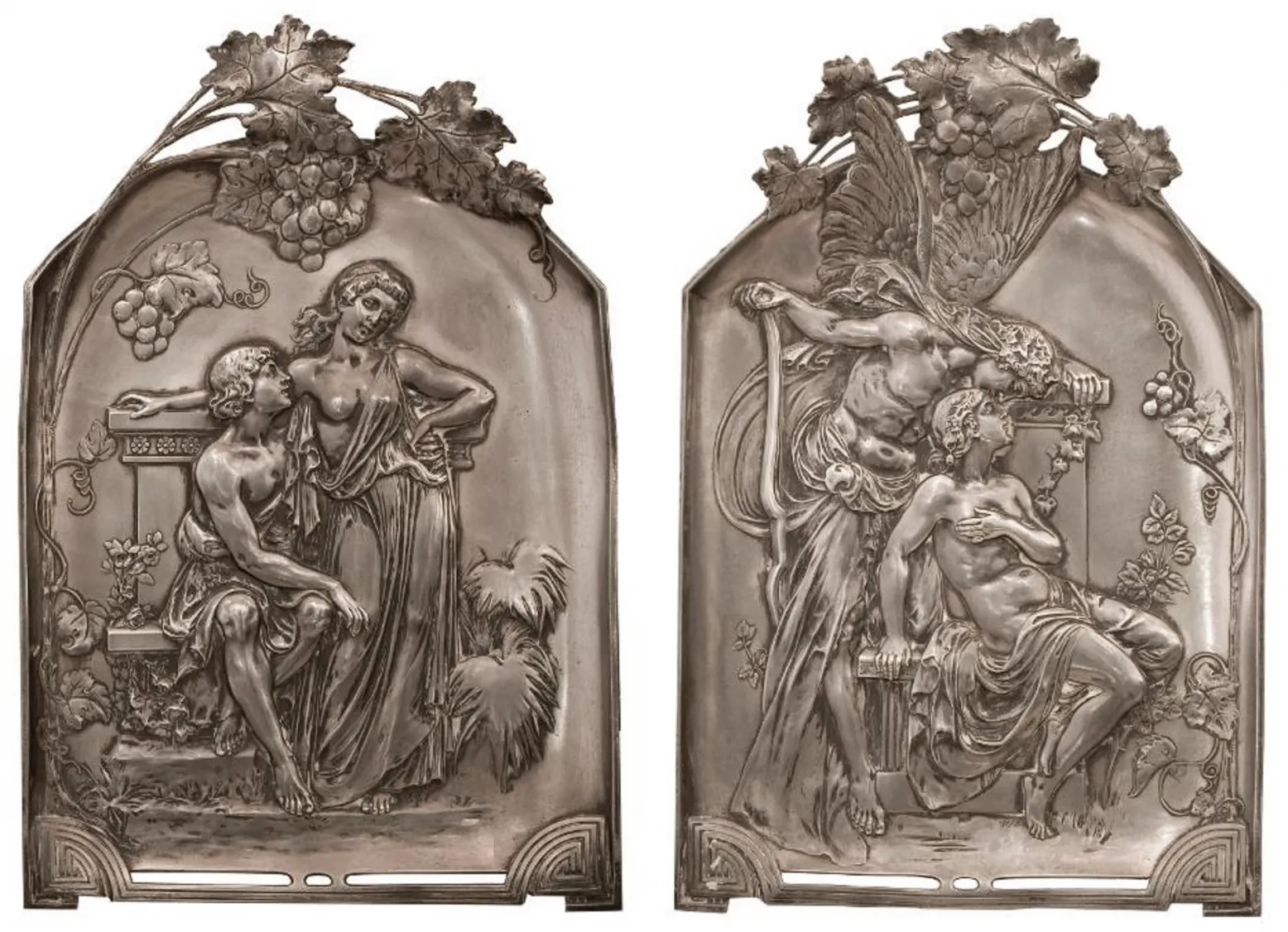
.webp "Antique wall plaques with romantic images")
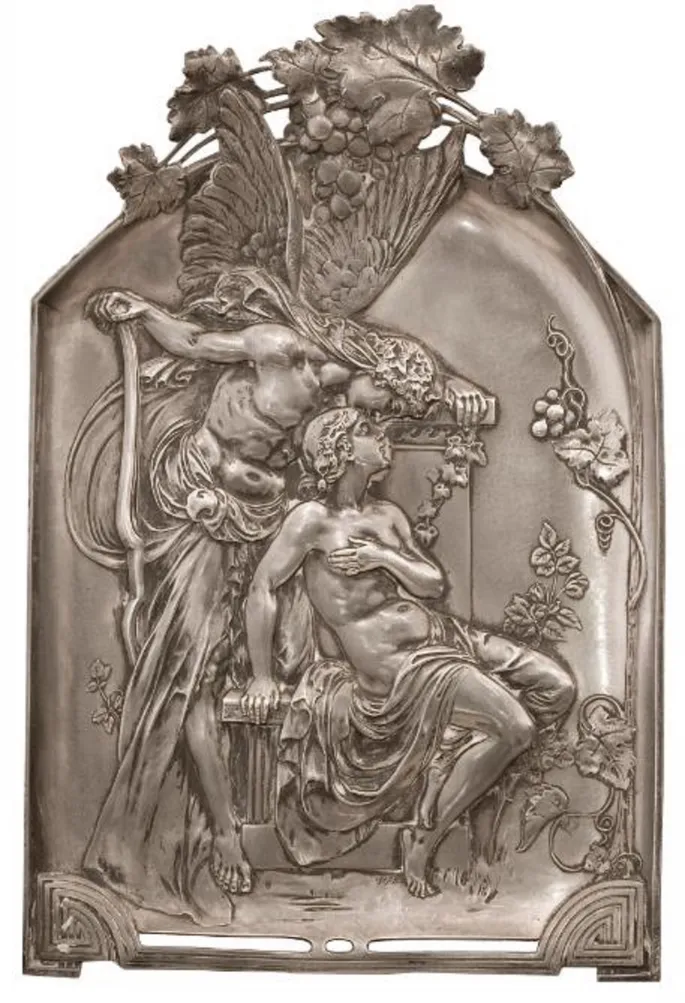
.webp "Antique 2 wall plaques (WMF) featuring human figures.")
.webp "Elegant antique 2 wall plaques with designs (WMF)")
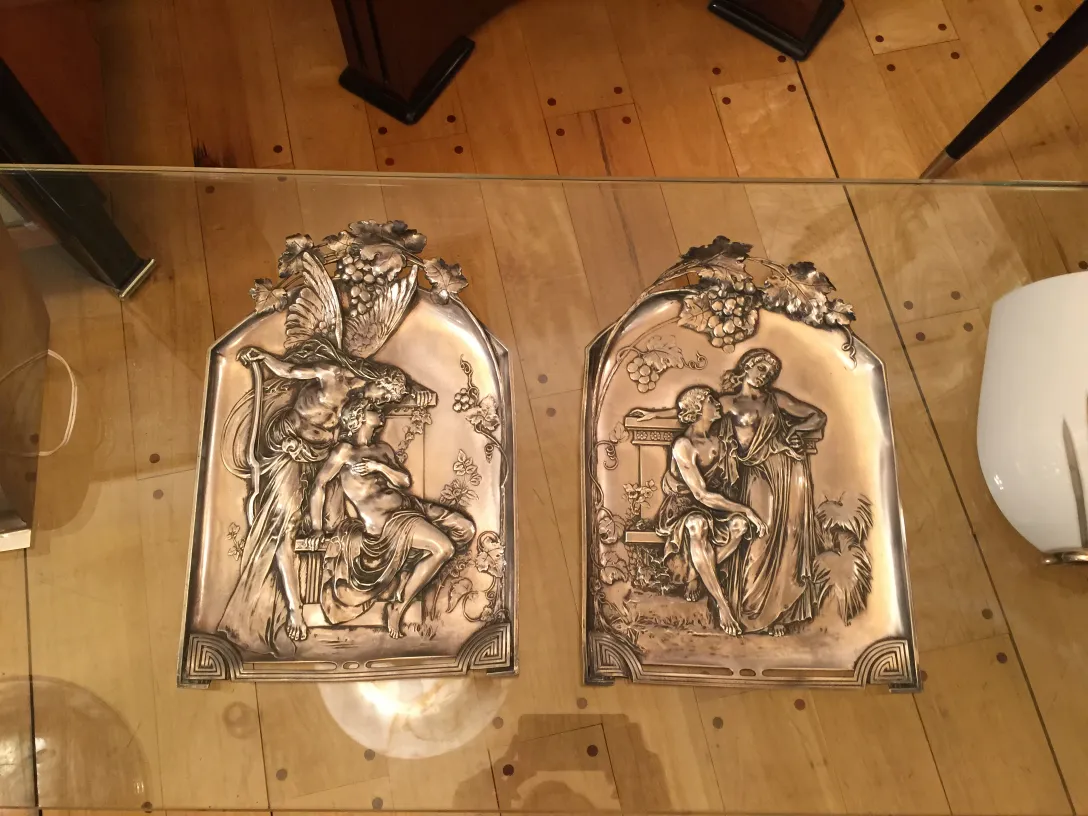
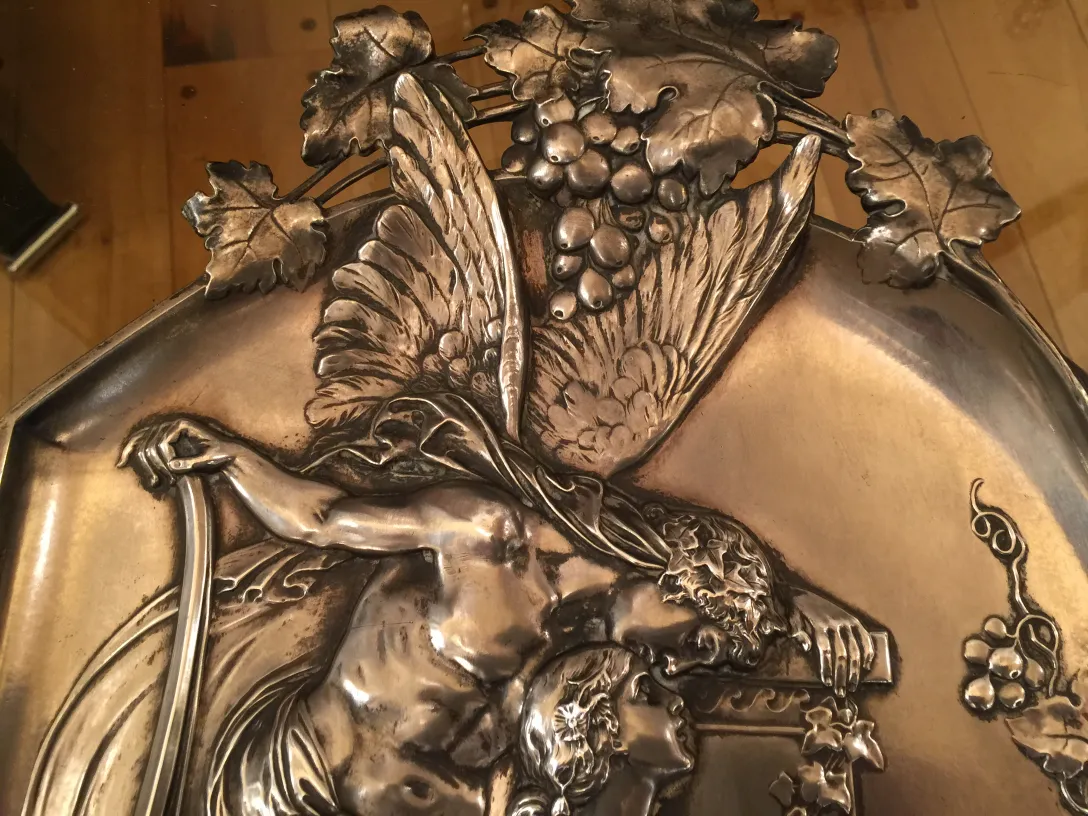
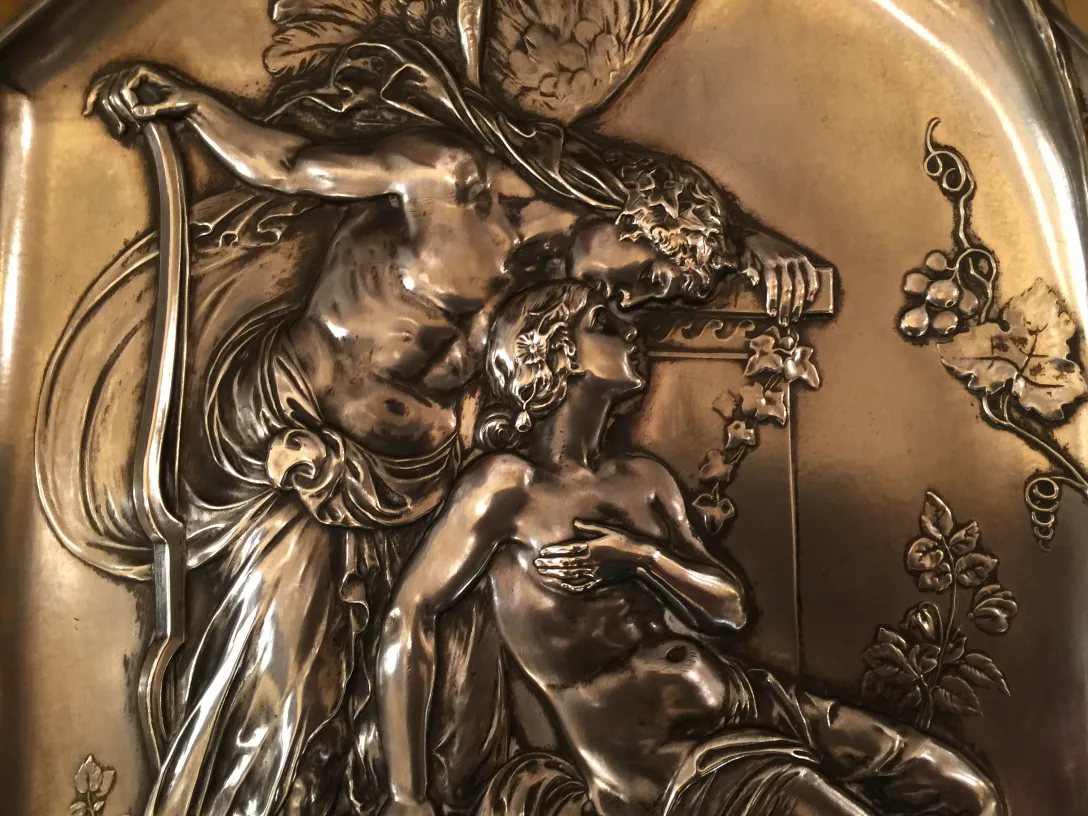
.webp "beautiful antique 2 wall plaques (WMF)")
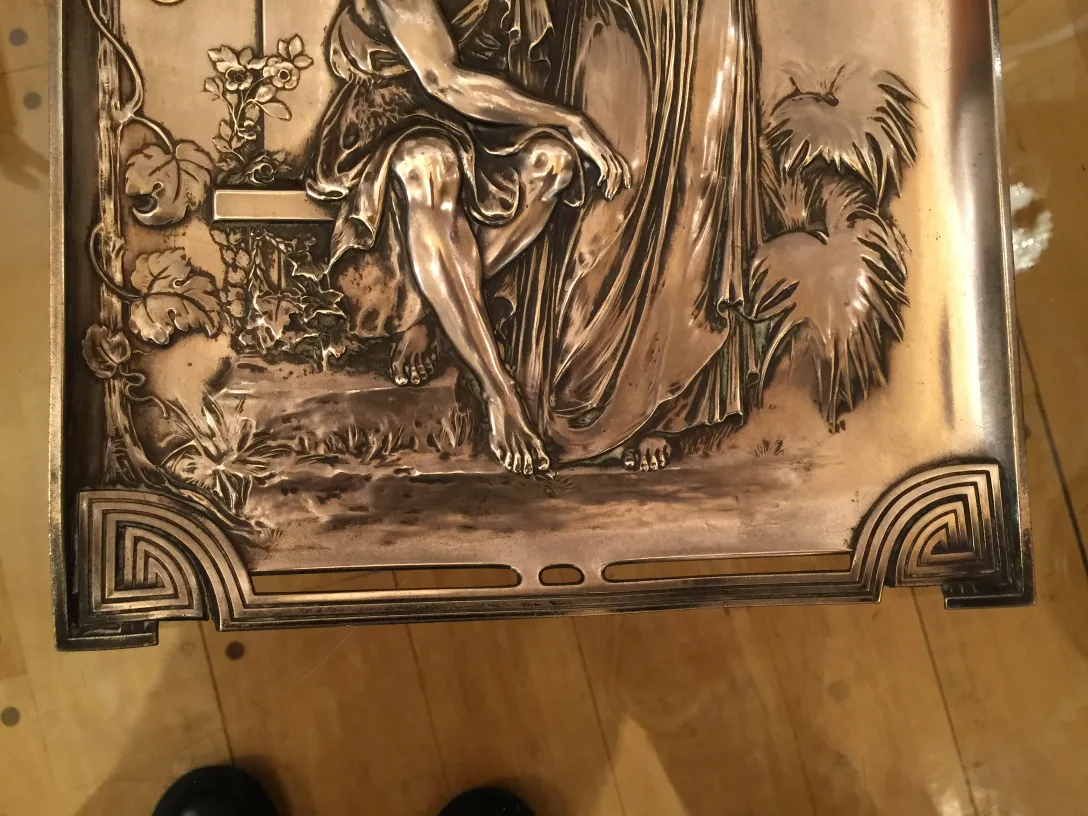
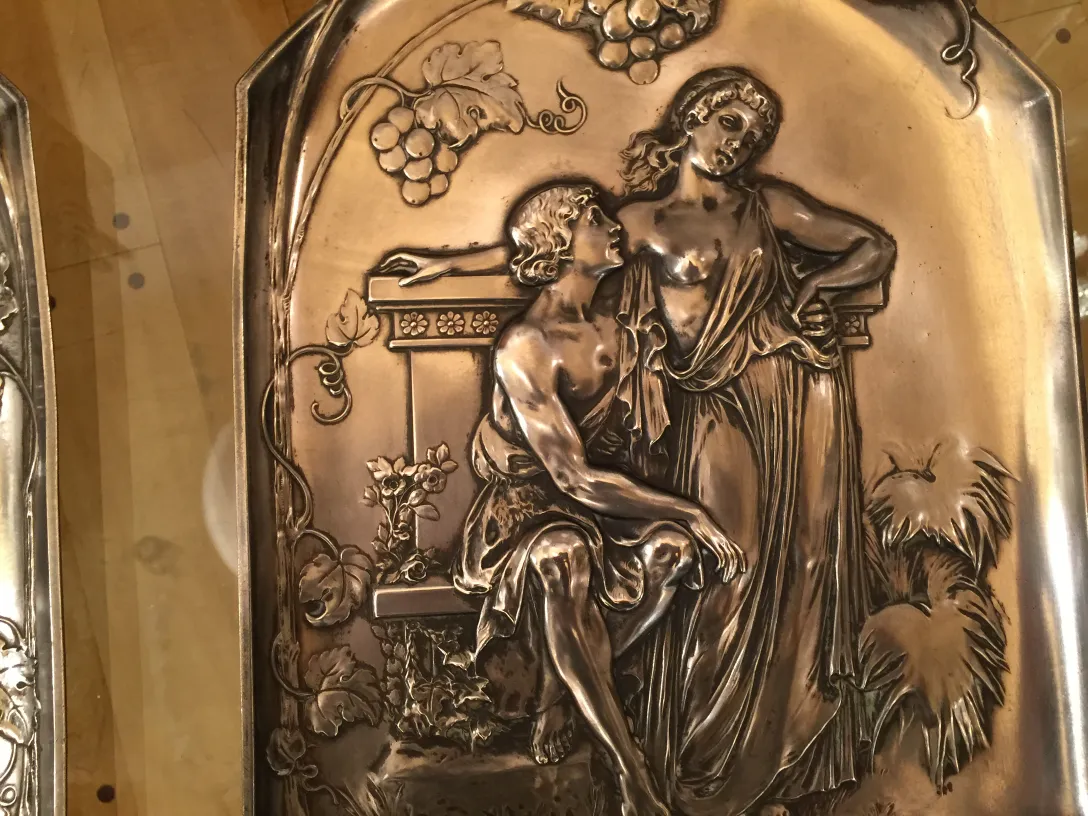
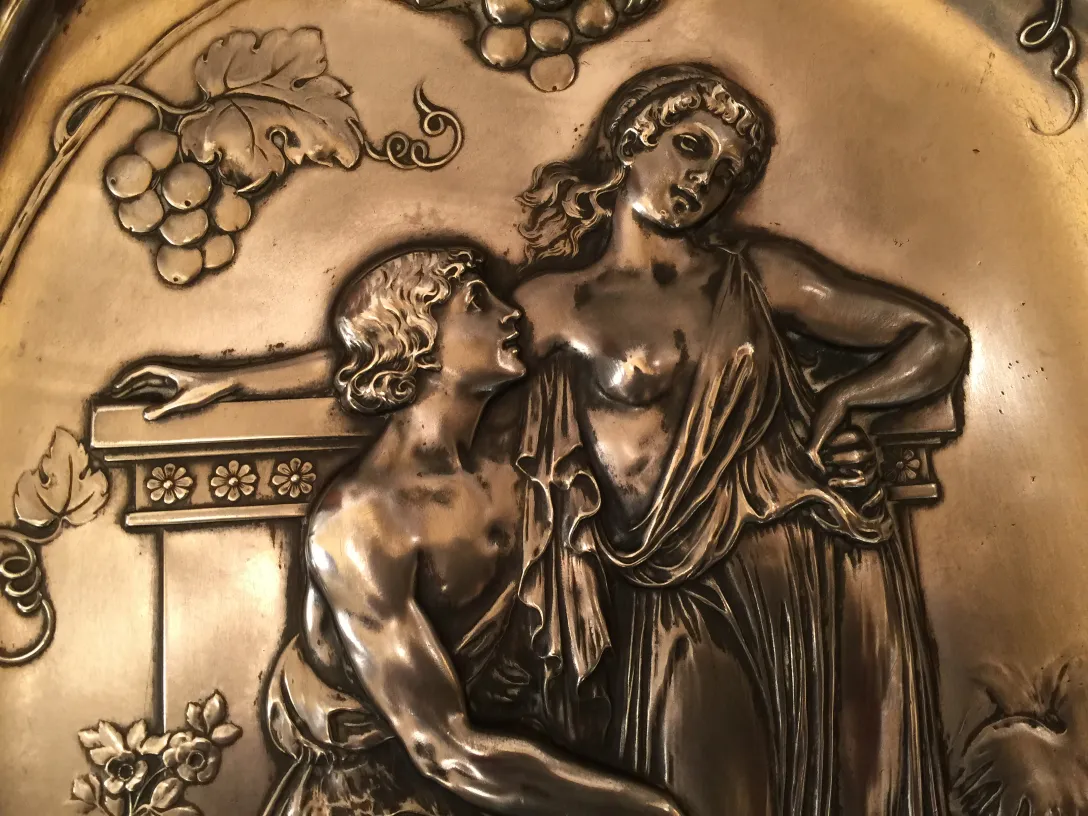
.webp "beautiful antique wall plaques with grapes")
.webp "antique 2 wall plaques decorative with leaf design")
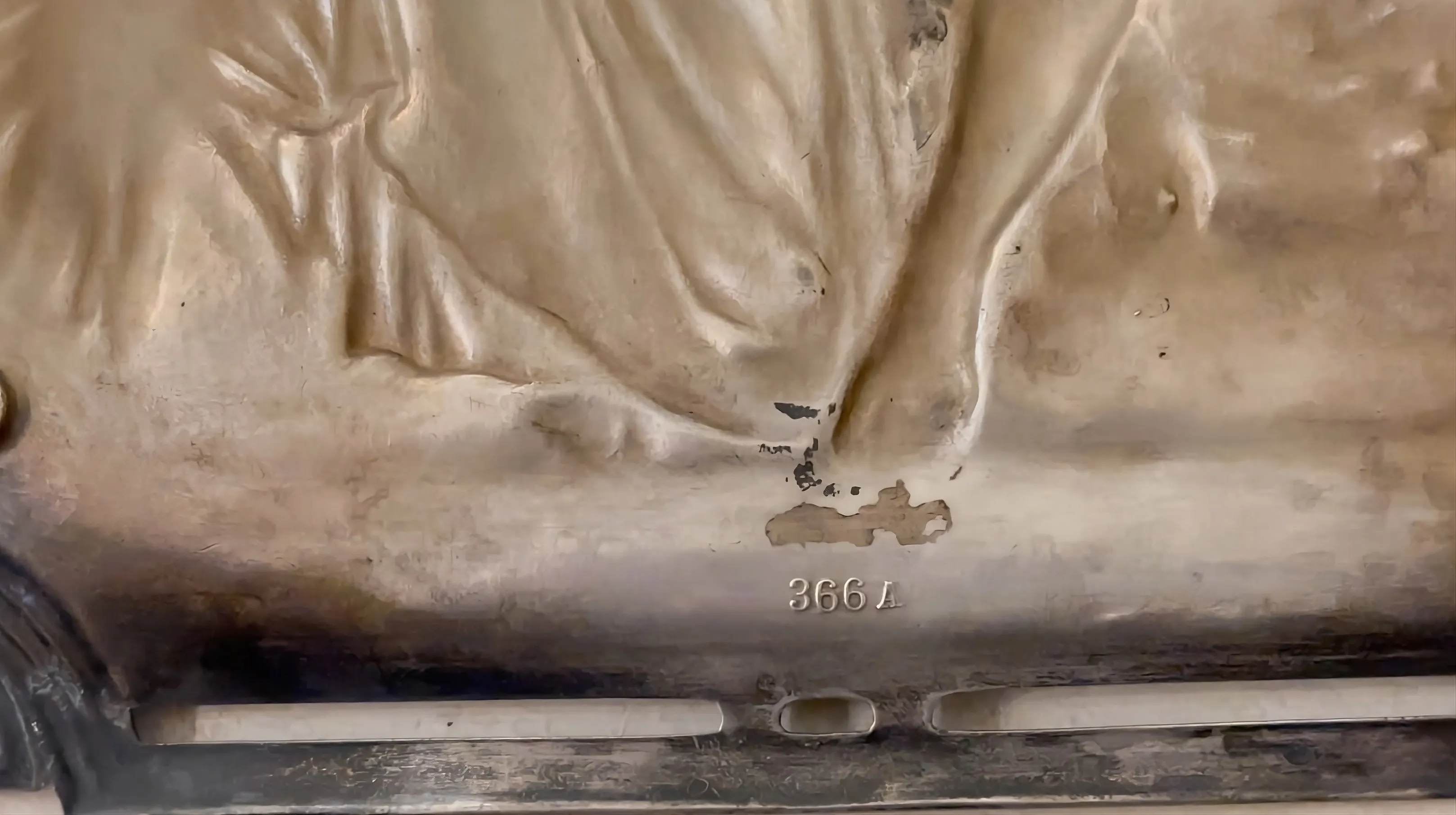
.webp "Decorate your walls with 2 antique wall plaques (WMF)")
.webp "beautiful antique decorative wall plaques (wmf)")
-decorative.webp "2 antique wall plaques (WMF) with striking design")
-decorative.webp "Antique WMF Wall Plaques with Decorative Design")
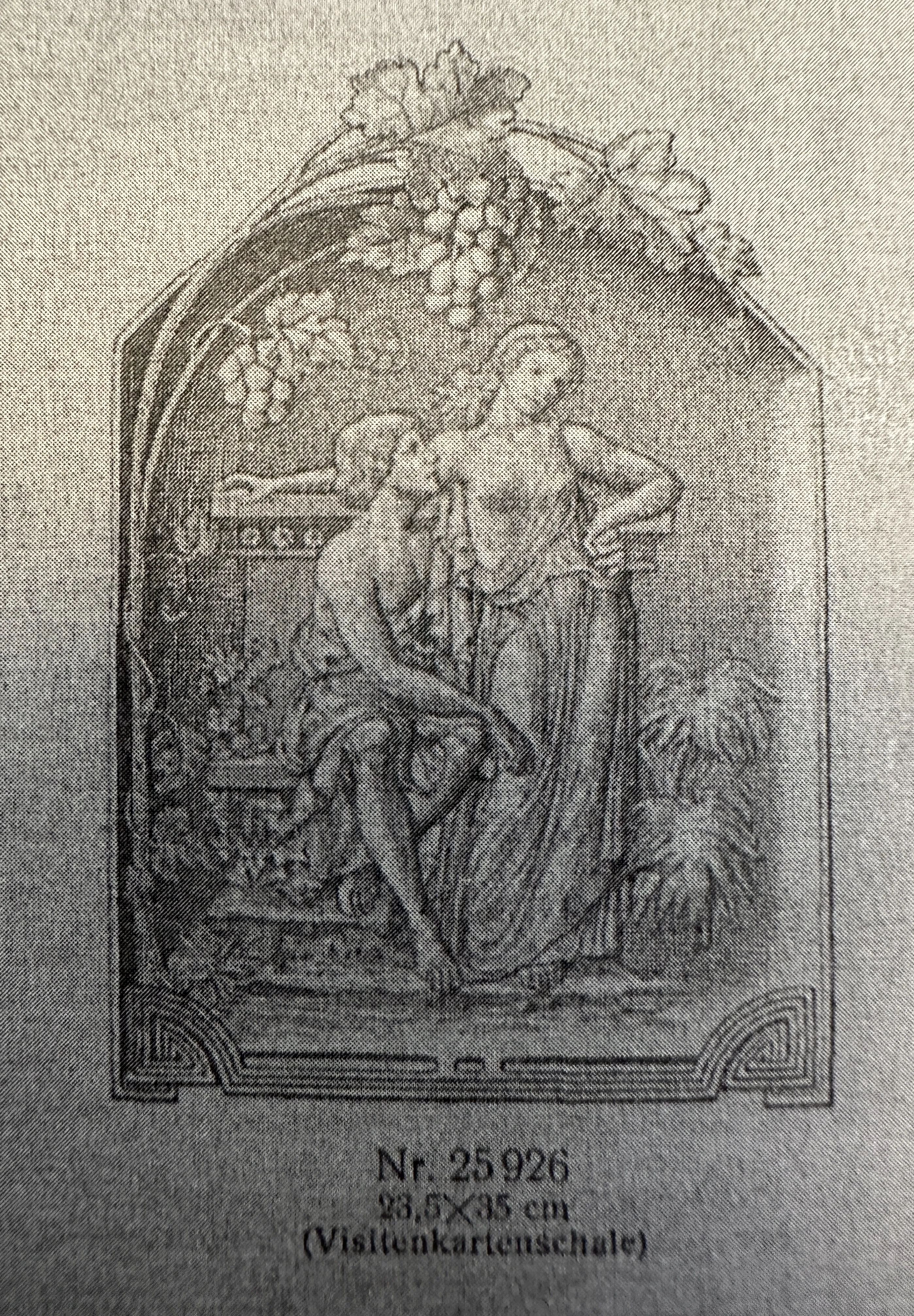
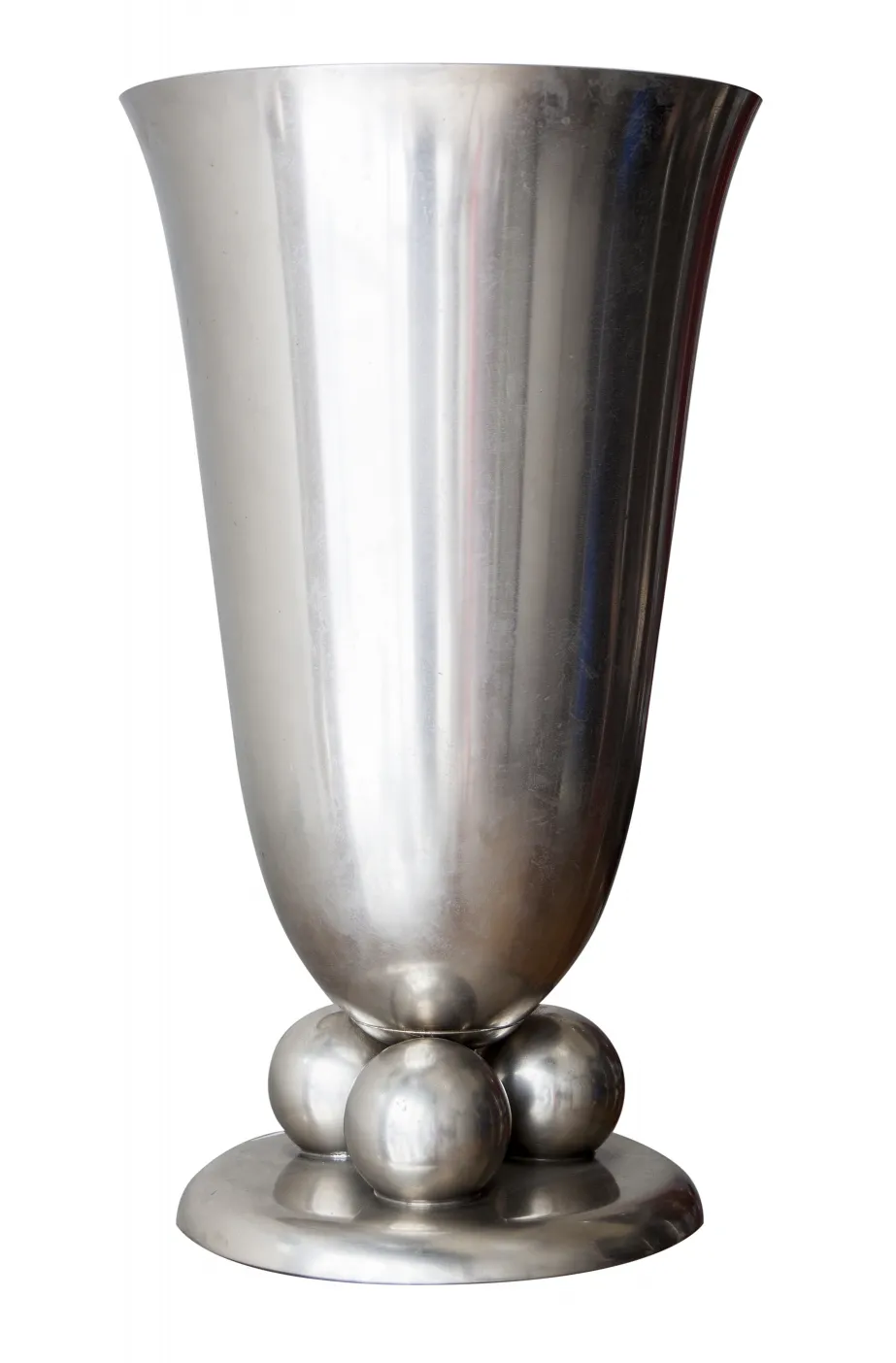
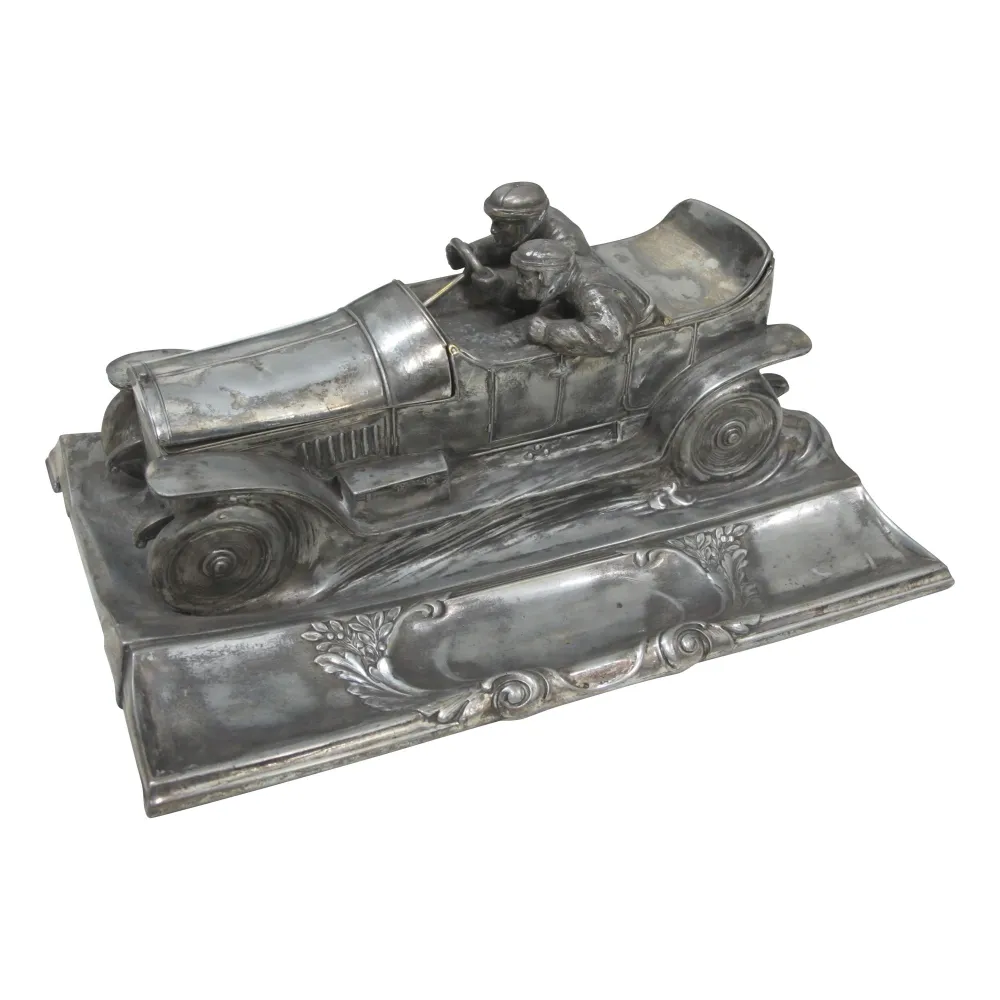
1785627178.webp)