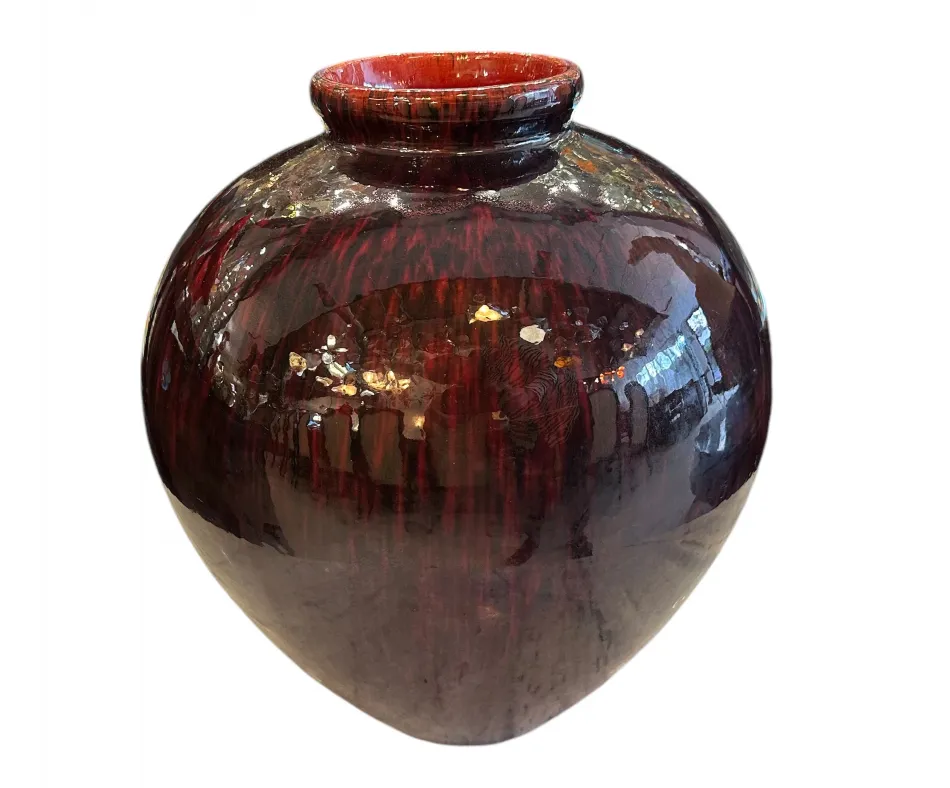
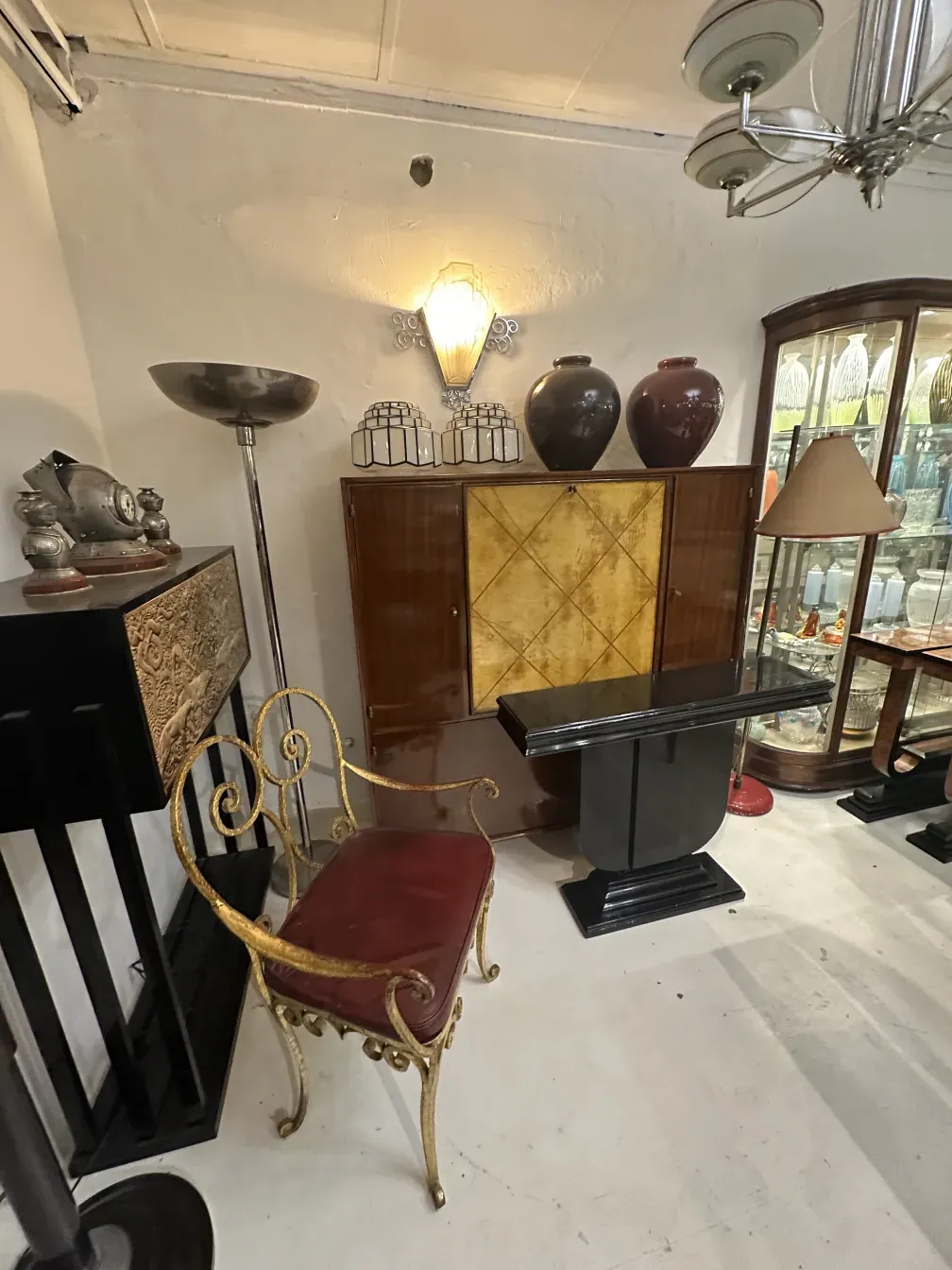
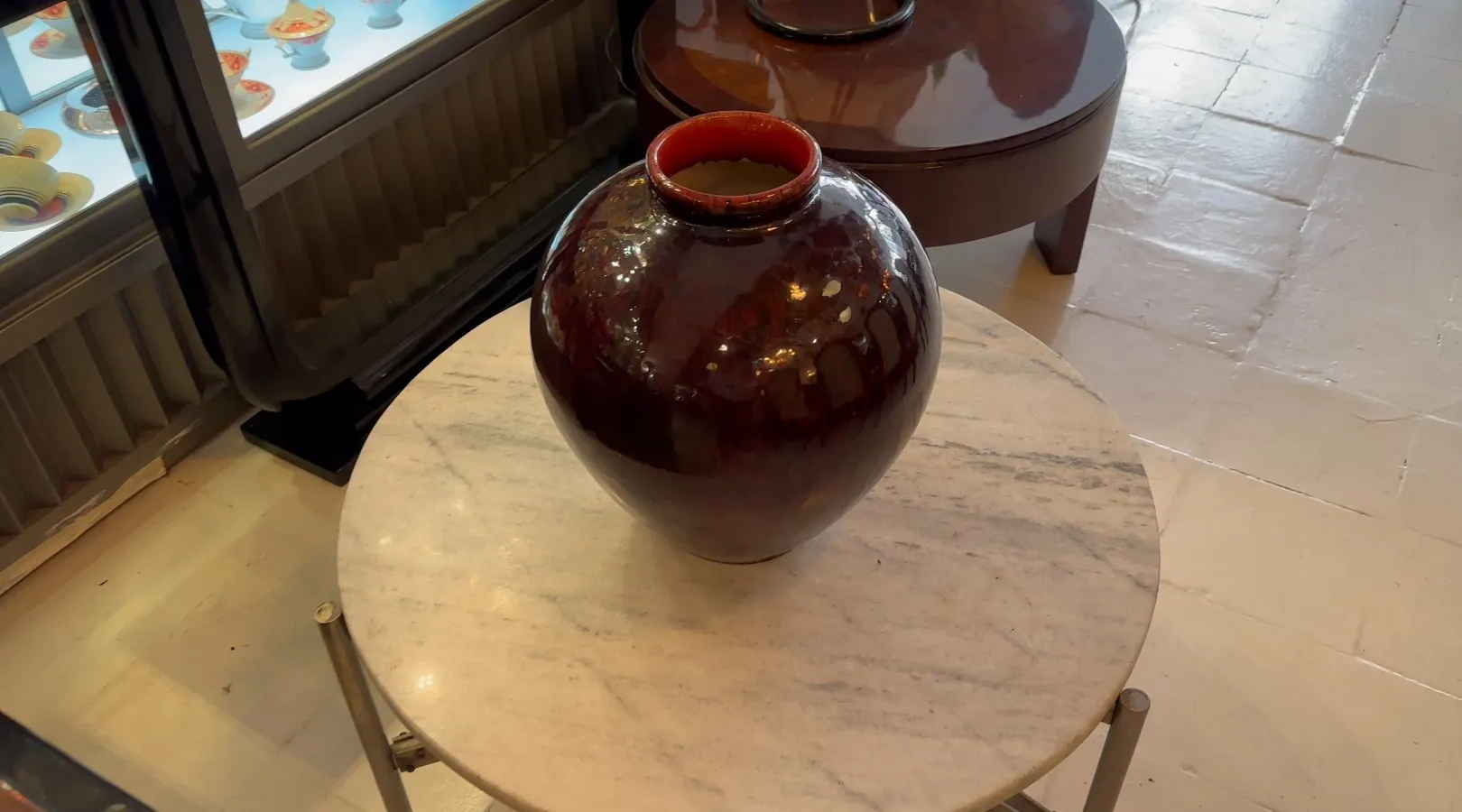
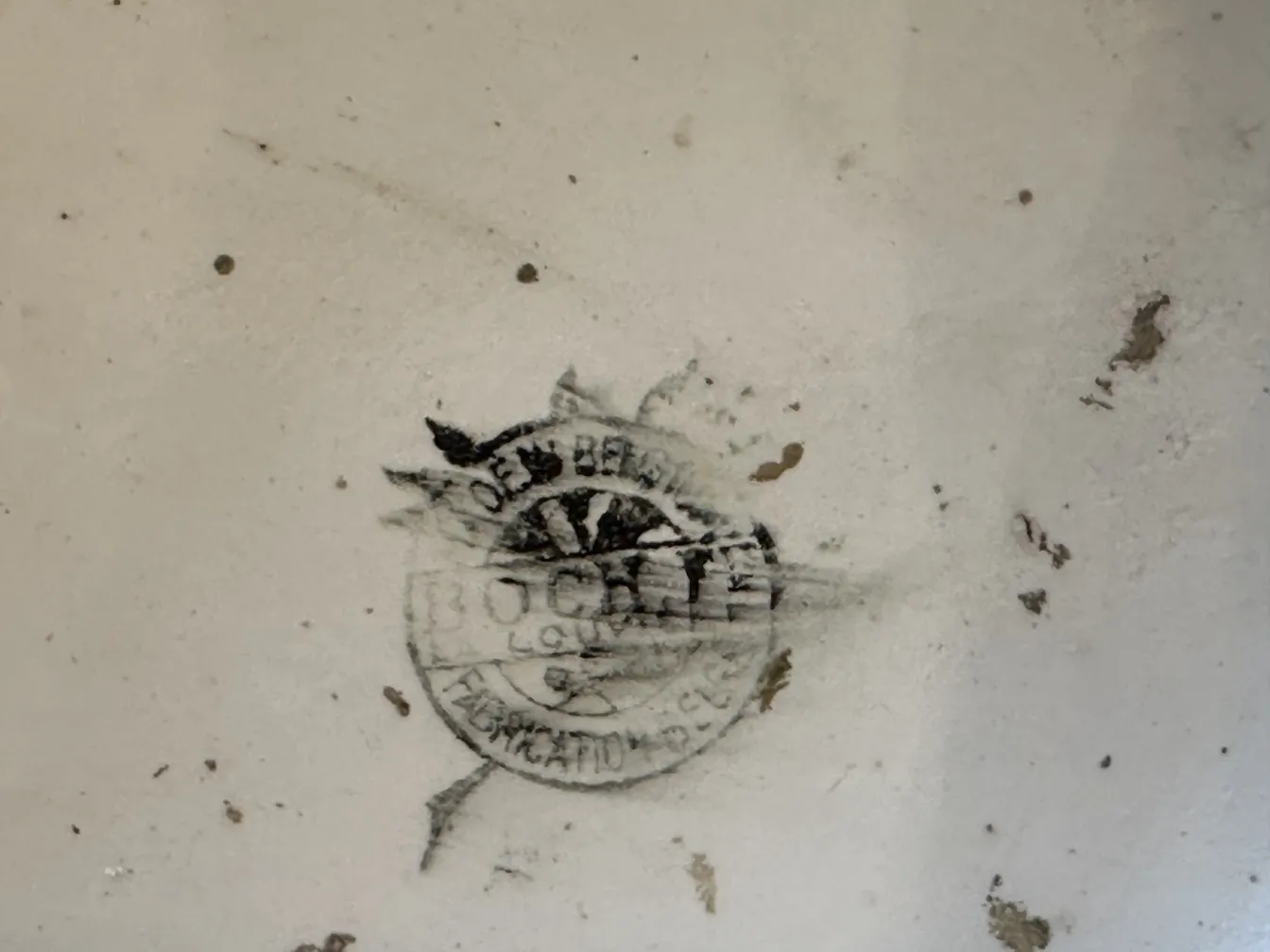
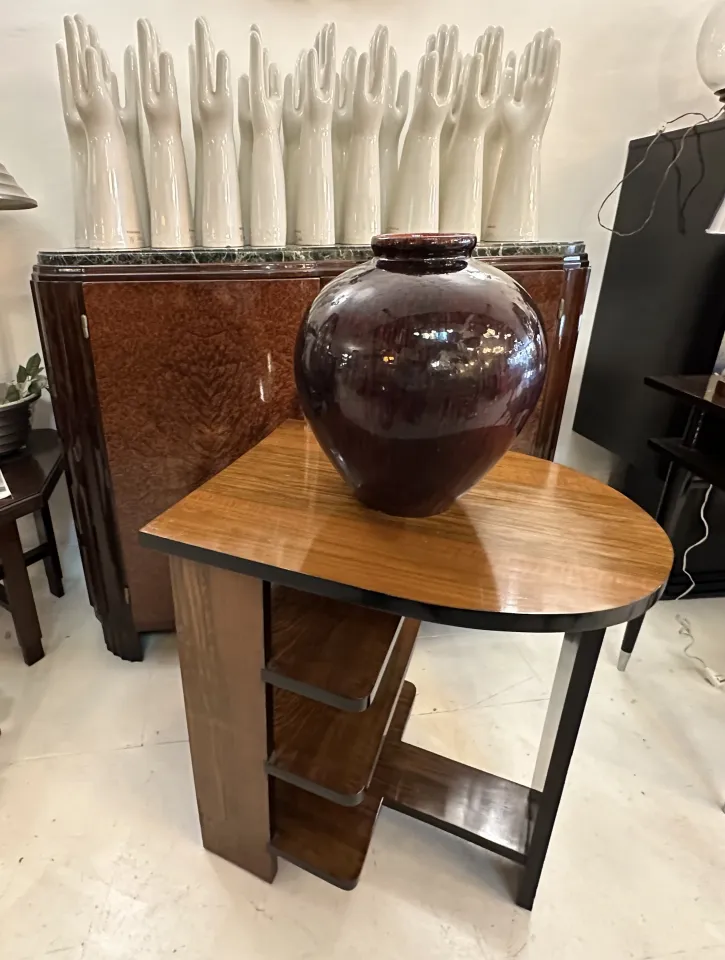
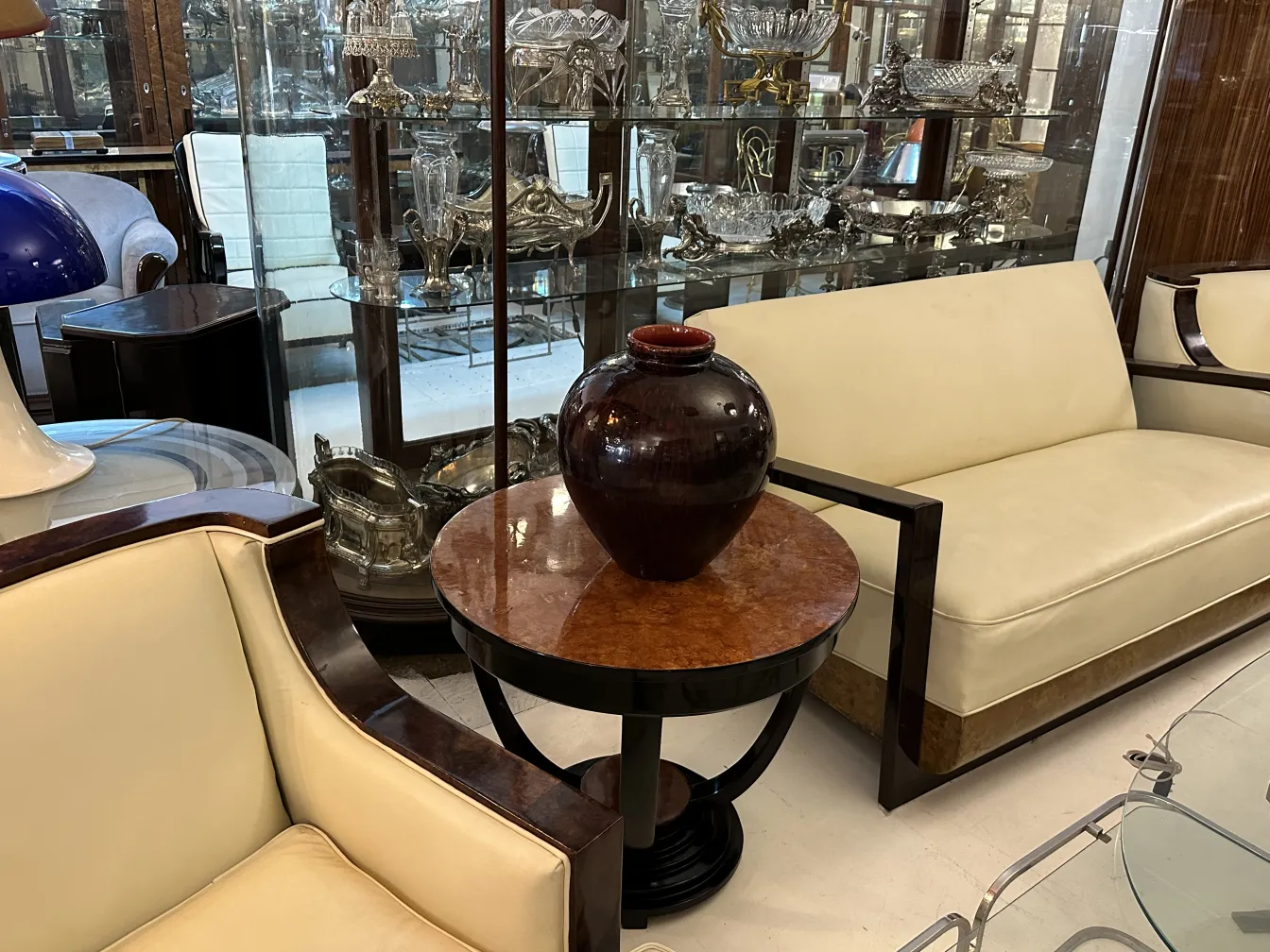
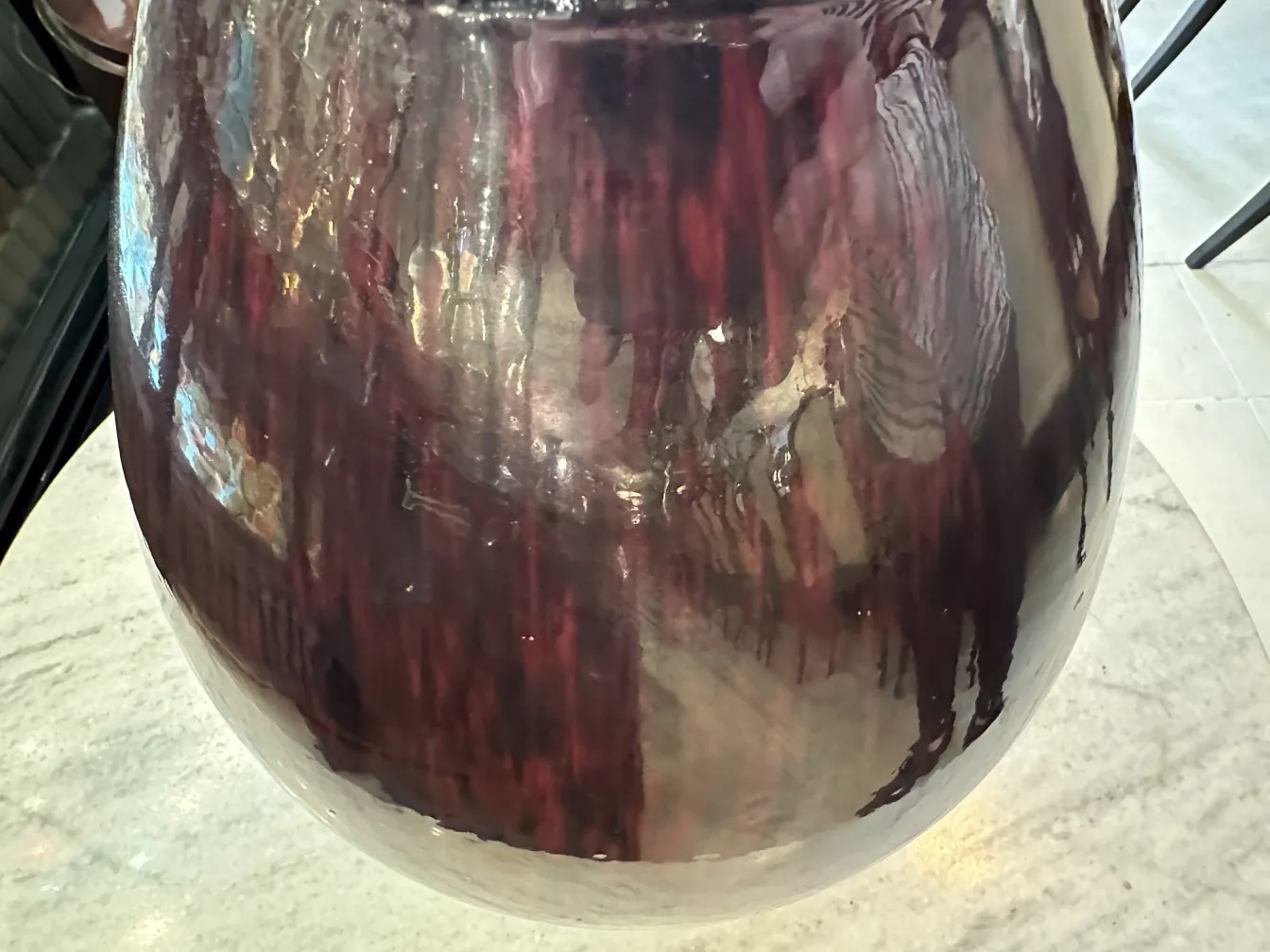
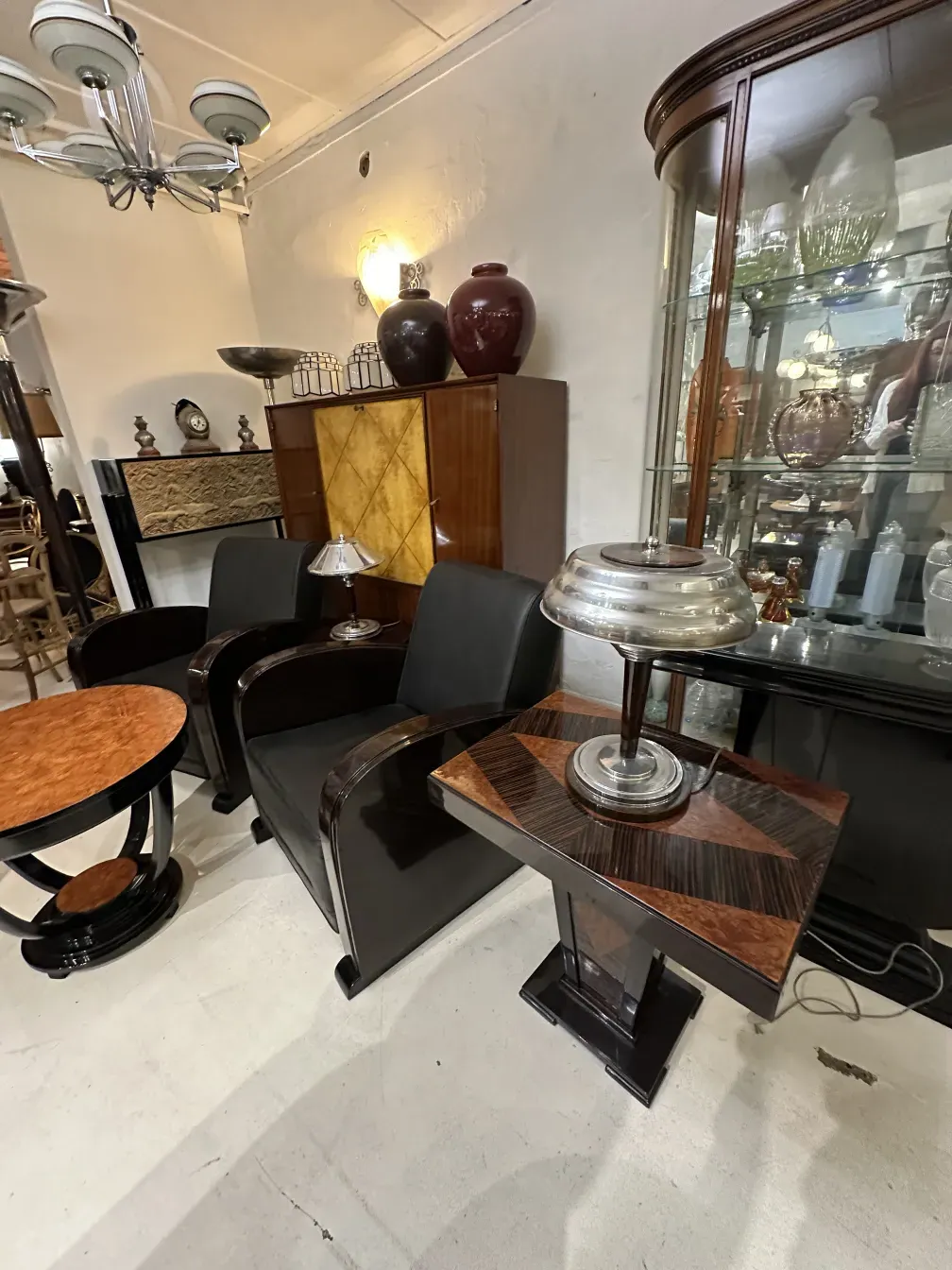
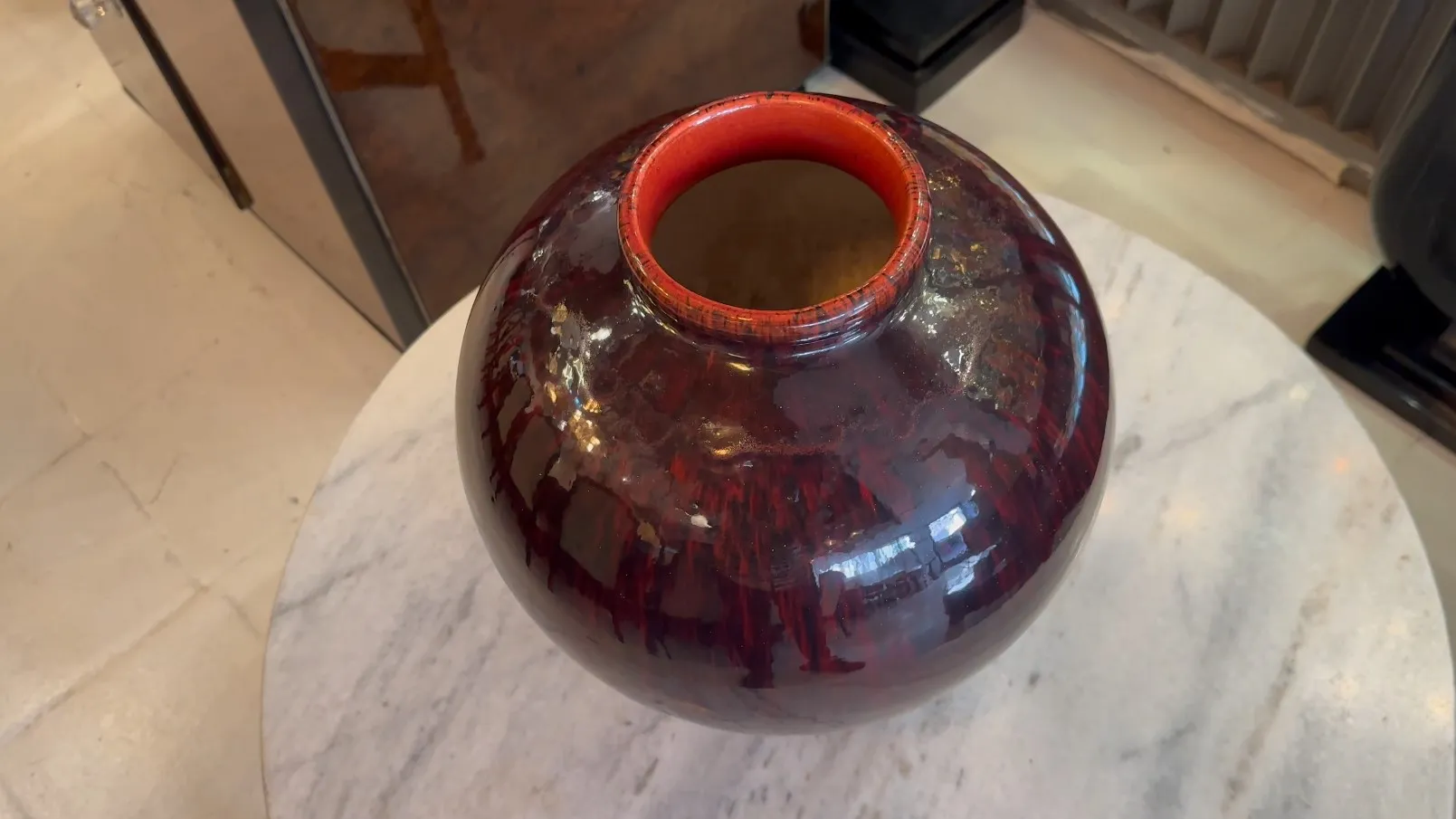
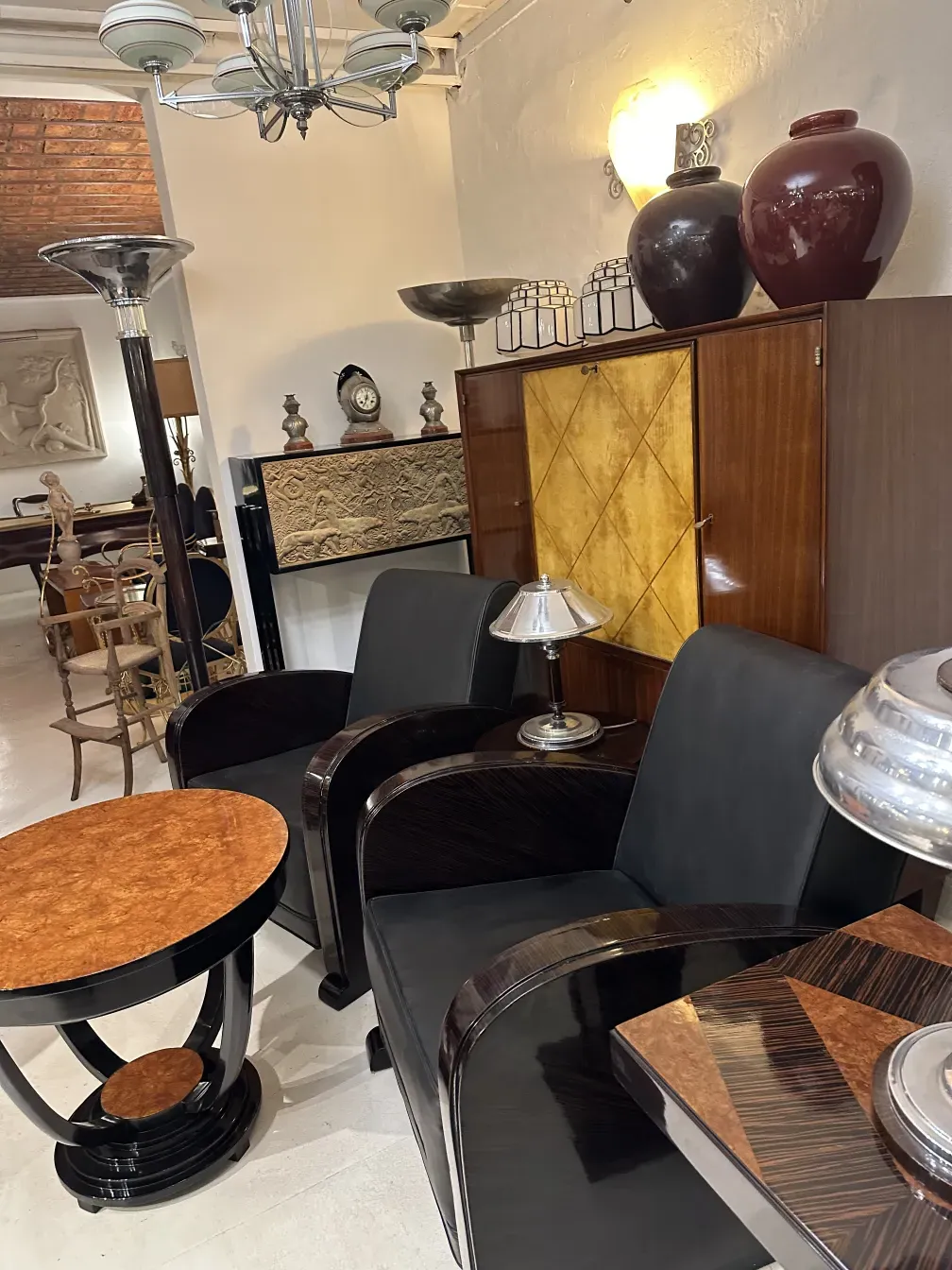
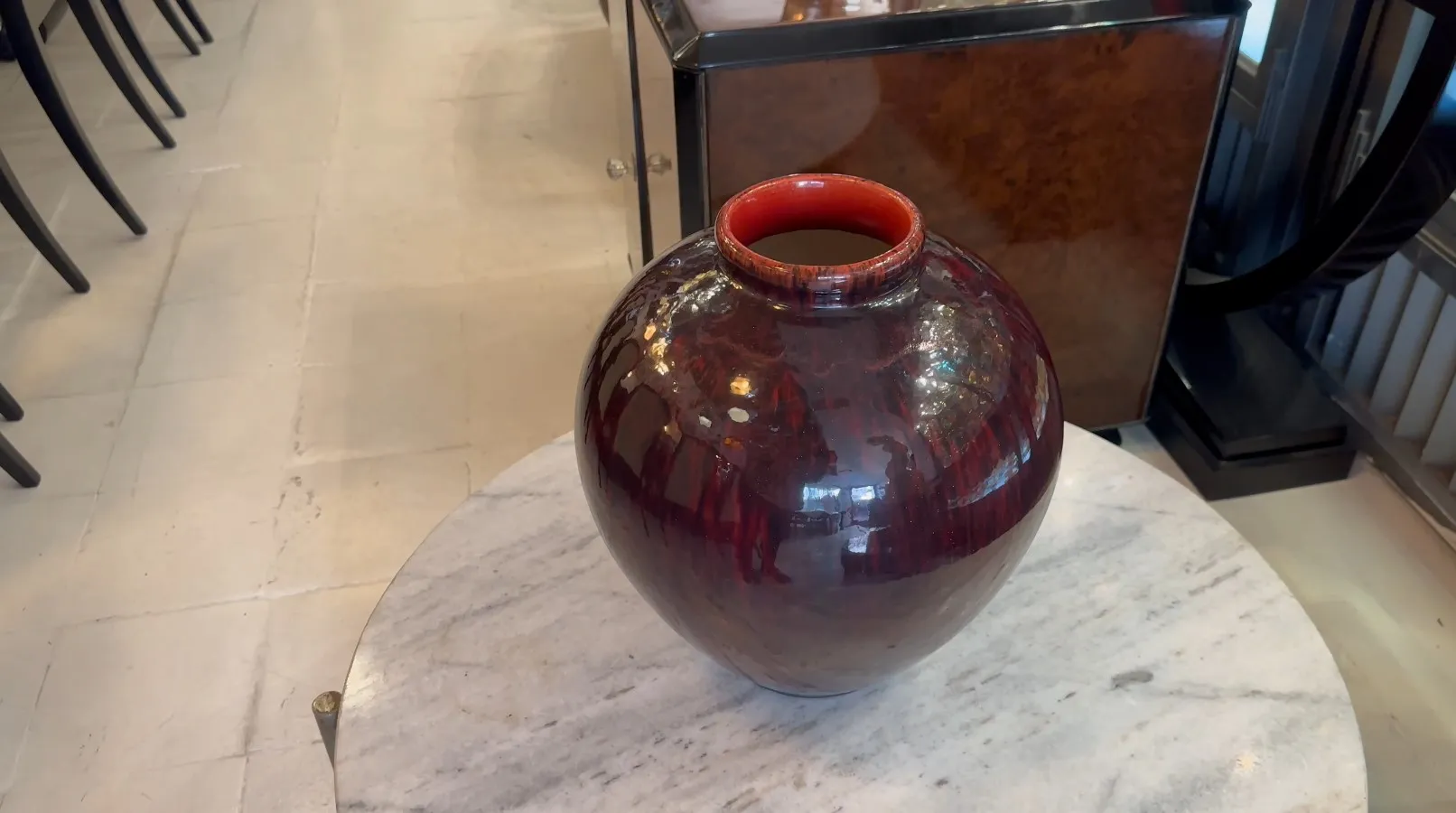
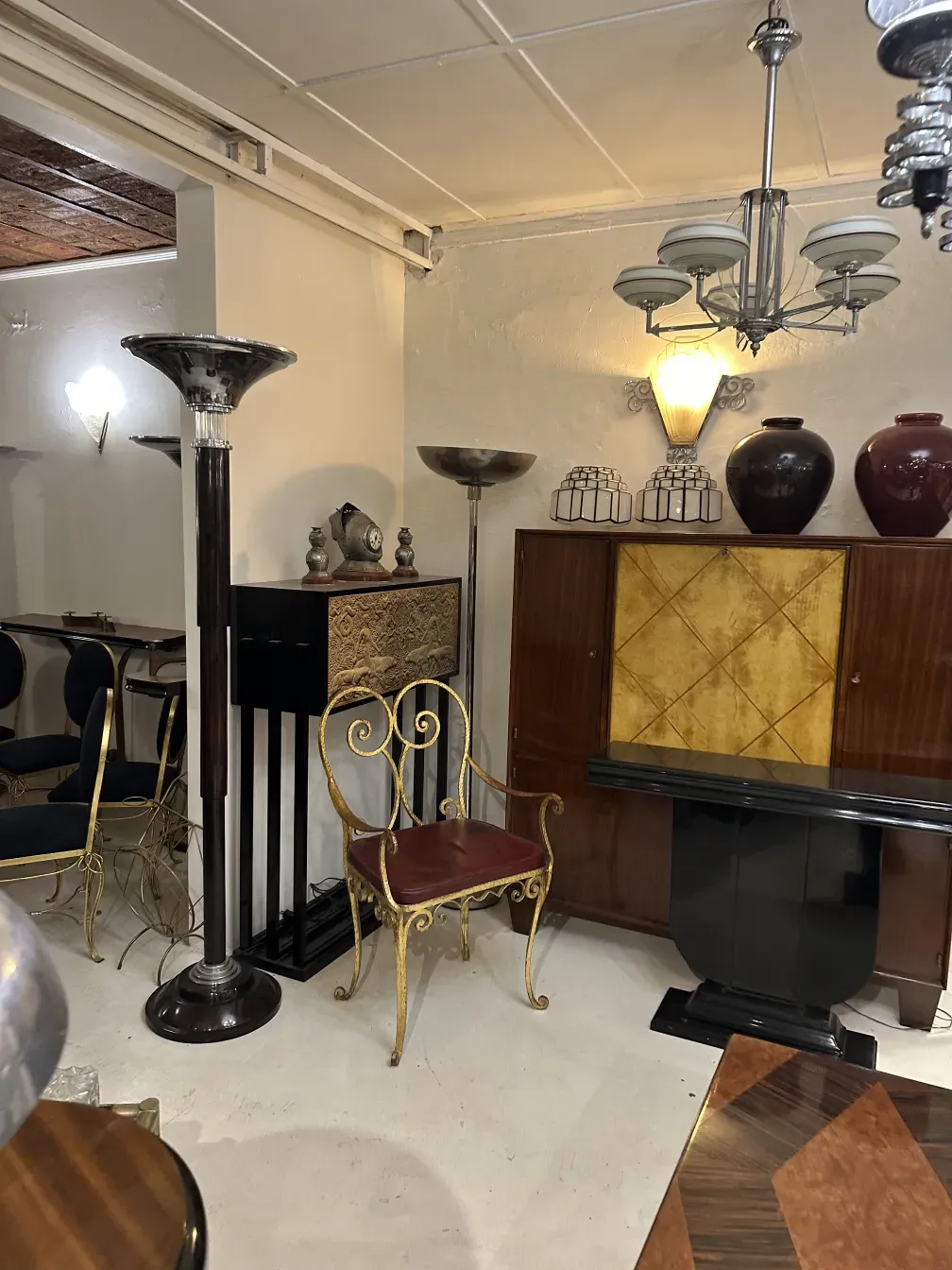
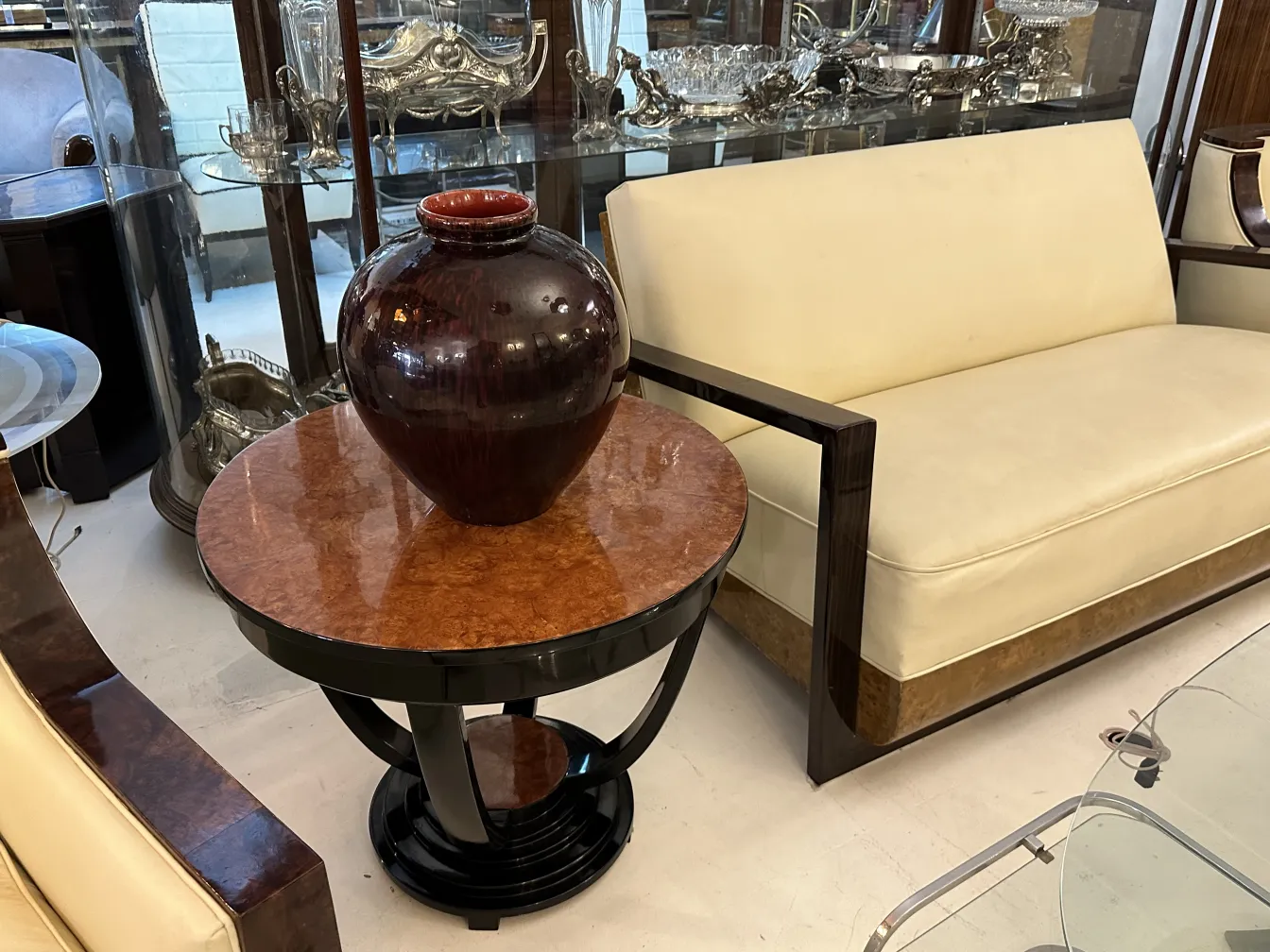
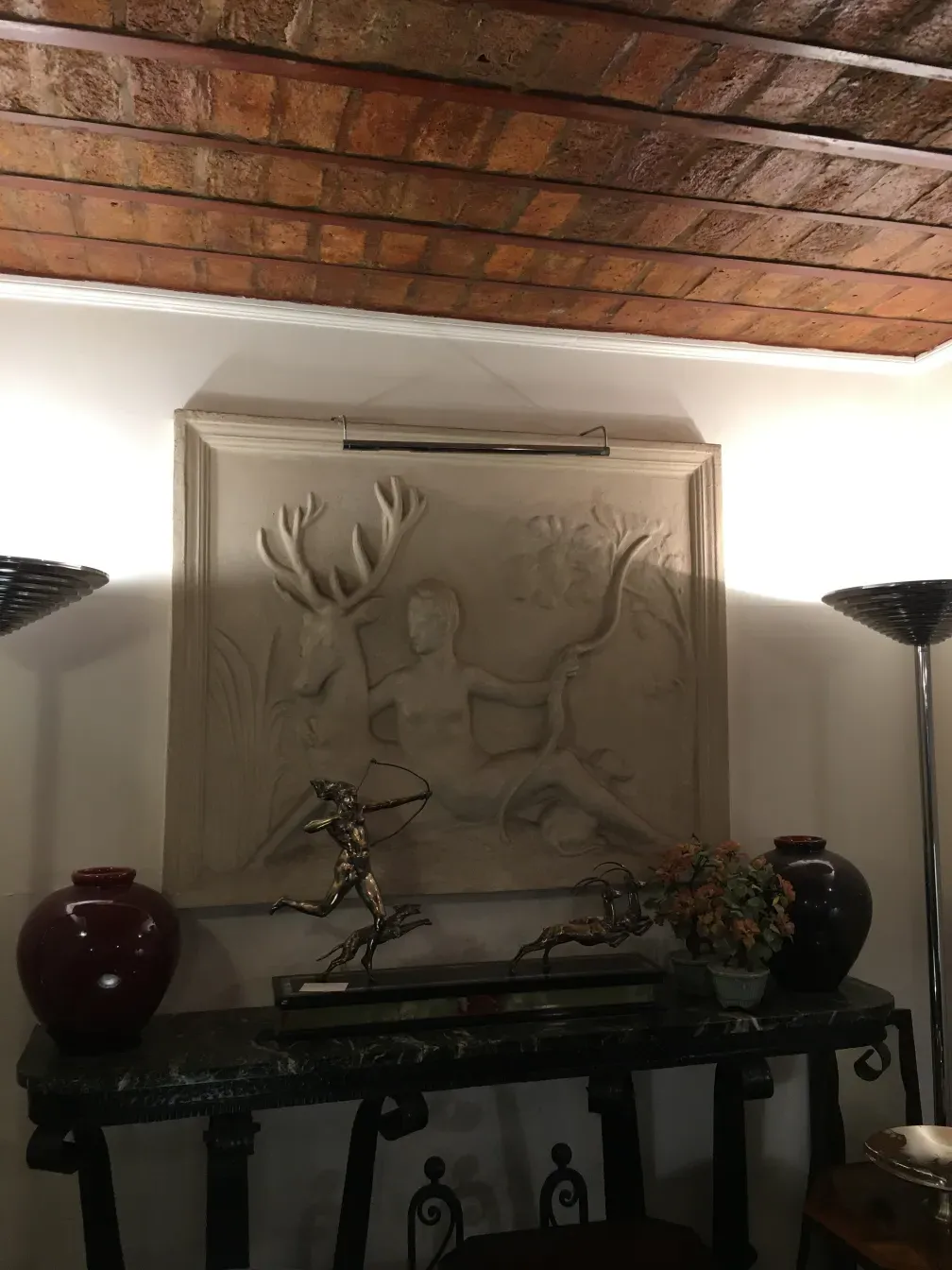
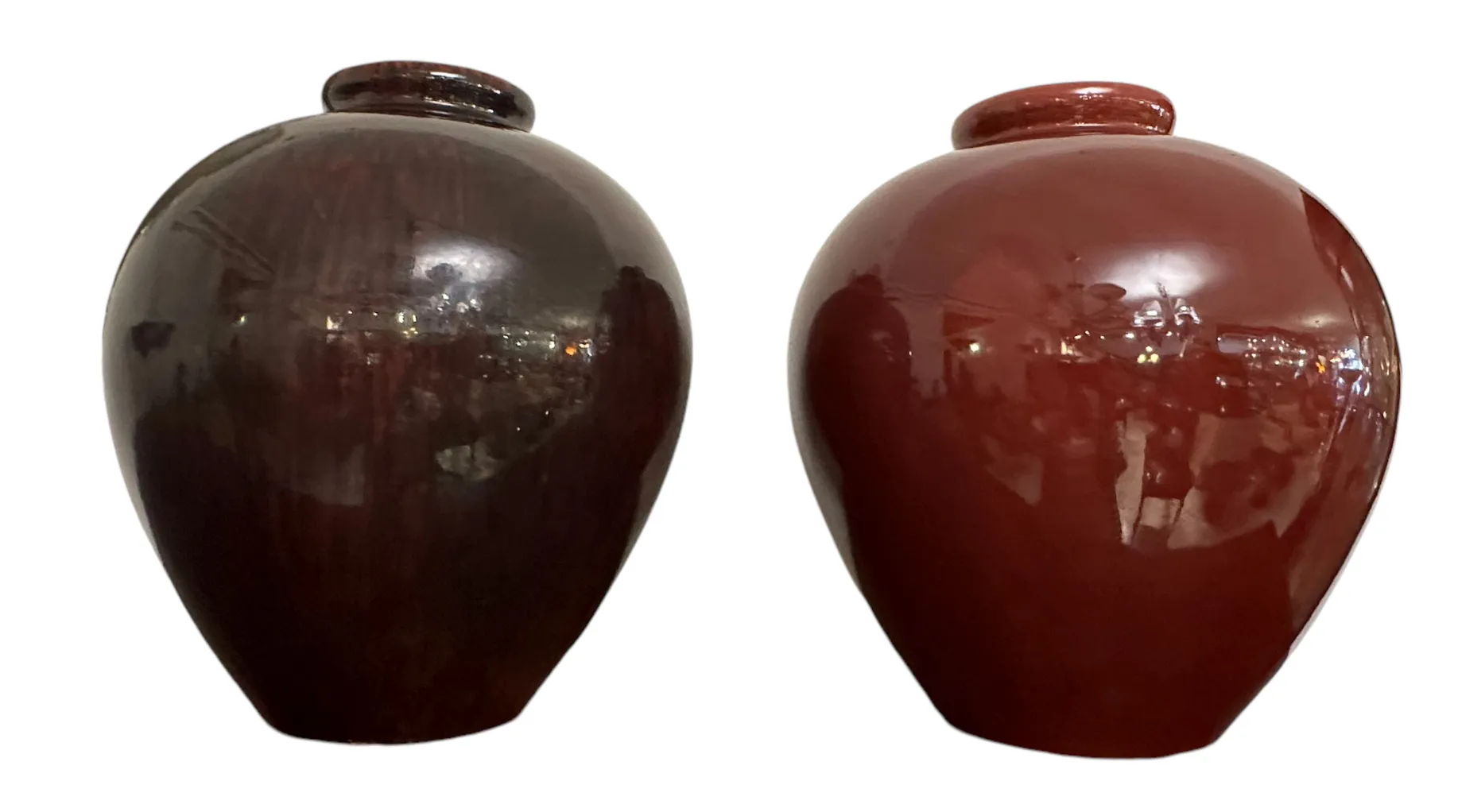
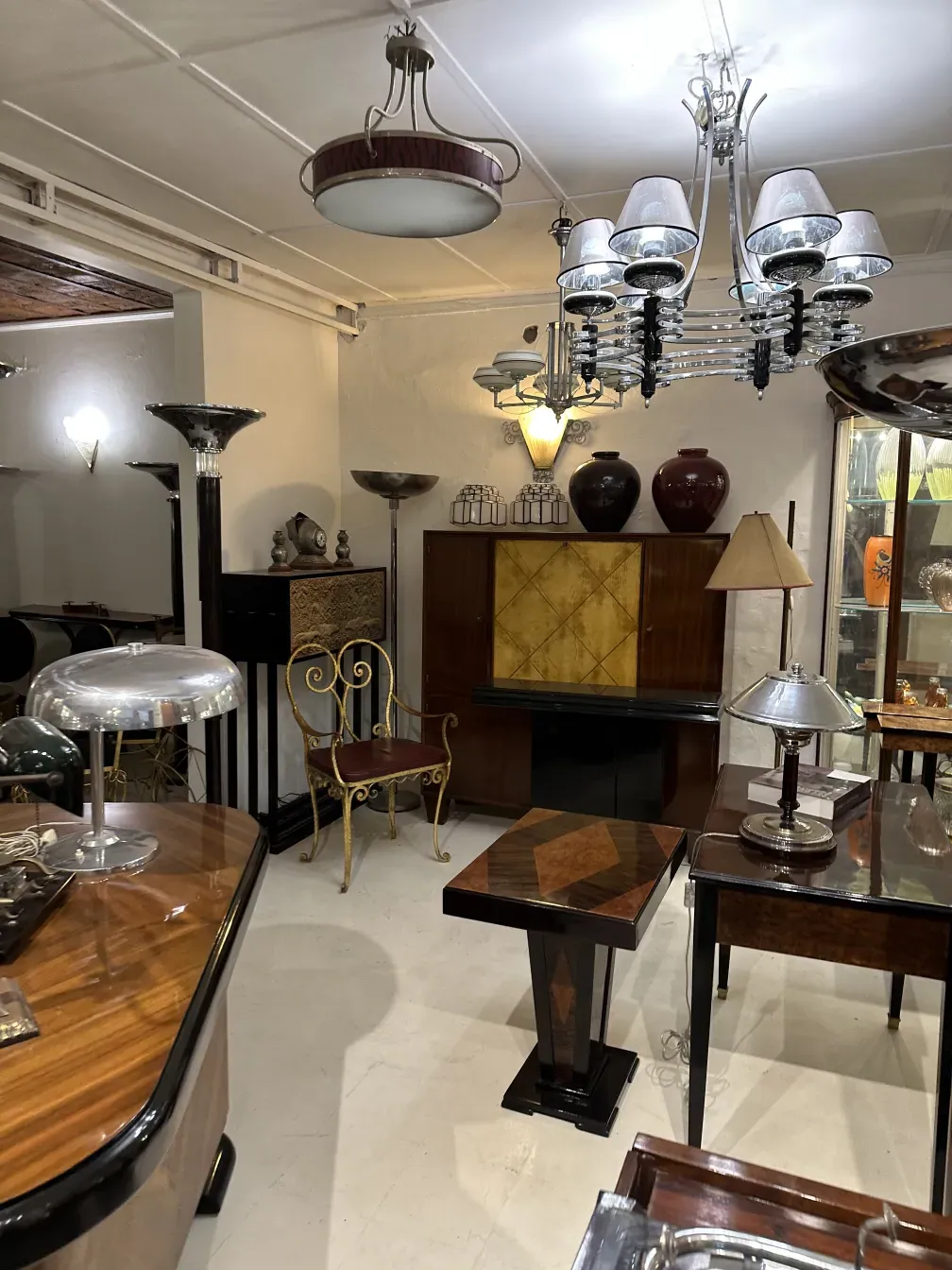
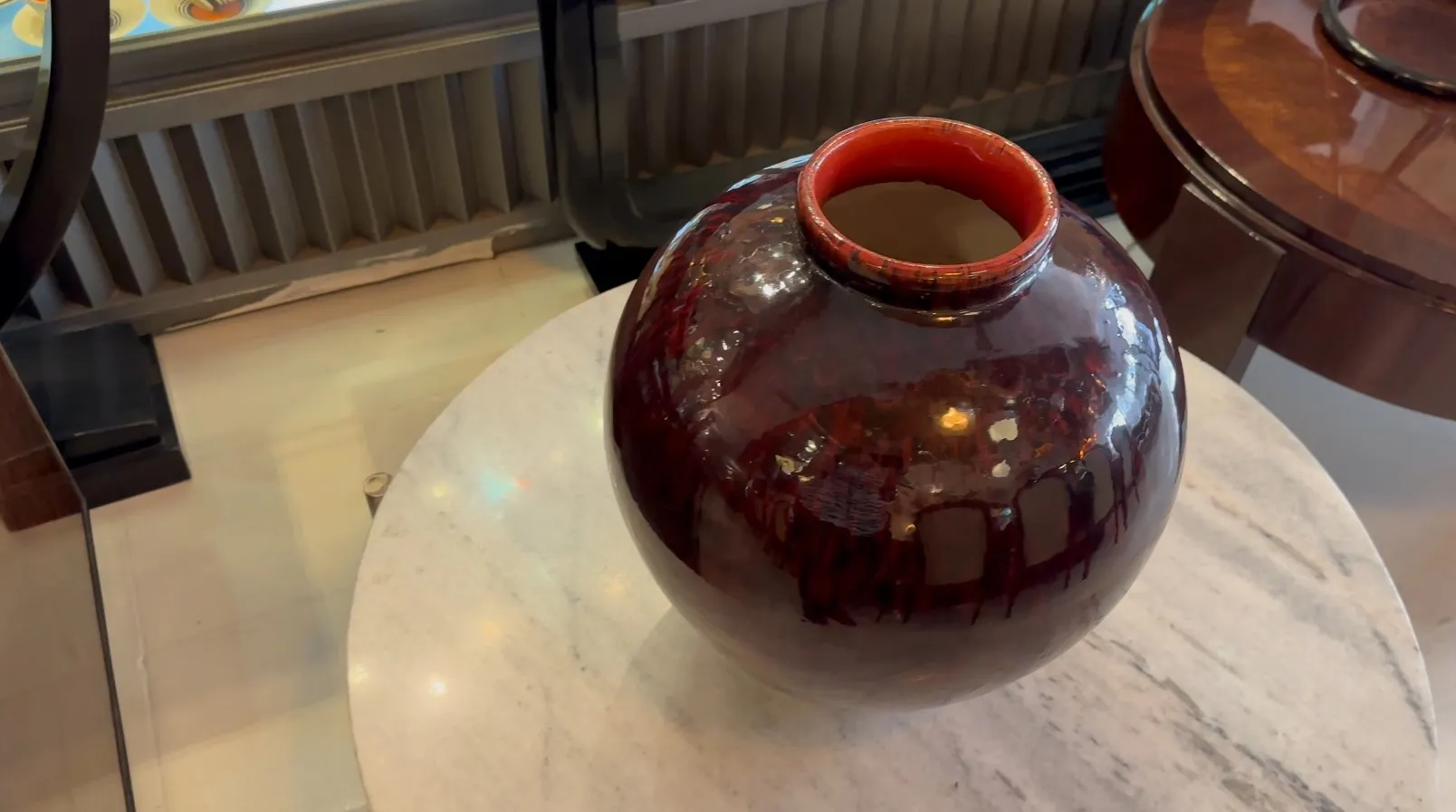
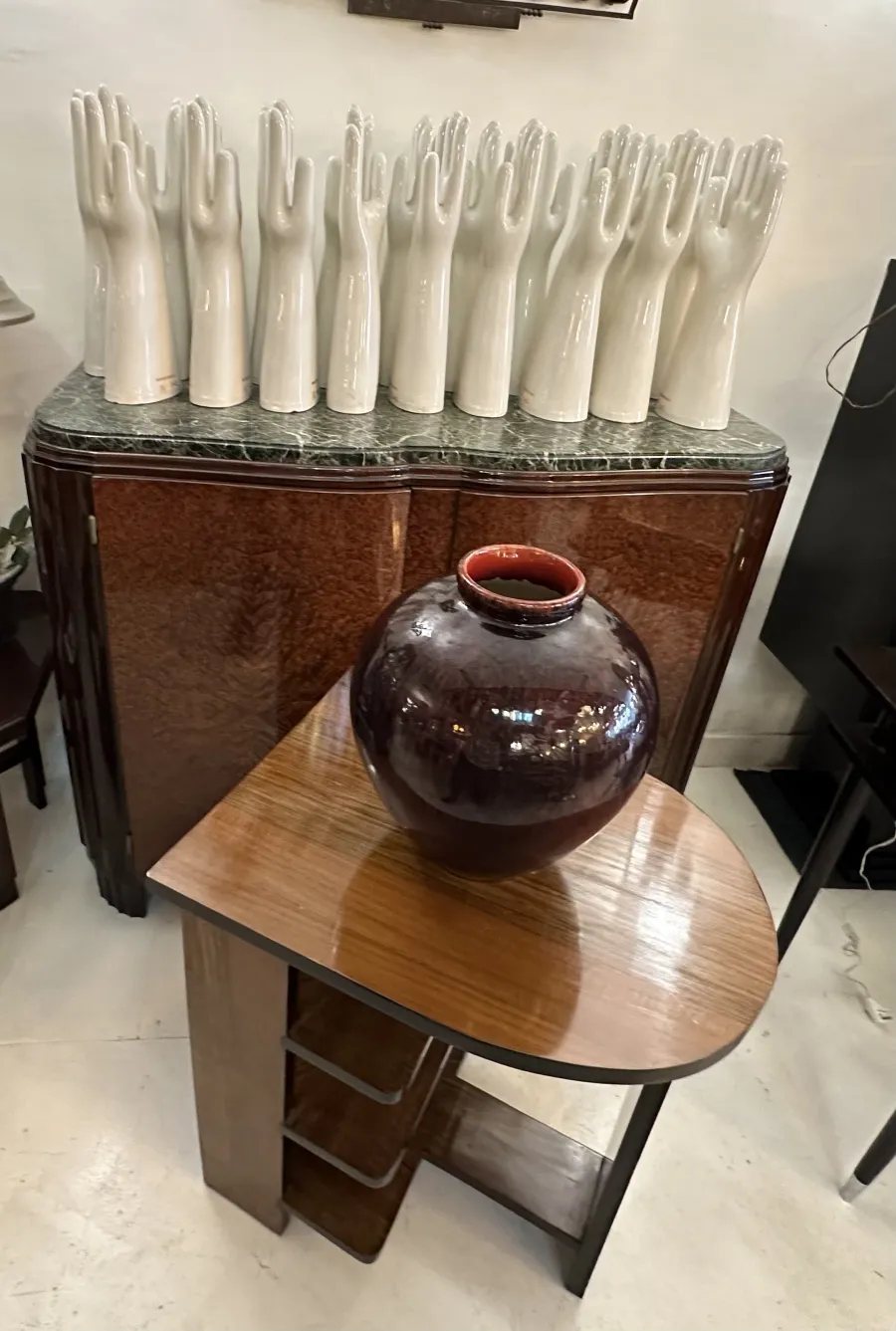
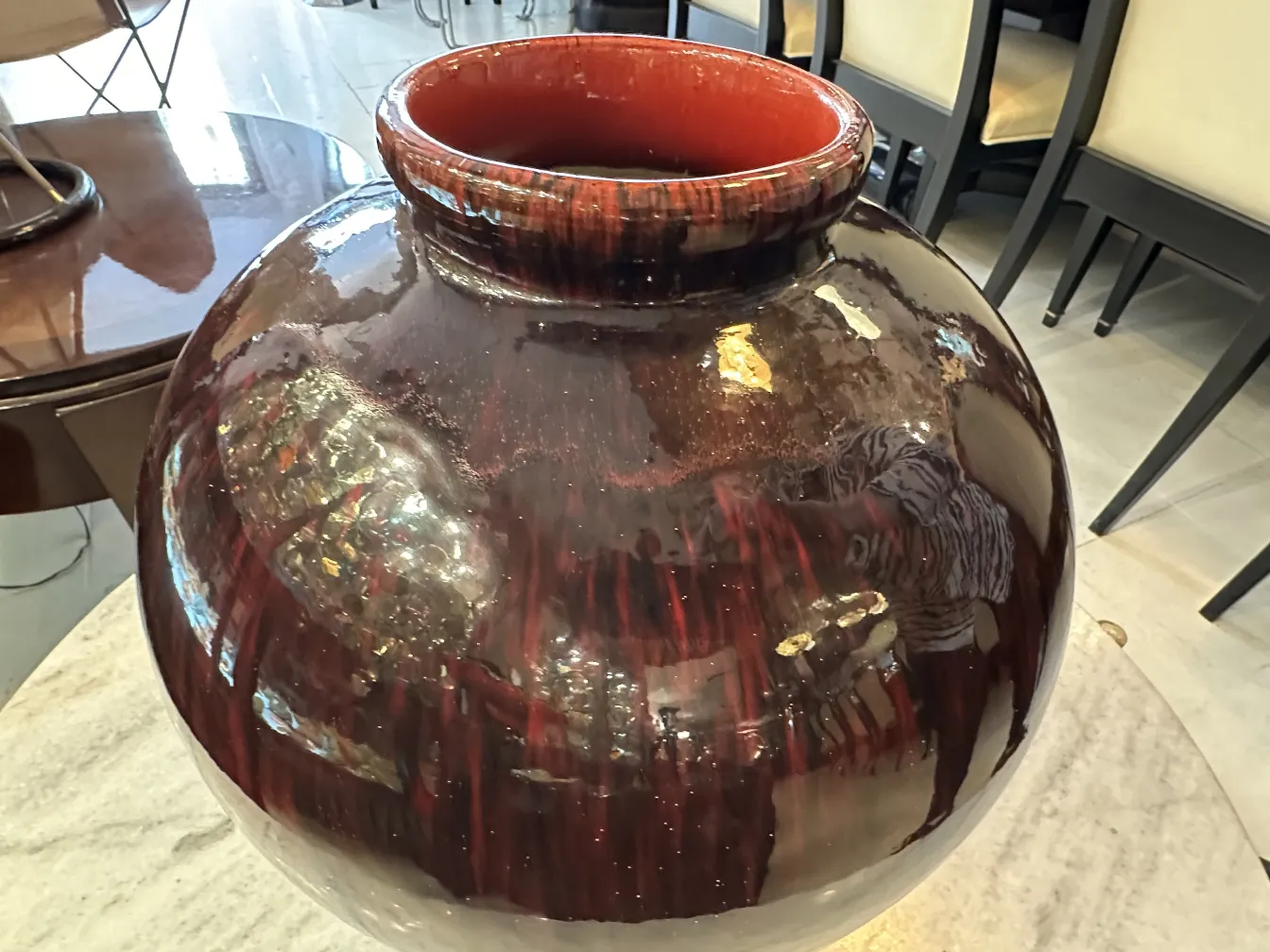
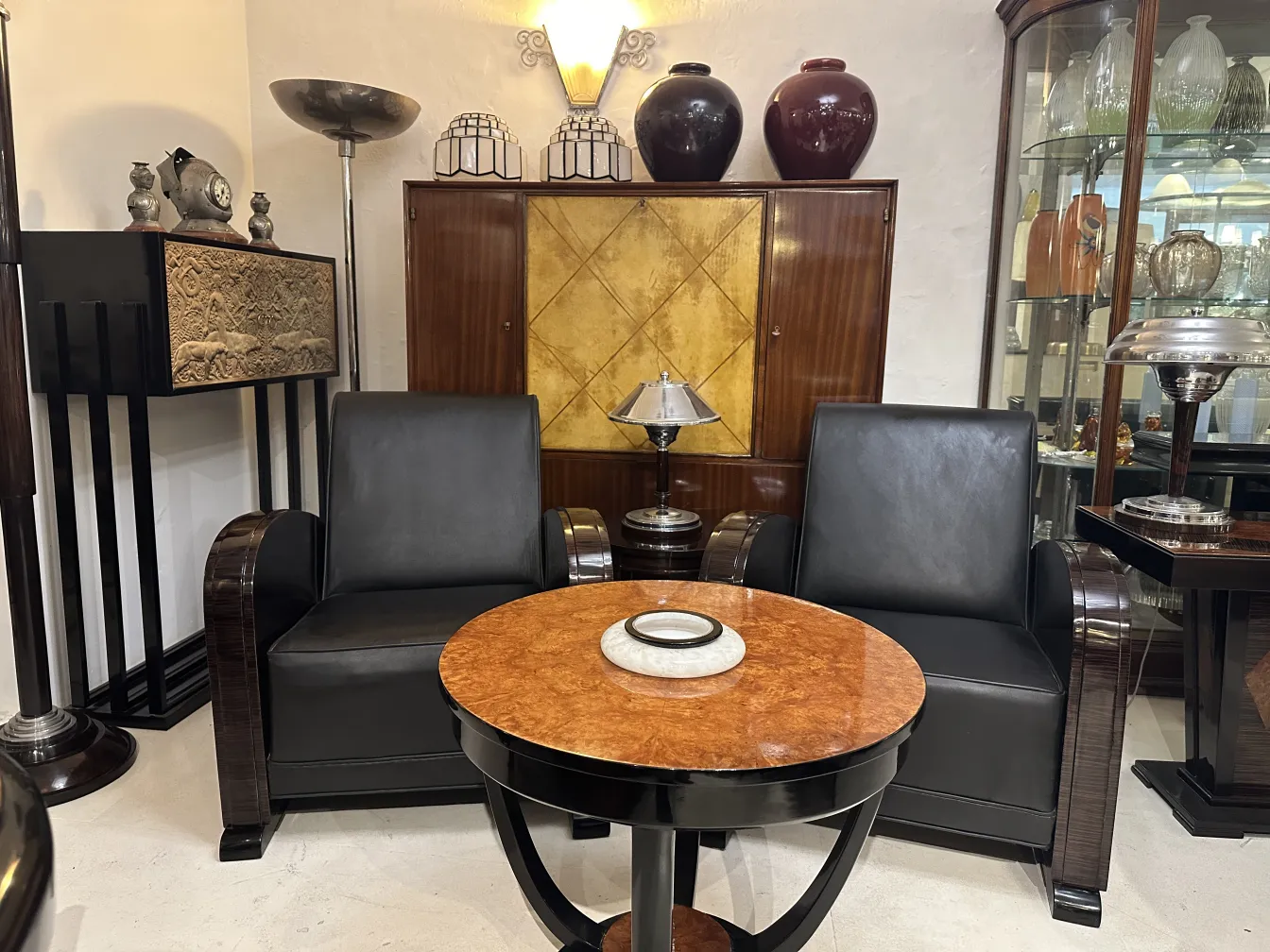
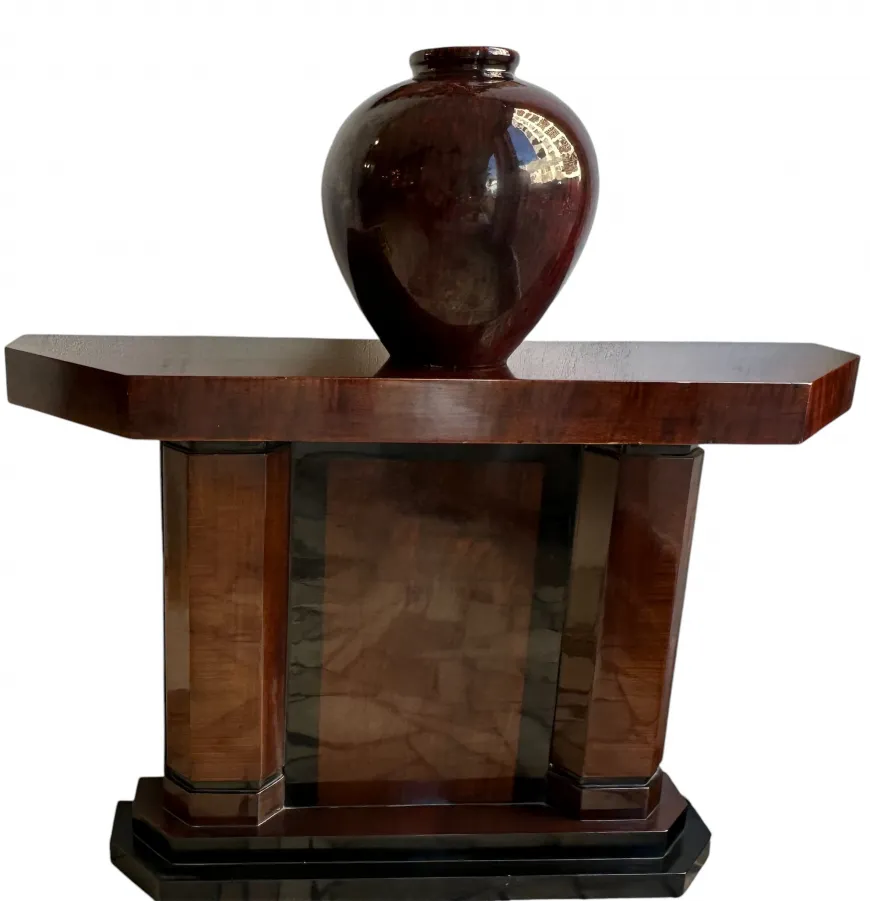
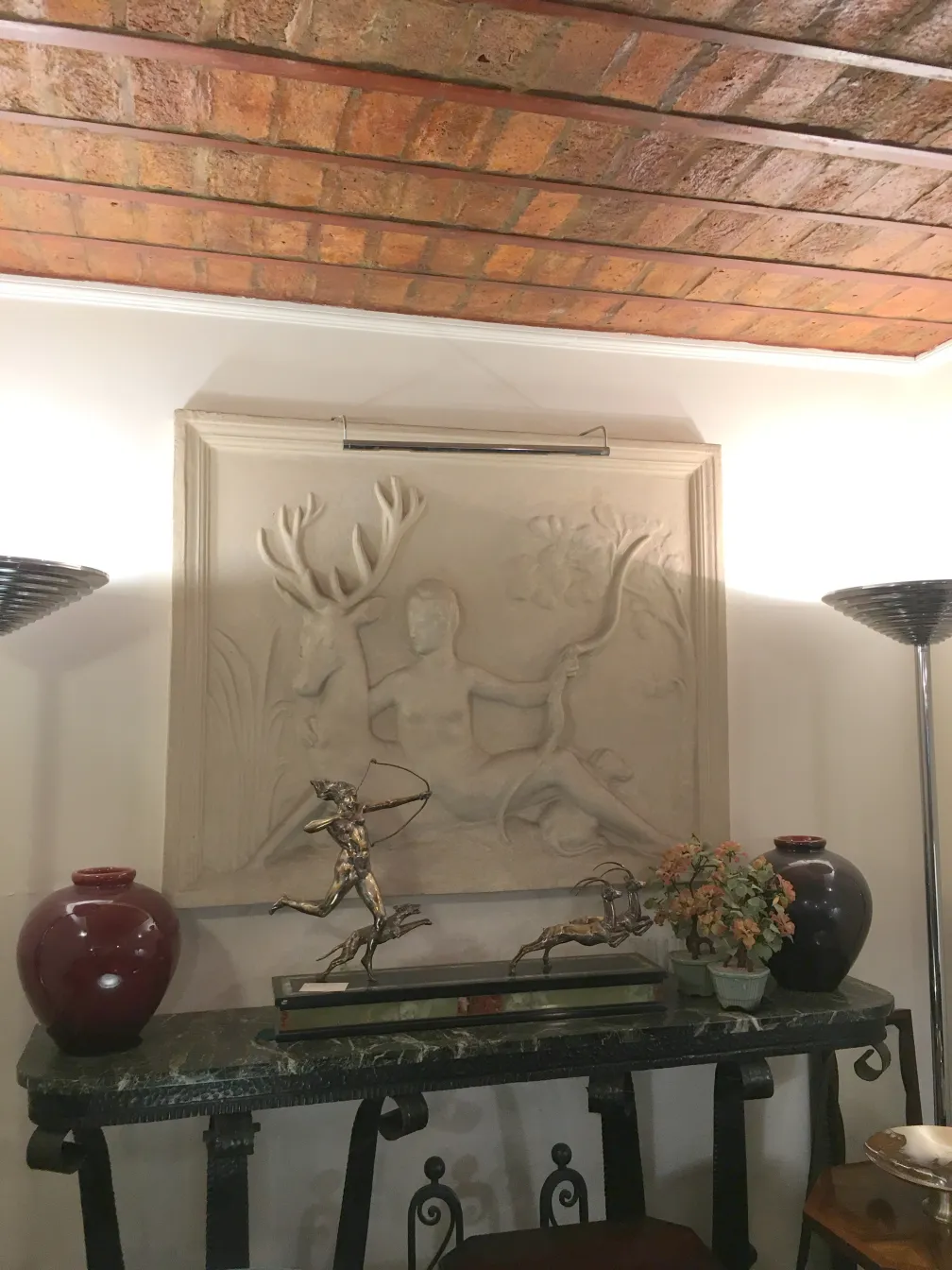
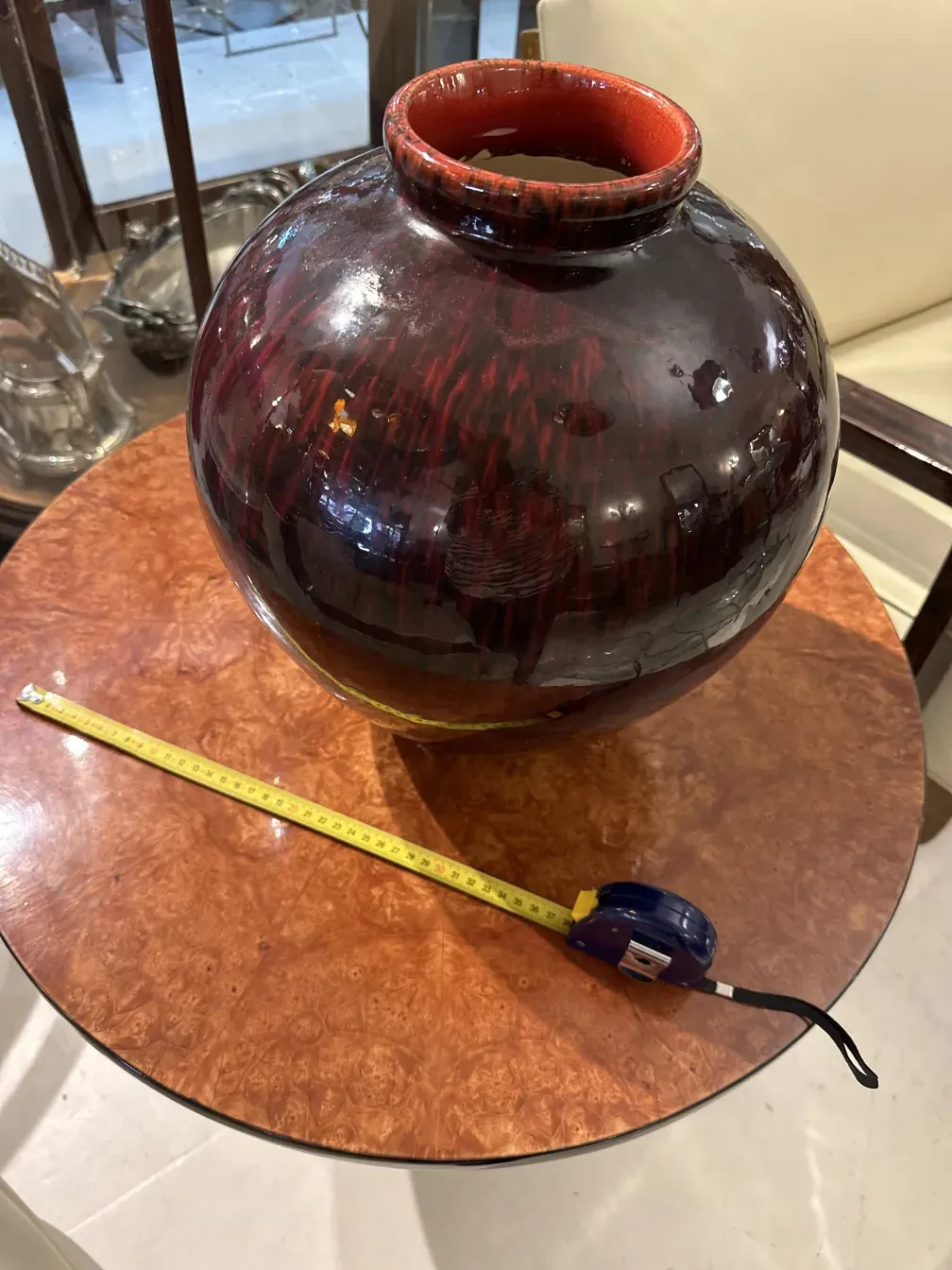
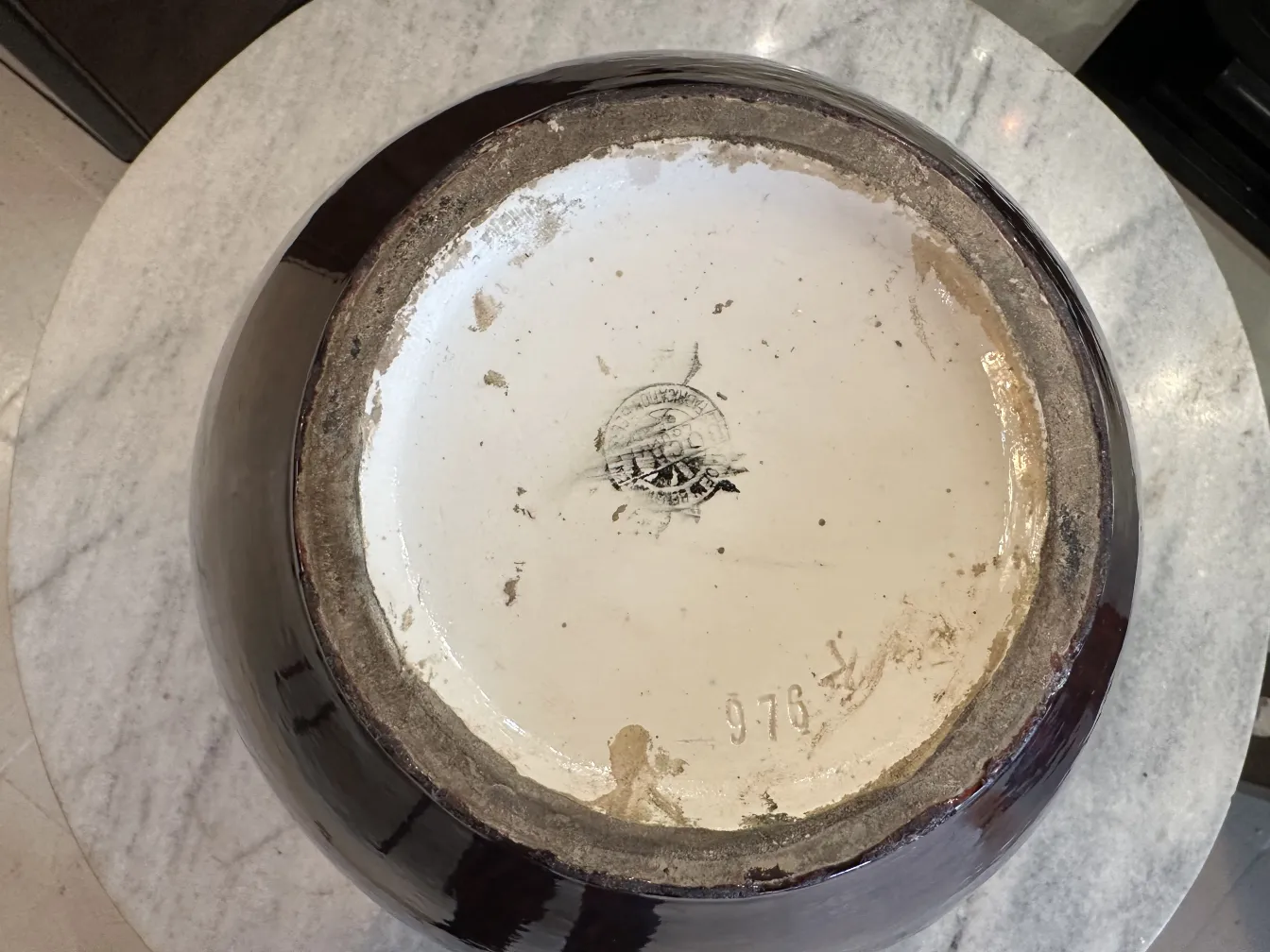
The Belgian ceramics company Boch Frères Keramis, later also known as Royal Boch, has a significant history in ceramic design.
Foundation and Early Years:
Founded in 1841 in La Louvière, Belgium, by the brothers Eugène and Victor Boch, along with their brother-in-law Jean-Baptiste Nothomb.
The Boch family had a long tradition in ceramics, dating back to 1748 when François Boch (founder of Villeroy & Boch) started a pottery company.
Won a gold medal in 1847 at the Belgian Industry Exhibition.
In 1860, they began producing polychrome (multicolored) pieces.
The arrival of the French ceramist Charles Catteau as artistic director in 1906 marked a turning point.
Catteau and his team created more than 2300 numbered designs and around 550 different shapes.
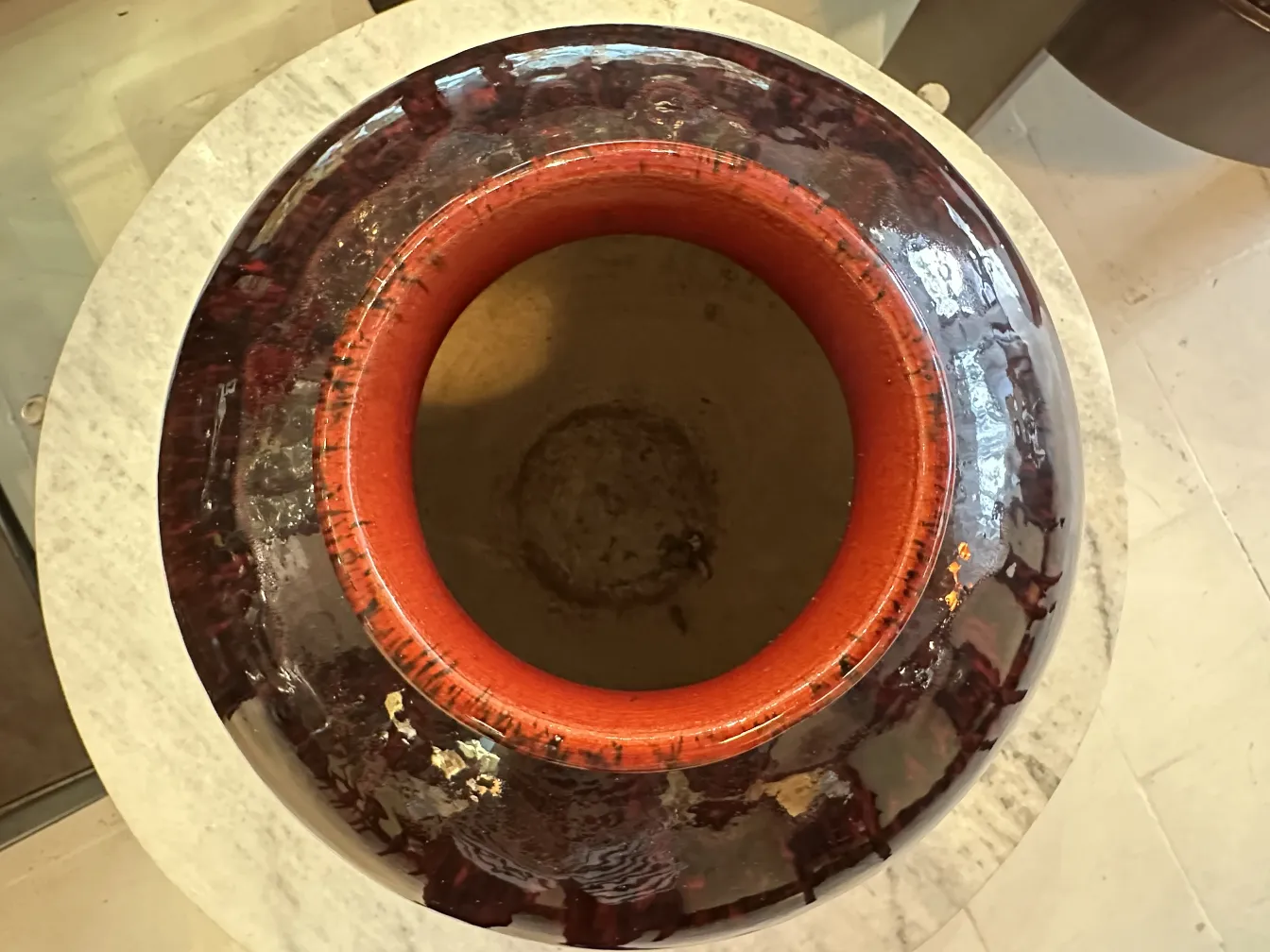
He experimented with glazes, colors, and firing processes to achieve unique and striking finishes.)
0:00 / 0:00
Style Art Deco
"The name Art Deco was assigned in the 1960s, at the exhibition "Les Années 25" held in Paris at the Museum of Decorative Arts.
The first pieces could be seen at the International Exhibition of "Decorative Arts and Modern Industry" held in Paris in 1925. This exhibition was a direct response to the Turin exhibitions of 1902 and Milan of 1906.
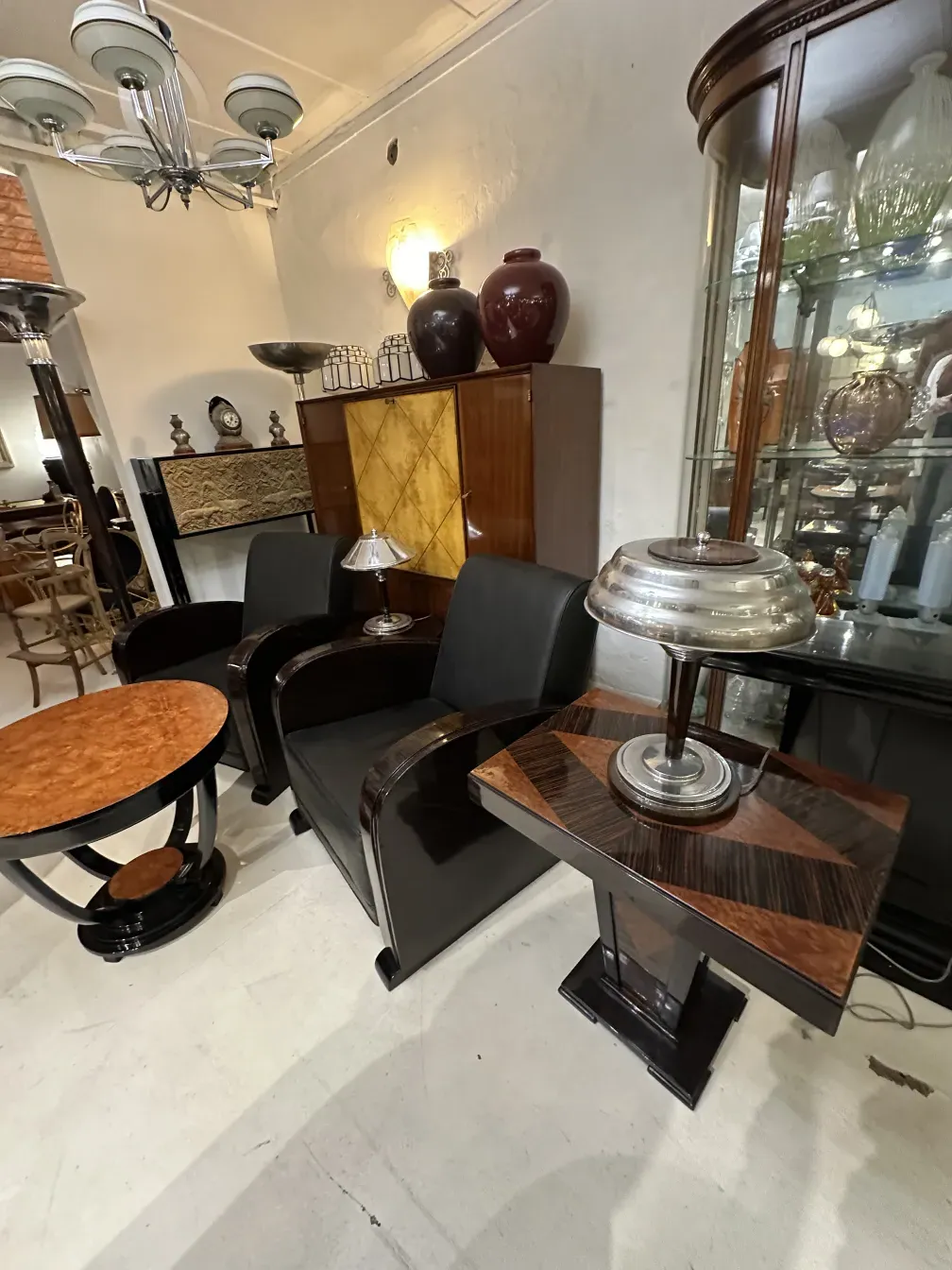
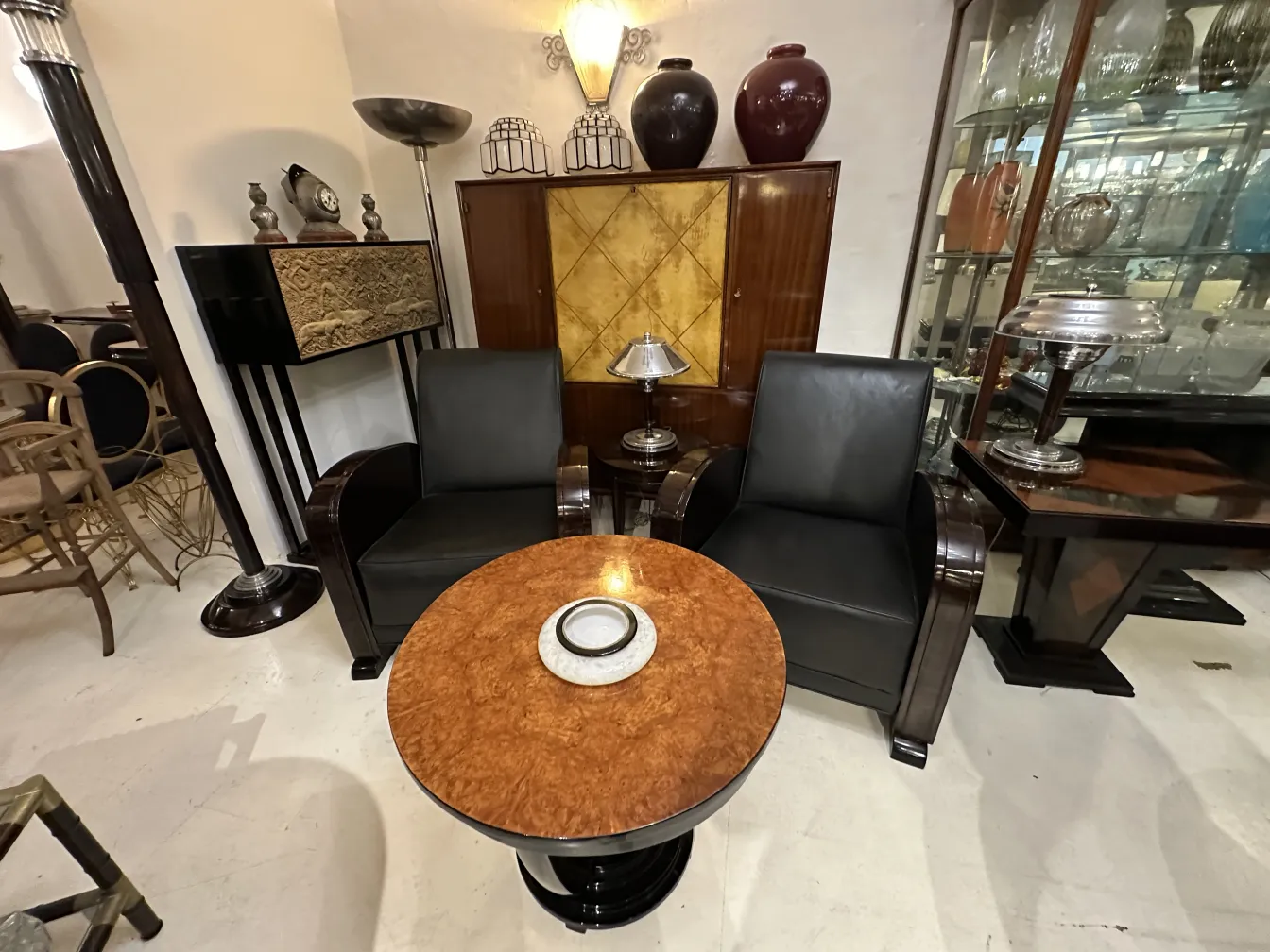
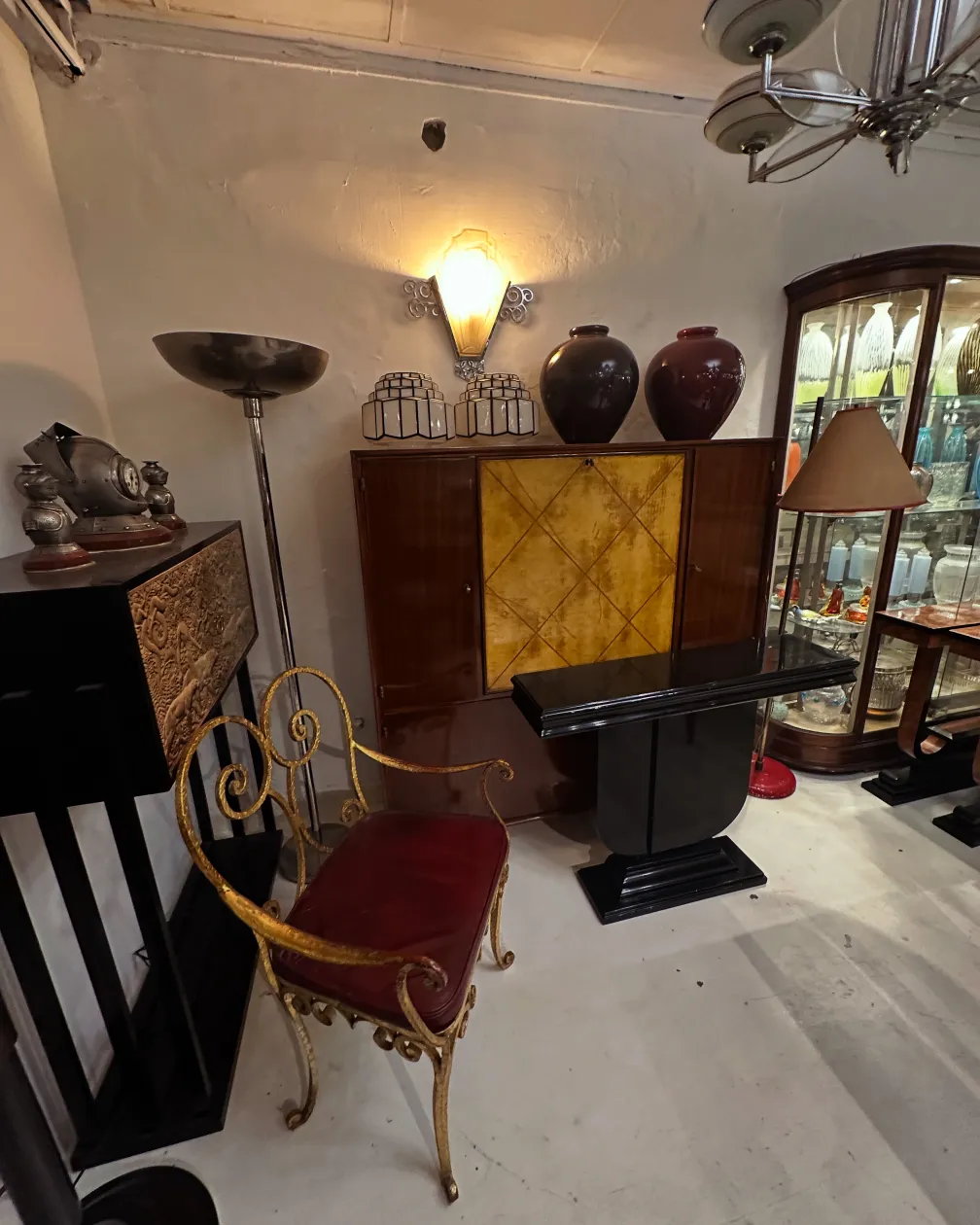
The Art Deco style emerged between 1920 and 1940 and is represented by symmetrical, rectilinear lines, abstract designs, and bold colors.
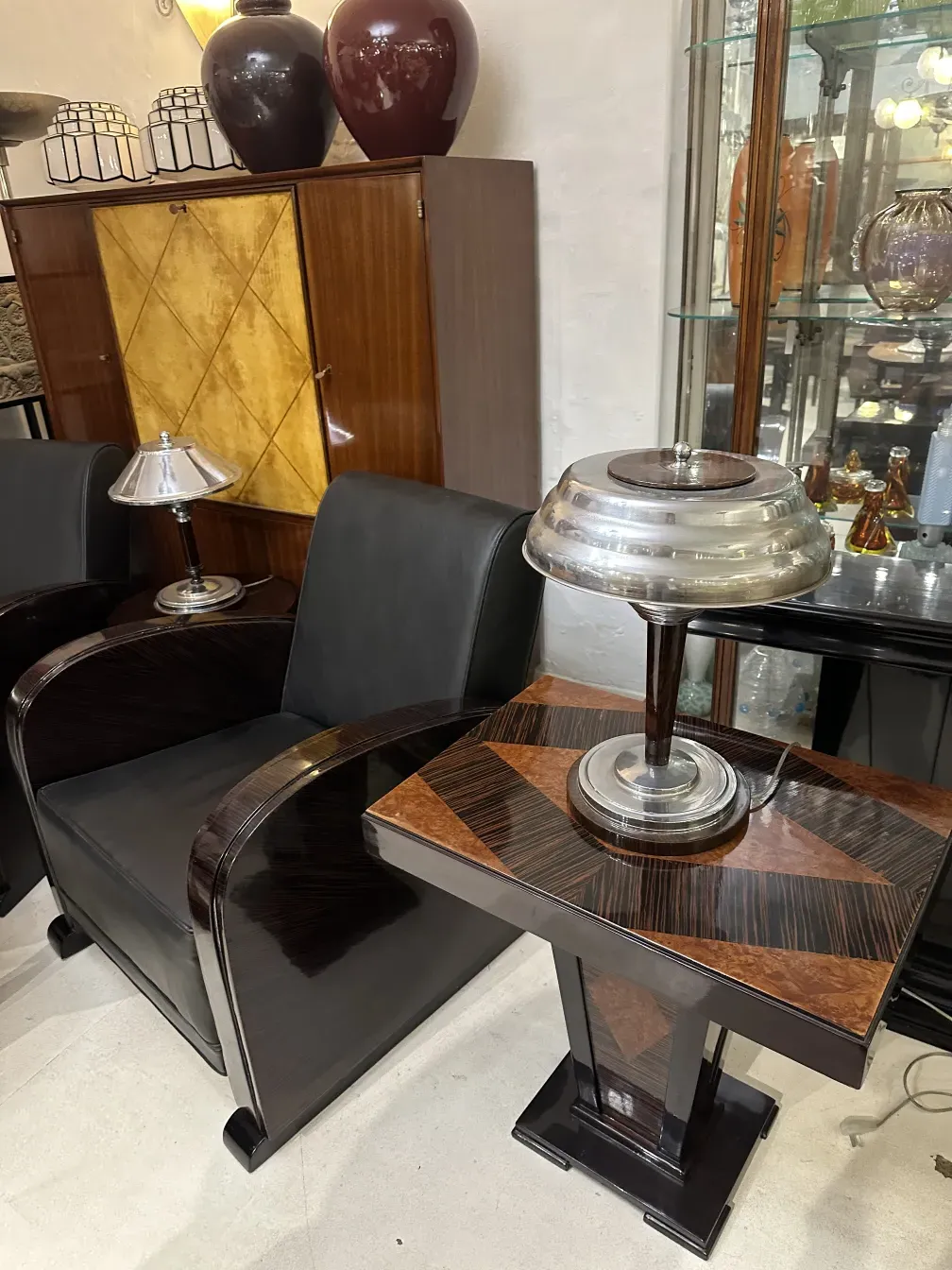
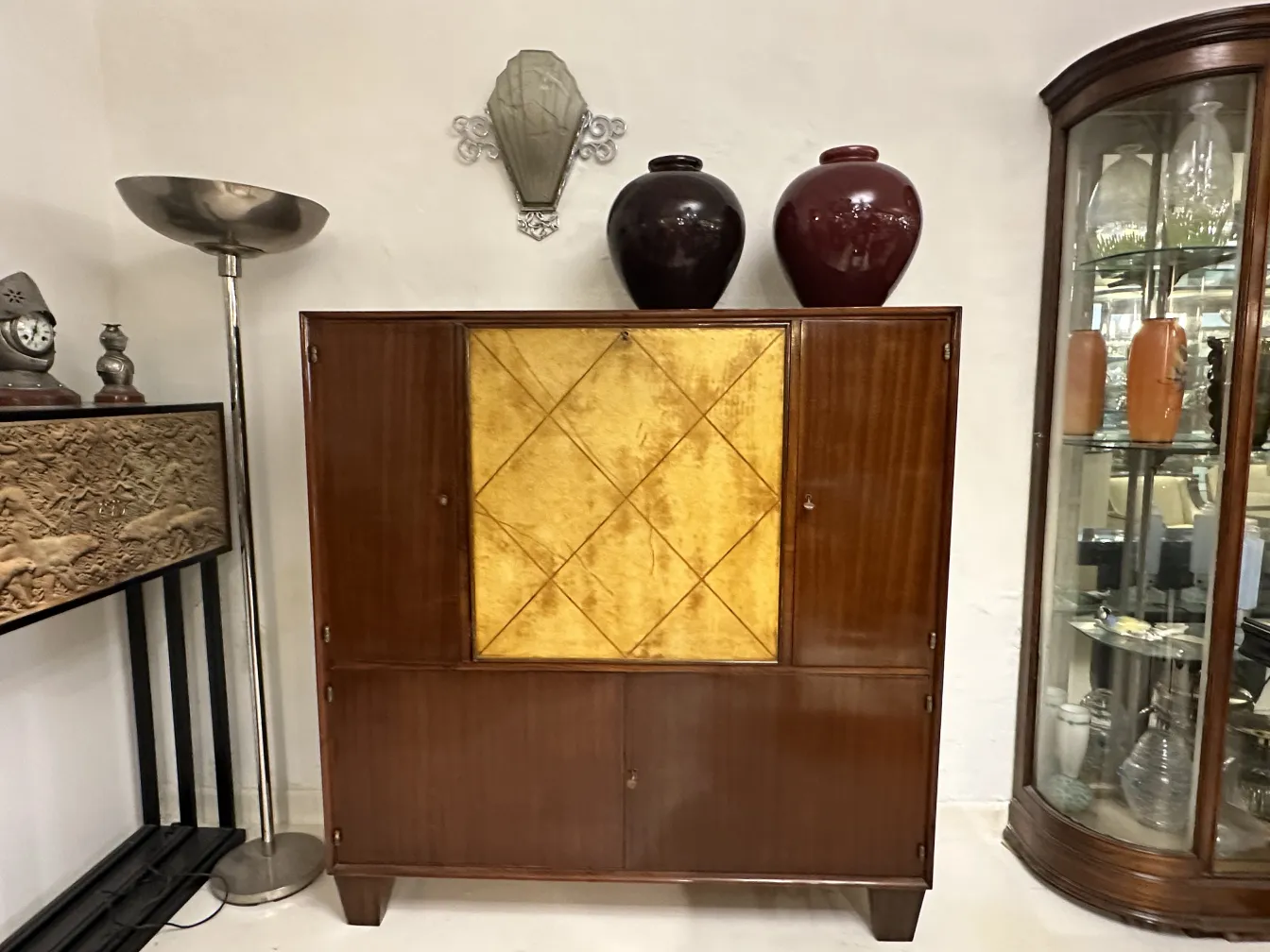
It featured the implementation of exotic materials such as parchment, shagreen (the skin of a small shark or ray), chrome pieces, and enamels, as well as ivory and mother-of-pearl inlays.
In contrast, Art Nouveau was more focused on asymmetrical, curved lines inspired by nature."




 Share
Share